The digital clock on the dashboard of a rideshare flickers to 4:14 AM. Outside, the world is a bruised purple, silent and still, but inside the terminal, the atmosphere is already humming with a frantic, low-frequency electricity. It is the sound of thousands of people collectively realizing they are behind schedule.
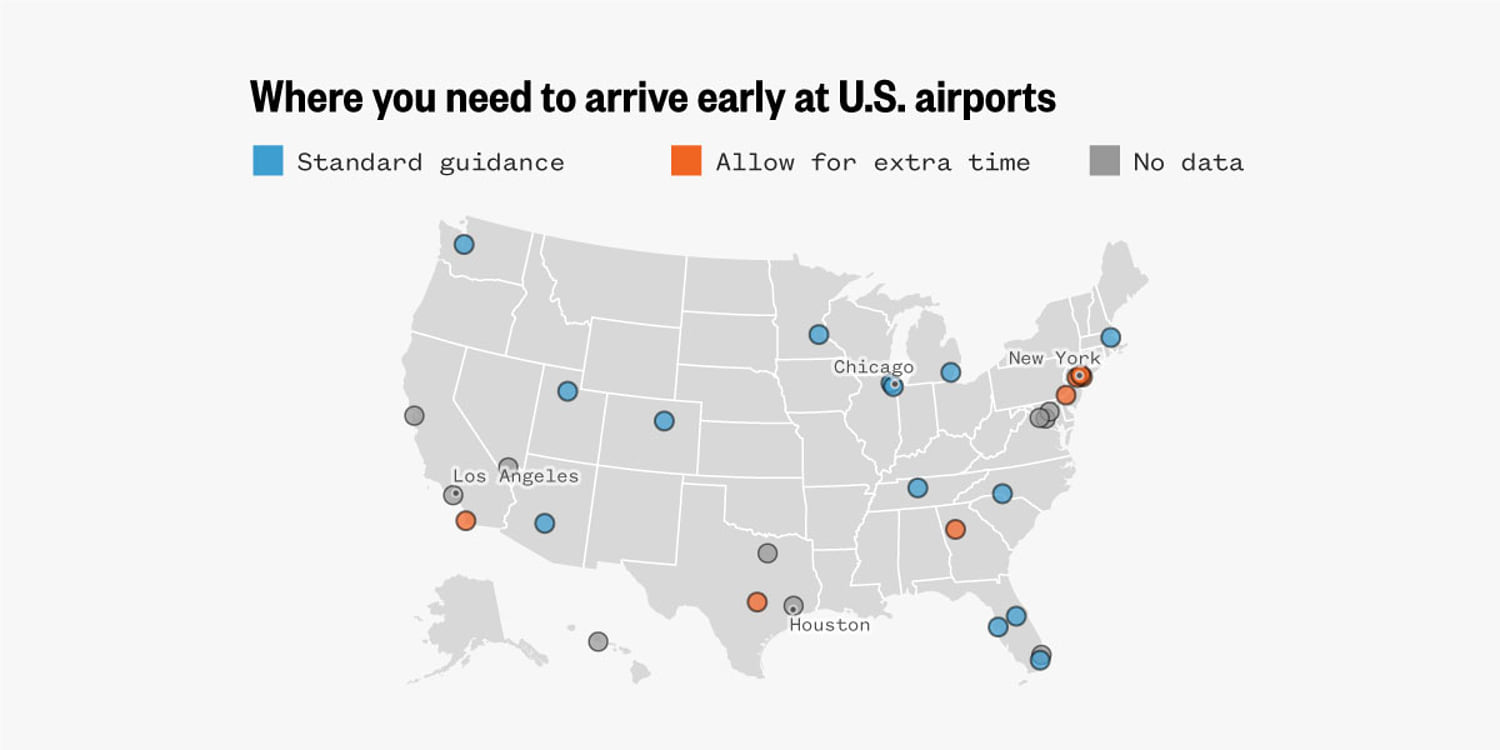
We have entered the era of the three-hour buffer. What used to be a cautious suggestion—arriving two hours early for a domestic flight—has morphed into a mandatory survival strategy. Across the country, from the sprawling labyrinth of O’Hare to the neon-soaked corridors of LAX, the message from airport authorities is uniform: give us more time, or risk losing your seat.
But this isn't just about logistical congestion. It is about a fundamental shift in how we move through the world and the invisible pressures that have turned the modern airport into a gauntlet of unpredictability.
The Anatomy of the Bottleneck
Consider a hypothetical traveler named Elias. He is a meticulous man. He checked in on his phone twenty-four hours ago. He isn't checking a bag. In the old world, Elias could arrive sixty minutes before boarding and still have time to buy an overpriced sourdough sandwich.
Today, Elias steps out of his car and hits a wall.
The first friction point isn't security; it’s the curb. As ride-hailing services and personal vehicles converge on aging infrastructure designed for a fraction of today's volume, the simple act of offloading a suitcase becomes a tactical maneuver. On peak days, the traffic jam begins a mile before the terminal.
Once inside, the variables multiply. TSA staffing levels fluctuate against a backdrop of record-breaking passenger volumes. In 2023 and 2024, the agency reported several of the busiest days in its history, frequently screening over 2.5 million individuals in a single twenty-four-hour period. When you combine those numbers with a workforce that is often stretched thin, the result is a queue that breathes like a living organism—expanding and contracting with no regard for your boarding pass.
The Technology Paradox
We were promised that technology would make this easier. Biometric scanners, PreCheck, and digital IDs were supposed to create a friction-free path from the sidewalk to the sky. In many ways, they have. But technology has a curious way of creating its own delays.
When a single 3D baggage scanner at a hub malfunctions, or a new software update requires a few extra seconds of processing per person, the ripple effect is massive. In a line of five hundred people, a five-second delay per passenger adds forty minutes to the wait. This is the math of the modern terminal. It is unforgiving.
There is also the matter of the planes themselves. Aircraft are flying fuller than ever before. Load factors—the percentage of available seats filled by passengers—regularly hover near 85 percent or higher. This means every gate is a high-pressure zone. There is no "extra" room. If you miss your window because you were stuck in a line for a latte or a scanner, the chances of being rebooked on the next flight are slim. The next flight is already full.
The stakes aren't just a missed meeting or a shorter vacation. The stakes are a total systemic collapse of your itinerary.
The Psychology of the Extra Hour
Why are airports nationwide begging for that third hour? Because they are trying to manage human emotion as much as physical bodies.
An airport is a pressure cooker of high-stakes milestones. If you are traveling for a funeral, a wedding, or a once-in-a-decade business deal, the anxiety of a slow-moving security line can be physically debilitating. By normalizing the "extra time" recommendation, authorities are attempting to lower the collective blood pressure of the terminal.
When passengers arrive early, they are more compliant. They move slower. They spend more money at the retail outlets. But more importantly, they provide a buffer for the inevitable.
The inevitable is the family of six in front of you who didn't realize they couldn't bring six liters of bottled water through the X-ray. It’s the sudden gate change that requires a fifteen-minute trek to the opposite end of the concourse. It’s the random secondary screening.
By the time Elias finally reaches his gate, he isn't the calm, prepared traveler he was at 4:00 AM. He is exhausted. He has spent two hours navigating a series of high-tension zones designed to filter, scan, and sort him.
The Infrastructure Debt
We are currently paying interest on decades of deferred maintenance and stagnant design. Many of the busiest airports in the United States were built or significantly expanded in an era before the Department of Homeland Security existed. We are trying to fit 21st-century security protocols and 2026 passenger volumes into 20th-century hallways.
Construction is the other silent thief of time. From New York to Salt Lake City, airports are undergoing massive, multi-billion dollar renovations. These projects are necessary, but they turn the journey into a literal obstacle course. Temporary walls, diverted walkways, and shuttered elevators add layers of complexity to a process that is already overtaxed.
Consider the physical distance. In some modern terminals, the walk from the security desk to the furthest gate can exceed a mile. If you are traveling with children, or if you have limited mobility, that "extra time" isn't a luxury. It is the difference between making the flight and watching the jet bridge pull away.
Reclaiming the Lost Time
So, how do we live with the vanishing hour?
The most successful travelers have stopped fighting the clock and started incorporating the airport into the trip itself. They treat the three-hour window not as a delay, but as the first leg of the journey. They bring the book they’ve been meaning to read. They find the quiet corner of the terminal—usually near the gates for regional jets—where the crowds thin out.
They also leverage every tool available, not to save time, but to gain information. They monitor the TSA's "MyTSA" app for real-time wait estimates. They use programs like CLEAR or Global Entry, not because they are guaranteed to be fast, but because they offer a more predictable range of wait times.
Predictability is the new currency of travel.
The recommendation to arrive early is an admission of vulnerability by the aviation industry. It is a confession that the system is running at redline. There is no slack left in the cables. Every gear is grinding against another, and the only way to keep the machine from seizing is to ask the passengers to act as a lubricant, filling the gaps with their own patience and their own time.
Elias eventually makes it onto his plane. He sits in 14B, leans his head against the cool plastic of the window, and watches the ground crew move with practiced urgency. He is on time. But he is also aware of the cost. He has traded three hours of sleep, a relaxed breakfast, and his own peace of mind for the privilege of sitting in a pressurized metal tube.
As the engines whine to life and the aircraft begins its pushback, the terminal fades into a blur of concrete and glass. Behind him, thousands of others are just beginning their sprint, eyes darting toward the monitors, hearts racing against a clock that never seems to have enough minutes left. The extra hour wasn't a suggestion. It was a ransom. And we pay it every single time we want to touch the sky.
The jet tilts upward, piercing the gray layer of morning clouds, and for a moment, the world below is silent. But the cycle is already resetting. Down on the tarmac, the next wave of cars is pulling up to the curb, the doors are swinging open, and the frantic, rhythmic march toward the gates begins all over again.
Would you like me to create a checklist of the most effective tools for tracking real-time airport delays across different major hubs?