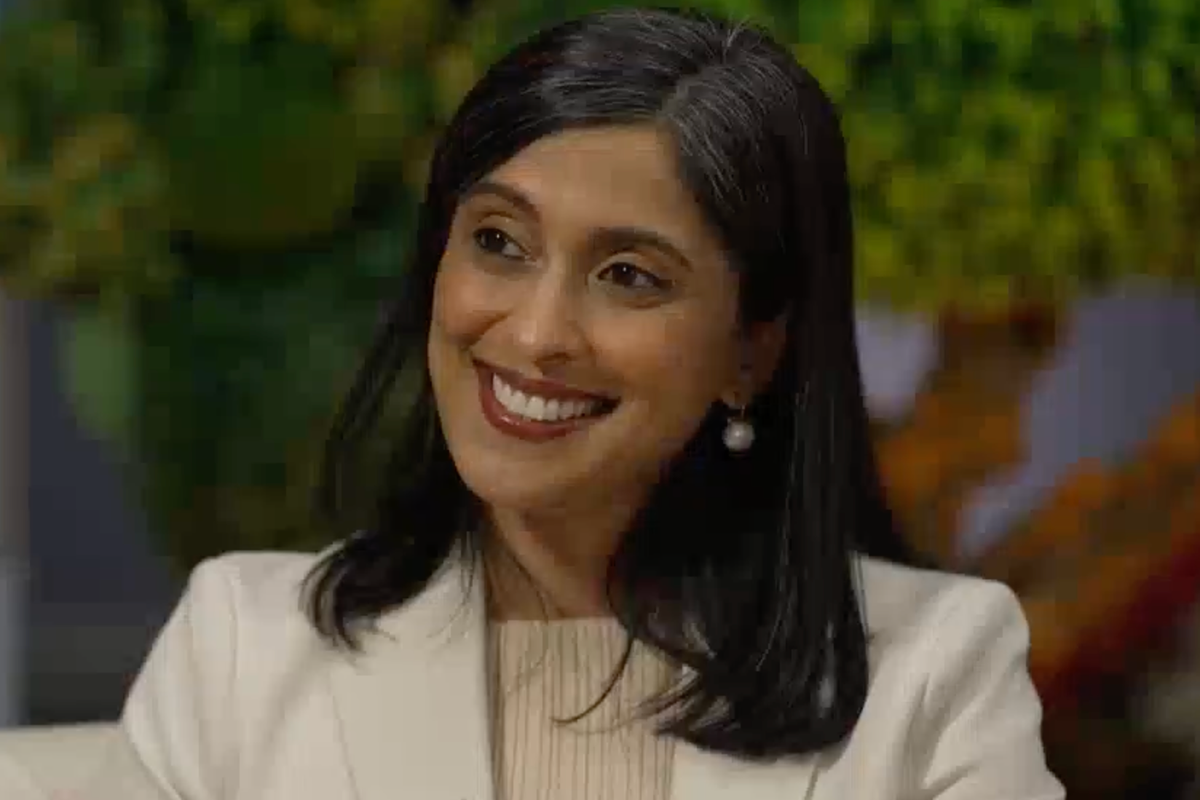
The media is currently obsessed with a piece of millinery trivia. When Usha Vance recently told an interviewer she was "not a hat lady" in response to a question about owning a MAGA cap, the commentary machine went into overdrive. Some saw it as a subtle distance-marker; others viewed it as a missed opportunity for a brand-building "loyalist" moment.
They are all wrong.
This isn’t about fashion, and it isn't about a lack of enthusiasm. It is a precise, high-level exercise in identity preservation within the most volatile political ecosystem in modern history. The obsession with whether a political spouse dons the literal uniform of the movement misses the point of how power actually operates in the 2020s. We are witnessing the death of the "Campaign Caricature," and Usha Vance is the one holding the scalpel.
The Myth of the Mandatory Uniform
For decades, the political spouse was a prop. They were expected to be a walking billboard for their partner’s platform. If the candidate wore a hard hat, the spouse wore a hard hat. If the candidate leaned into a specific subculture, the spouse was expected to adopt the aesthetic.
The "not a hat lady" comment is a refusal to be a prop.
By declining the aesthetic of the MAGA cap, Vance isn't rejecting the ideology; she is protecting her intellectual autonomy. In the world of high-stakes litigation and corporate law—where Vance spent her career—your brand is built on being the smartest, most composed person in the room. You don't achieve that by putting on a foam-front trucker hat for a photo op.
The "lazy consensus" suggests that a spouse must be a 100% visual match for the base to be effective. I’ve seen political consultants burn through millions trying to "humanize" candidates by forcing them into costumes that don’t fit. It never works. Authenticity isn't about doing what the crowd does; it's about staying consistent with who you were before the cameras showed up.
The Power of Strategic Apathy
In branding, what you don't do is often more impactful than what you do.
When a figure like Vance says she isn't a "hat lady," she is employing Strategic Apathy. She is signaling that she is above the fray of low-level tribal signaling. This serves two vital functions:
- De-escalation: It makes her a harder target for the opposition. It’s difficult to caricature someone as a radical when they refuse to adopt the radical's visual shorthand.
- Broad-Base Appeal: It leaves a door open for the "normie" voter who might agree with the policies but finds the pageantry of modern politics exhausting.
The media wants a "gotcha" moment. They want her to either embrace the hat and be labeled a zealot, or reject it and be labeled a dissenter. By choosing a third path—personal preference—she makes the question itself look small.
The Litigation of Personality
Let’s be clear about the mechanics here. Usha Vance is a litigator. In a courtroom, you never answer the question your opponent is asking; you answer the question you wish they had asked.
The interviewer asked: "Do you own a MAGA hat?"
The underlying trap was: "Are you a performative member of this movement?"
Her answer—"I’m not a hat lady"—effectively litigated the premise out of existence. She turned a political loyalty test into a conversation about personal style. It is a deflection so smooth that most commentators didn't even realize they’d been diverted.
The Breakdown of Signal vs. Noise
In information theory, Signal is the message you want to send, and Noise is the interference.
- Signal: "I support my husband and his platform."
- Noise: "I am willing to change my personal identity to suit a brand."
Most political spouses amplify the noise because they are afraid of looking "disloyal." They end up looking like hollowed-out versions of themselves. Vance is cutting the noise. She is betting that the American public is smart enough to distinguish between a spouse's wardrobe and their convictions.
Stop Asking the Wrong Questions
The "People Also Ask" sections of the internet are currently flooded with variations of: Is Usha Vance a secret Democrat? or Does Usha Vance like the MAGA movement?
These questions are fundamentally flawed. They assume that political alignment is a binary that must be expressed through 24/7 performance art.
If you want to understand the Vance dynamic, stop looking at the hat. Look at the record. Look at the legal career. Look at the consistency of the messaging. The real story isn't that she won't wear a cap; it's that she has successfully navigated the transition from the highest echelons of the legal elite to the center of a populist firestorm without losing her composure or her personal brand.
The Risk of the Middle Path
There is a downside to this contrarian approach. In a hyper-polarized environment, nuance is often mistaken for weakness.
By not "donning the armor" (the hat), she risks alienating the "true believers" who demand total visual fealty. I have seen movements turn on their own because of a perceived lack of aesthetic enthusiasm. If the base decides that "not being a hat lady" is code for "not being one of us," the strategy backfires.
However, the upside is far greater. In an era where every politician looks like a generic version of a person, a spouse who maintains a distinct, unyielding sense of self is a rare asset. It provides a tether to reality. It suggests that there is a life outside of the 24-hour news cycle.
The New Playbook for Political Identity
The era of the Stepford Spouse is over. We are moving into an era of Functional Partnership.
In this model, the spouse is not an extension of the candidate, but a separate entity with a shared goal. This requires a level of confidence that most people in Washington simply do not possess. It requires the ability to stand in front of a microphone and say, "No, I don't do that," without apologizing.
The competitor articles are looking for a crack in the foundation. They are hoping the "hat" comment is the first sign of a crumbling facade. They are missing the fact that the refusal to wear the hat is the foundation. It is the statement of a person who knows exactly who they are and refuses to be edited.
Don't look for the hat. Look for the person who doesn't need one.
Politics is a game of symbols, but power is a game of substance. If you're still arguing about the fabric on someone's head, you've already lost the argument.
Stop looking for a costume and start watching the player.