The potential merger between Unilever’s food division and McCormick & Company represents more than a consolidation of market share; it is a calculated response to the structural erosion of the traditional consumer packaged goods (CPG) model. As inflation-weary consumers migrate toward private-label offerings and niche, digitally-native brands, the legacy "Power Brand" strategy has reached a point of diminishing returns. This transaction would redefine the cost-to-serve ratio for global grocery retail while attempting to solve the distinct growth stagnation issues facing both entities.
The Strategic Asymmetry of the Deal
To understand the impetus for these talks, one must analyze the divergent pressures on each firm’s balance sheet. Unilever has long struggled with its "dual-track" identity, balancing high-growth Beauty and Wellbeing segments against a sluggish, capital-intensive Nutrition business. McCormick, conversely, dominates the global flavor and spice market but faces a ceiling in domestic market penetration.
The logic of a merger rests on three structural pillars:
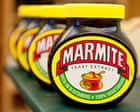
- Supply Chain Densification: In the CPG world, profitability is a function of logistical density. By combining Unilever’s vast condiment portfolio (Hellmann’s, Marmite, Knorr) with McCormick’s spice and seasoning dominance, the resulting entity creates a "must-have" category leader for retail procurement officers. This increases bargaining power during price negotiations and optimizes the cost of last-mile delivery.
- Portfolio De-risking: Unilever’s food brands are primarily "center-aisle" staples, which are highly susceptible to private-label substitution. McCormick’s products are "ingredient-level" essentials, which enjoy higher brand loyalty and lower price elasticity.
- Capital Reallocation: For Unilever, spinning off or merging its food unit allows for a "pure-play" rerating of its remaining business. Investors currently apply a "conglomerate discount" to Unilever’s stock; removing the slower-growth food assets enables the market to value the company closer to high-margin peers like L'Oréal or Estée Lauder.
The Cost Function of Global Distribution
The primary mechanism for value creation in this merger is the optimization of the Cost of Goods Sold (COGS) through raw material procurement. Unilever and McCormick share a significant overlap in their agricultural supply chains—specifically in oils, seeds, and specialized seasonings.
By merging, the new entity gains "monopsony-lite" power over specific spice and oil supply chains. This is not merely about volume discounts. It is about Secured Supply Transparency. In an era of climate-driven crop volatility, having the combined R&D and sourcing infrastructure of both firms allows for better hedging against commodity price spikes.
Solving the "Volume-Price" Paradox
Post-pandemic, the CPG industry has relied almost exclusively on price increases to drive revenue growth, while underlying sales volumes have stagnated or declined. This is a terminal strategy. To return to sustainable growth, a firm must achieve Volume-Led Growth (VLG).
The Unilever-McCormick entity addresses the VLG problem through Channel Arbitrage:
- Foodservice Expansion: McCormick has a sophisticated "Flavor Solutions" division that services fast-food chains and industrial food producers. Unilever’s Knorr and Hellmann’s brands have struggled to penetrate this high-volume B2B sector with the same efficacy.
- Emerging Market Penetration: Unilever possesses one of the most sophisticated distribution networks in Southeast Asia and Africa. McCormick, which is heavily weighted toward North American and European markets, can use these rails to introduce "Flavor" as a premium category in developing economies.
The Cultural and Operational Bottleneck
Despite the financial logic, the execution faces a significant hurdle in Operational Rigidity. Unilever’s food business is governed by a decentralized, regional management structure designed to cater to local tastes (e.g., Marmite in the UK vs. Bovril). McCormick operates with a more centralized, product-focused hierarchy.
The risk is "Synergy Friction." If the new entity attempts to centralize the marketing and R&D for local heritage brands under a US-centric McCormick model, they risk alienating the core consumer base that provides the brands' defensive value.
Quantitative Thresholds for Success
For this merger to be accretive to shareholders, the integrated company must achieve specific performance benchmarks within the first 24 months:
- EBITDA Margin Expansion: A minimum 200 basis point improvement through the elimination of redundant back-office functions and consolidated media buying.
- Inventory Turnover Ratio: An increase from the current average of 6.5x to 8.0x, driven by integrated demand sensing and shared warehousing.
- R&D Efficiency: Reducing the "Time-to-Shelf" for new flavor variants by 30% by leveraging McCormick’s rapid prototyping labs with Unilever’s global test markets.
The Regulatory Hurdle
Anti-trust scrutiny in 2026 is no longer focused solely on consumer price indexes. Regulators in the EU and the US now examine Buyer Power and Data Monopolies. A combined Unilever-McCormick would hold a dominant position in the "Flavor and Dressings" category that could potentially squeeze smaller competitors out of shelf-space.
The deal will likely require the divestment of overlapping brands in specific territories—most notably in the mustard and dry-seasoning categories in Western Europe—to satisfy the European Commission’s competition requirements.
Strategic Action: The Perimeter Defense
If the merger proceeds, the new entity must immediately pivot away from being a "product seller" and toward being a "platform provider." This involves:
- Digitizing the Flavor Profile: Using McCormick’s sensory data to create personalized digital marketing for Unilever’s condiment lines, targeting the "home chef" demographic that has shifted toward scratch-cooking.
- The "Clean Label" Transition: Utilizing McCormick’s natural extraction technologies to remove synthetic stabilizers from Unilever’s legacy food products, staying ahead of impending HFSS (High Fat, Sugar, Salt) regulations in the UK and EU.
The play is not to simply sell more jars of mayonnaise or bottles of pepper; it is to own the entire chemical and sensory "stack" of the consumer’s meal. Success will be measured by whether the combined firm can decouple its growth from inflation and prove that its "Big Food" scale is an agile asset rather than a bureaucratic liability.