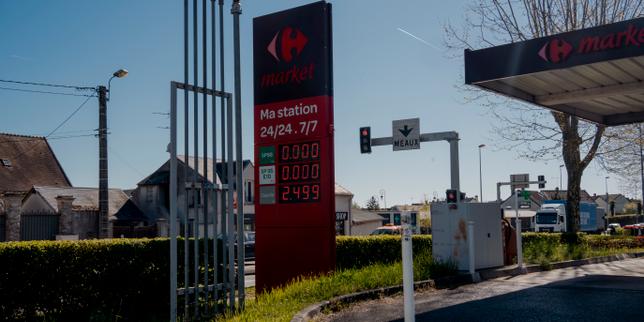
Whenever you pull up to the pump and see those digits spinning faster than a slot machine, it’s easy to feel like you’re being robbed. You stare at the price per liter and think the government must be throwing a party with your hard-earned cash. It’s a common sentiment across France. People are angry. They feel the weight of every centime. But if we actually look at the math and the mechanisms behind fuel taxes, the reality is a bit more complicated than a simple cash grab.
Does the state get rich when prices soar? Technically, yes and no. It’s a frustrating answer, I know. But the way taxes like TICPE and VAT are structured means the government doesn't always "win" just because you’re losing. Let's break down how this actually works without the political spin.
The Fixed Tax Trap
Most people assume that as the price of oil goes up, the government’s tax take goes up in equal proportion. That’s not how the TICPE (Taxe intérieure de consommation sur les produits énergétiques) works. This is the big one. It’s a fixed amount per liter.
If you buy a liter of SP95, the TICPE is roughly 0.69 euros. It doesn't matter if the raw price of gas is 1 euro or 2 euros; that 0.69 euros stays exactly the same. When oil prices explode on the global market, the state doesn't see a single extra cent from this specific tax. In fact, when prices get too high and people start driving less to save money, the state actually loses revenue. They’re collecting the same amount per liter but on fewer liters sold.
The VAT Double Dip
Now, the part that really grinds people's gears is the VAT (TVA). France applies a 20% VAT on fuel. Here’s the kicker: it’s applied not just to the product itself, but also to the TICPE. You are literally paying a tax on a tax.
When the price of crude oil rises, the base price of the fuel goes up. Since VAT is a percentage, the amount of VAT collected does increase as the price at the pump climbs. If the base price jumps by 10 cents, the state pockets an extra 2 cents in VAT. On a national scale, with millions of drivers, those two cents add up to hundreds of millions of euros.
So, in this specific slice of the pie, the state is indeed collecting more money when you suffer at the pump. But don't start imagining the Treasury building is suddenly paved in gold.
Where Does the Money Actually Go
It’s easy to imagine this tax money disappearing into a black hole or funding lavish lifestyles for politicians. The truth is more boring. Fuel taxes are a massive pillar of the national budget, bringing in around 30 to 40 billion euros a year.
A large portion of the TICPE goes directly to local authorities. It pays for your roads, your bridges, and the maintenance of the infrastructure you're currently driving on. Another chunk helps fund the transition to greener energy. Whether or not you agree with how efficiently that money is spent is a different debate, but the funds aren't just sitting in a vault. They're being cycled back into the machinery of the country.
The Hidden Costs of High Prices
Here’s the thing many people miss. While the state might see a bump in VAT revenue when fuel is expensive, high energy costs are a nightmare for the overall economy. When gas is expensive, everything else gets expensive.
Trucking companies charge more to move food. Farmers pay more to run tractors. Factories pay more for power. This leads to inflation. When inflation rises, the government often has to step in with subsidies, "fuel checks," or tax breaks to keep the peace and prevent an economic stall.
Think back to the "bouclier tarifaire" or the 15-20 cent rebates we saw in previous years. Those interventions cost the state billions. Often, the amount they give back in aid to keep the economy moving far outweighs the "extra" VAT they collected from the price hike. From a purely fiscal standpoint, the state generally prefers stable, moderate fuel prices over volatile, high ones. High prices create social unrest and economic drag that no amount of extra VAT can compensate for.
The Myth of the Windfall
We often hear the term "windfall profits" in relation to the state. It sounds like they're hitting the jackpot. But if you look at the long-term data from the Direction générale de l'énergie et du climat (DGEC), the tax share of the pump price has actually fluctuated wildly.
A few years ago, taxes represented about 60% of what you paid. When prices at the pump hit 2 euros, that percentage actually dropped closer to 45% or 50% because the fixed TICPE became a smaller portion of the total cost. The state isn't increasing its "cut" of the pie; the pie is just getting more expensive because of the ingredients—oil and refining.
Why the Government Won't Just Cut Taxes
You might ask: "If they aren't getting rich, why don't they just lower the taxes?"
It's a fair question. The problem is dependency. The French budget is built on this revenue. If you slash the TICPE by 10 cents, you create a multi-billion euro hole in the budget instantly. To fill that hole, the government would either have to cut services (like road maintenance or schools) or raise taxes elsewhere (like income tax or property tax).
Politically, fuel taxes are "easy" because they're collected at the point of sale. They're also a tool used to discourage fossil fuel consumption in line with climate goals. Removing them would be a massive U-turn on environmental policy that most European governments aren't willing to make.
What You Can Actually Do
Complaining about the state's "wealth" feels good, but it doesn't lower your bill. If you want to stop the bleeding, you have to look at the factors you can control.
First, use apps like Prix-carburants.gouv.fr. The price difference between a supermarket station and a highway station can be 20 cents or more. That's a bigger difference than any minor tax adjustment the government might consider.
Second, check your tire pressure. It sounds like something your dad would nag you about, but under-inflated tires can increase fuel consumption by 3%. On a full tank, that's a couple of euros literally vanishing into thin air.
Third, look at your driving style. "Eco-driving" isn't just a buzzword. Shifting gears earlier and avoiding aggressive braking can cut your consumption by 10% to 15%. If the state is taking 60 cents a liter, and you can save 15% of your liters, you're essentially giving yourself a tax break that the government can't touch.
The state isn't exactly "impoverished" by fuel taxes, but the idea that they're rubbing their hands together in glee every time oil prices go up is a fantasy. They’re managing a balancing act between a massive budget need, an angry public, and a fragile economy. Stop waiting for a massive tax cut that probably isn't coming and start optimizing how you buy and burn your fuel. It's the only way to win a game that's rigged by global markets and national debt.