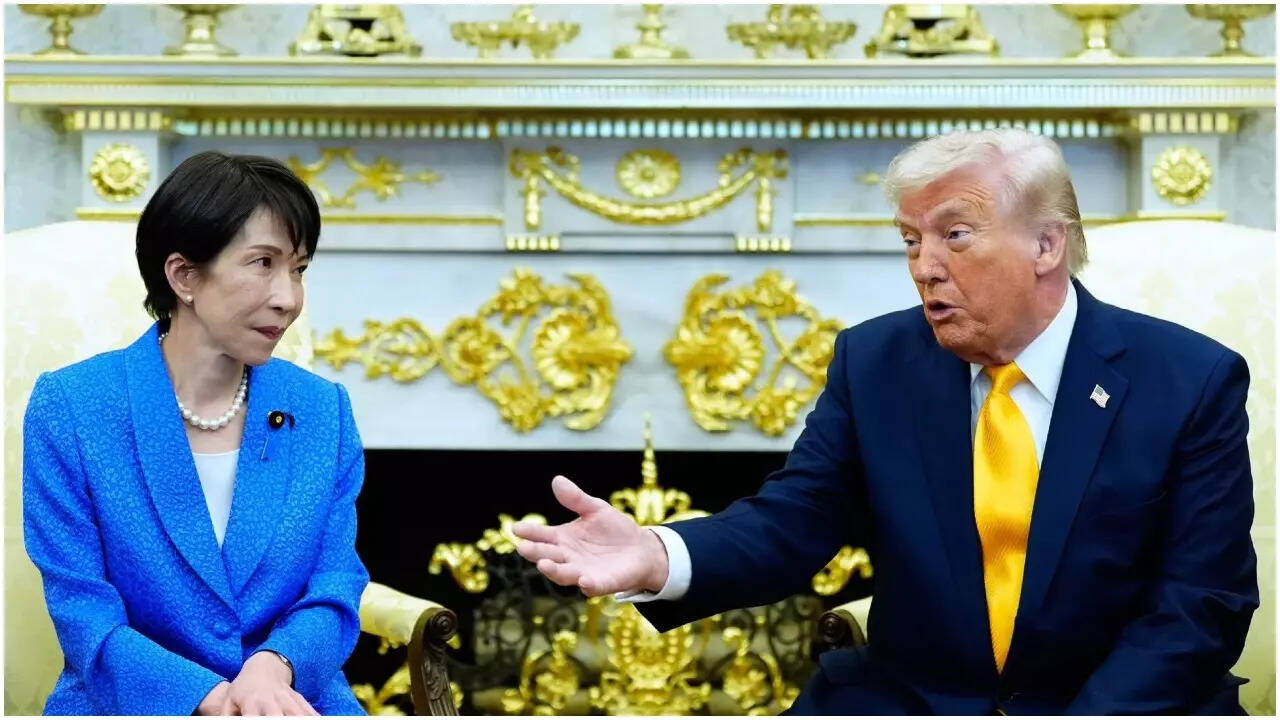
Donald Trump just reminded the world why he’s the most unpredictable force in modern diplomacy. During a high-stakes statement regarding tensions with Iran, he dropped a rhetorical bomb that hit Tokyo harder than any adversary could. "Who knows surprise better than Japan?" he asked, referencing the 1941 attack on Pearl Harbor. It wasn't just a throwaway line. It was a verbal gut punch to one of America’s most loyal allies at a time when global stability is already on a knife-edge.
If you’re wondering why a historical reference from 85 years ago still has the power to derail modern geopolitics, you have to look at the fragile state of the "Indo-Pacific" strategy. Tokyo isn't just a partner; they're the anchor of American influence in Asia. When a U.S. President uses their greatest national shame as a punchline or a tactical comparison, it doesn't just "spark unease." It signals a fundamental lack of respect for the current diplomatic reality.
The Cost of Bringing Up Pearl Harbor in 2026
History isn't dead in East Asia. It’s a living, breathing part of every trade deal and defense pact. For the Japanese government, the Pearl Harbor comparison is the ultimate "no-go" zone. It frames Japan as an aggressor and a "sneaky" actor, stereotypes they’ve spent decades trying to bury through pacifism and transparent governance.
Trump’s remark came as he was discussing the need for "decisive action" and the element of surprise in military strikes. By dragging Japan into the conversation about Iran, he effectively linked a democratic ally with a rogue state. That’s not just bad phrasing. It’s a strategic blunder that provides immediate ammunition to critics in Tokyo who argue that the U.S. is an unreliable, ego-driven partner.
Japanese officials usually respond to these slights with "careful observation." That’s diplomatic code for being absolutely livid but too polite to scream. But the silence from the Kantei (the Prime Minister’s office) is getting louder. They’re realizing that no matter how much they invest in the relationship, they might always be viewed through the lens of 1941 by the man holding the nuclear codes.
Why This Remark Matters More Than a Twitter Rant
You might think this is just Trump being Trump. You'd be wrong. Words have a specific gravity in international relations, especially when they involve the Treaty of Mutual Cooperation and Security. Japan hosts over 50,000 U.S. troops. They pay billions to keep those bases running. They’re currently doubling their defense budget to counter threats from China and North Korea.
When the U.S. President treats their history like a prop, he undermines the domestic support the Japanese government needs to keep those bases open. Imagine being a Japanese politician trying to convince your voters to fund American military interests after the American leader essentially called your country a master of "surprise attacks." It’s an impossible sell.
The timing is also atrocious. With the Middle East on the brink of a broader conflict, the U.S. needs Japan’s diplomatic channels. Japan has historically maintained a unique, functional relationship with Tehran. They’ve acted as a bridge when Washington couldn't talk to the Iranians directly. By offending Tokyo during an Iran statement, Trump is burning the very bridge he might need to cross to avoid a full-scale war.
The Double Standard of US Diplomacy
There is a glaring double standard at play here that nobody seems to want to talk about. The U.S. expects Japan to be a "normal" country when it comes to buying Tomahawk missiles and patrolling the South China Sea. Yet, at the first sign of a rhetorical flourish, the U.S. reverts to treating Japan as the antagonist of World War II.
You can't have it both ways.
You can't demand that Japan becomes the "Great Britain of the East" while simultaneously reminding them that you still see them as the people who bombed Hawaii. It creates a psychological rift. Young Japanese citizens, who have no personal connection to the 1940s, see these comments and wonder why they're tethered to a country that refuses to see them as they are today.
The Iranian Connection
The context of the Iran statement makes this even weirder. Trump was attempting to project strength and the necessity of catching enemies off guard. By using Japan as his example of "surprise," he inadvertently suggested that the U.S. learns its best military tactics from its former enemies. It was a bizarre attempt at a compliment that landed like a lead balloon.
Iran, meanwhile, loves this. Anything that creates friction between the U.S. and its allies is a win for Tehran. They see the "unease" in Tokyo and realize that the American coalition isn't as tight-knit as it looks on paper. Diplomacy is a game of perceptions. Right now, the perception is that the U.S. is willing to insult its best friends to make a point during a press conference.
Breaking the Cycle of Rhetorical Blunders
If the U.S. wants to maintain its grip on the Pacific, it has to stop the historical revisionism. It’s not enough to just say "we're allies." There has to be a baseline of cultural intelligence.
- Stop the 1941 Comparisons. It’s lazy. It’s tired. It’s offensive.
- Acknowledge Japan’s Current Role. Talk about their contribution to regional stability, not their actions during the Roosevelt administration.
- Consult Before Speaking. If you’re going to mention a country in a major policy statement, maybe check with their embassy first.
The reality is that Japan isn't going to break the alliance tomorrow. They need the U.S. nuclear umbrella too much. But alliances don't usually die in a single explosion; they erode over time through a thousand small insults. This "surprise" remark is a significant crack in the foundation.
Tokyo is already looking at "autonomy" more seriously than ever. They’re building their own long-range missiles. They’re forming security partnerships with Australia and the UK that don't always involve Washington. They're hedging their bets. And honestly? You can’t blame them. When your "best friend" keeps bringing up your worst mistake from a century ago to look cool on TV, it’s time to start looking for new friends.
The next time a statement on global security is drafted, someone in the West Wing needs to find a dictionary and look up the word "tact." Or better yet, look at a map and see how lonely the Pacific gets without a solid partner in Tokyo. History is for learning, not for scoring cheap points during a crisis.
Japan knows surprise. They also know when they’re being disrespected. The U.S. should hope they don't decide to "surprise" the world by taking their massive defense budget and their strategic geography and going their own way. That’s a surprise no one in Washington is prepared for.