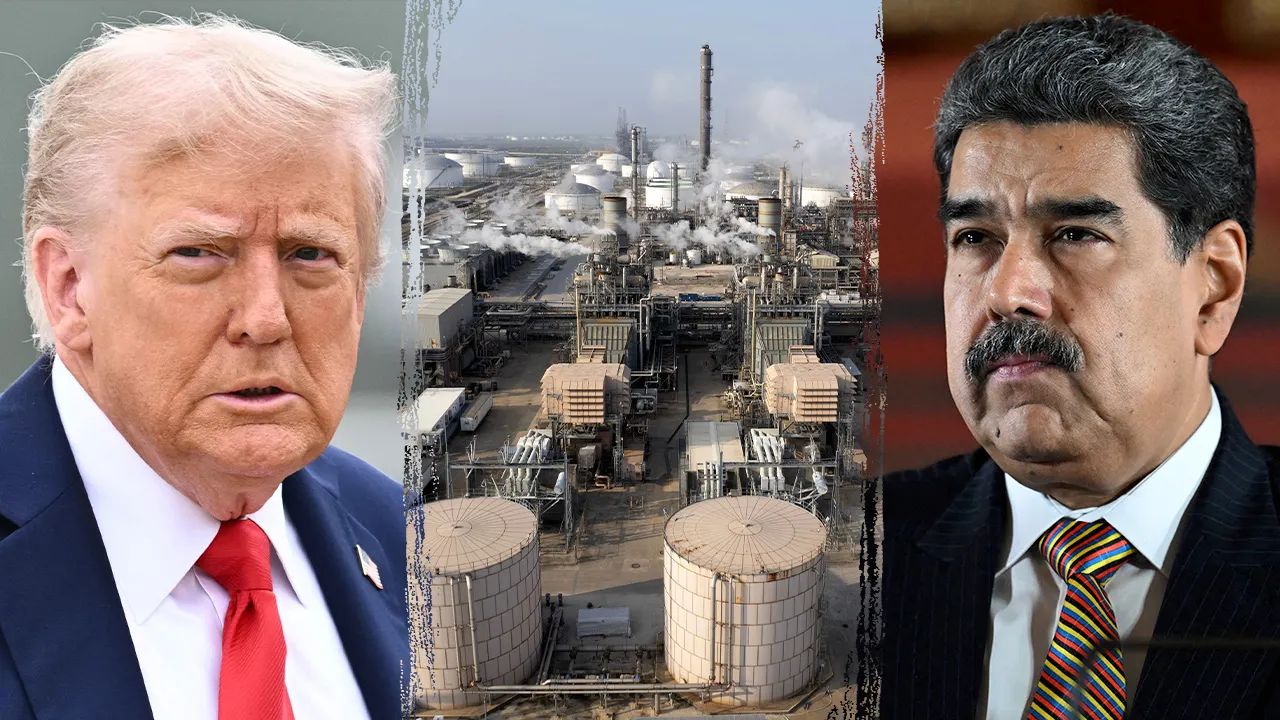
The headlines are vibrating with the same tired script. Donald Trump vows to sink any Iranian vessel that dares to challenge a U.S.-led blockade. The markets flinch, oil speculators place their bets, and the beltway pundits debate the "toughness" of the rhetoric.
They are all missing the point.
The obsession with "sinking boats" is a 20th-century solution to a 21st-century economic siege. We are watching a masterclass in performative geopolitics while the actual mechanics of global trade security are rotting from the inside out. If you think a kinetic response to Iranian speedboats is the silver bullet for Middle Eastern stability, you don't understand the geography of the Strait of Hormuz, and you certainly don't understand the math of modern attrition.
The Myth of the Kinetic Deterrent
The "lazy consensus" suggests that overwhelming naval force creates a vacuum of safety. It doesn’t. In the narrowest chokepoint on the planet—a 21-mile wide slit through which 20% of the world’s petroleum flows—force is a blunt instrument that often breaks the thing it's trying to protect.
The U.S. Navy’s Fifth Fleet is an engineering marvel. It is also an incredibly expensive target. When a politician talks about "sinking boats," they are imagining a classic naval engagement. Iran isn't interested in that. They practice asymmetric swarm tactics.
I have watched defense contractors burn through billions trying to solve the "swarm problem." You cannot use a $2 million RIM-116 Rolling Airframe Missile to take out a $50,000 remote-controlled explosive skiff every time one enters the water. The math of the interceptor versus the target is fundamentally broken. By vowing to sink everything, you aren't showing strength; you are inviting a war of economic exhaustion where the U.S. pays $100 for every $1 the IRGC spends.
The Blockade is a Ghost
The media loves the word "blockade." It sounds official. It sounds like control. In reality, a blockade in the Persian Gulf is an invitation for a global depression.
If Trump actually attempts to "sink everything" that challenges a blockade, he isn't just targeting Iranian warships. He is creating a kinetic "no-go" zone for insurance underwriters. This is the detail the Hindu and others gloss over. Shipping companies like Maersk or MSC do not care about who has the bigger gun; they care about the War Risk Surcharge.
As soon as the first "boat is sunk," Lloyd’s of London will skyrocket the premiums for any vessel entering the Gulf. At a certain price point, the "blockade" becomes irrelevant because the commercial fleet will simply stop moving. You don't need to sink a tanker to stop the oil; you just need to make it uninsurable. Trump’s rhetoric ignores the reality that the greatest threat to U.S. interests isn't an Iranian missile—it’s a spreadsheet in a London insurance office.
Stop Asking if We Can Win a War
People also ask: "Can the U.S. defeat the Iranian Navy?"
It’s the wrong question. Of course, the U.S. can turn the Iranian surface fleet into a series of artificial reefs by Tuesday afternoon. The real question is: Can the U.S. maintain a functional global economy while doing it?
The answer is a resounding no.
A conflict in the Strait doesn't look like a Michael Bay movie. It looks like a decade of 12% inflation. It looks like the collapse of the "Just-in-Time" supply chain. When you "sink the boats," you create debris, you trigger environmental disasters in desalination-heavy regions, and you turn the Gulf into a graveyard of kinetic uncertainty.
The Strategic Fallacy of "Toughness"
We have been conditioned to believe that de-escalation is weakness and "sinking boats" is strength. This is a binary for the simple-minded.
Real power in the Middle East is the ability to maintain the flow.
- Tactical Strength: Sinking a fast-attack craft.
- Strategic Strength: Keeping the price of Brent Crude under $80.
Trump’s stance prioritizes the former at the absolute expense of the latter. By signaling a hair-trigger response, he gives Tehran the power to crash the global markets whenever they feel like sending a drone into the water. We are handing the "volatility switch" to the very enemy we claim to be neutralizing.
The Cost of the "Counter-Intuitive" Truth
There is a downside to my argument: it’s boring. It doesn't involve explosions or patriotic montages. It involves tedious diplomatic maneuvering, regional power-sharing, and perhaps most galling to the "tough guys," a recognition that we cannot shoot our way out of a geographical bottleneck.
I have seen the internal reports on "Millennium Challenge 2002"—a massive war game where the "red" team (simulating a Middle Eastern power) used low-tech tactics to sink a U.S. carrier and sixteen other ships in the first few days. The military didn't like the results, so they reset the game and forced the red team to play "properly."
Trump is making the same mistake. He is assuming the enemy will play the game he wants to play.
The Actionable Reality
If you are an investor or a policy observer, ignore the "sinking boats" theater. Watch the TankerTrackers data. Watch the Shanghai Containerized Freight Index.
The real war isn't happening on the surface of the water; it's happening in the cost of logistics. If the U.S. moves toward this promised blockade, the first casualty won't be an Iranian boat. It will be the retirement accounts of every American who thinks "foreign wars" don't affect their grocery bills.
Sinking boats is easy. Managing the aftermath of a shattered maritime order is a task for which the current rhetoric is woefully unprepared.
The U.S. doesn't need more "sunk boats." It needs a strategy that recognizes that in the Strait of Hormuz, the person who fires first has already lost.
Stop looking for a hero to clear the sea. Start looking for the exit strategy from a conflict that has no mathematical victory.