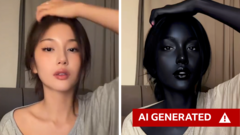
The algorithm doesn't care about your dignity. It cares about retention. When the BBC recently flagged a massive network of TikTok accounts using AI-generated images of sexualized Black women, they weren't just pointing out a few bad apples. They exposed a systemic failure in how social media giants police synthetic content. These images, often depicting highly exaggerated and hyper-sexualized features, aren't just "fake photos." They're part of a digital economy that thrives on the fetishization of Black bodies, and TikTok's moderation tools are consistently a step behind.
You’ve probably seen them while scrolling. The lighting is slightly too perfect. The skin has a plastic sheen. The proportions are biologically impossible. These AI "influencers" are designed to bait clicks and drive users to third-party subscription sites or scammy "dating" links. It’s a lucrative business model built on the backs of non-existent women, and it’s hurting real creators in the process.
Why the BBC Investigation Matters for Digital Safety
The BBC didn't just find a few posts. They uncovered a coordinated effort. Their investigation revealed that dozens of accounts were pumping out thousands of these images, racking up millions of views. Many of these accounts used "dead-naming" or repurposed the names of real-life Black celebrities and influencers to trick the algorithm into pushing the content to specific fans.
TikTok eventually removed the content after the BBC reached out. That’s the problem. Why does it take a major news organization to get a multi-billion dollar platform to follow its own community guidelines? TikTok’s rules explicitly ban "synthetic media that contains realistic appearances" without a label, and they certainly ban non-consensual sexual content. Yet, these accounts flourished for months.
The Specific Targeting of Black Women
This isn't happening in a vacuum. There’s a long, ugly history of the hyper-sexualization of Black women in media. AI is just the newest tool for an old habit. By using generative AI, creators can pump out "idealized" and pornographic versions of Black women at a scale that was previously impossible.
It’s a form of digital blackface. In many cases, these images are created by people who aren't Black, using prompts that lean into harmful stereotypes. They create a "vibe" that feels authentic to the uninitiated but is actually a calculated caricature designed to maximize engagement through fetishization.
Real Black creators find themselves buried. When the feed is flooded with "perfect" AI-generated models that never complain, never age, and always show skin, the bar for human creators gets shifted to an impossible standard. It devalues the work of actual influencers and makes the platform a more hostile space for Black women to exist without being reduced to a thumbnail.
How the Scammers Make Their Money
These accounts aren't just for "likes." They’re sophisticated funnels. If you look closely at the bios of these AI-generated profiles, you’ll see the same pattern. They link to Linktree or similar landing pages. From there, the user is shuffled off to adult content platforms, "private" Telegram channels, or sites designed to harvest credit card data.
It’s a classic bait-and-switch. The AI creates the lure. The TikTok algorithm provides the audience. The scammer gets the payout. TikTok’s struggle to catch this is partly because the creators are getting better at bypassing filters. They might use "Algospeak"—using symbols or weird spellings for words like "sexy" or "link"—to stay under the radar of automated moderation.
The Technical Gap in AI Detection
TikTok says it uses a mix of human moderators and machine learning to keep the platform safe. Clearly, the machine learning part is failing. AI detection tools are notoriously finicky. As the generators (like Midjourney or Stable Diffusion) get better, the detectors fall behind.
There is also a bias in how these tools are trained. If a moderation AI isn't trained on a diverse enough dataset, it might misidentify real Black women as "synthetic" or, conversely, fail to see the "uncanny valley" markers in AI-generated Black faces that would be obvious in white ones. This "coded bias" means that the very people being exploited by the technology are the ones the platform is least equipped to protect.
What Needs to Change on the FYP
Cleaning up the For You Page (FYP) isn't rocket science, but it requires a shift in priorities. TikTok needs to stop reacting and start being proactive.
- Mandatory Watermarking: TikTok should require all uploaded content to pass through a digital forensic check. If AI markers are found and not declared, the account should be flagged immediately.
- Aggressive Link Scrubbing: If an account is posting high volumes of synthetic media and linking to known "adult funnel" sites, that’s a red flag. The platform needs to stop allowing these "link in bio" scams to operate with impunity.
- Better Support for Human Creators: There should be a clearer path for real creators to report AI clones or accounts that use their likeness. Right now, the reporting process is a labyrinth that often ends in a generic "we found no violation" message.
How to Spot the Fakes Yourself
Don't let the algorithm play you. You can usually spot these AI accounts if you know what to look for.
Check the hands. Even in 2026, AI still struggles with fingers. They’ll look like sausages or have strange joints. Look at the background. If the furniture seems to melt into the wall or the patterns on the clothes don't quite line up, it’s probably a bot. Most importantly, look at the engagement. If a profile has 50,000 followers but only posts the same five types of poses with zero personality or video content, it’s a farm account.
The BBC investigation was a wake-up call, but it shouldn't be the end of the conversation. The digital safety of marginalized groups shouldn't depend on whether a journalist decides to write a story about it. It’s time to hold these platforms accountable for the content they choose to amplify.
If you see these accounts, report them for "Spam" and "Sensitive Content." Don't comment on them—even negative comments tell the algorithm that the post is "engaging" and should be shown to more people. Block the account and move on. The only way to starve these bot farms is to deny them the attention they crave.