Thomas Tuchel does not care about the weight of the number ten shirt, but he is about to find out that the English public cares about little else. As he prepares to take the reins of the national team, the German tactician inherits a squad overflowing with elite technical talent, yet paralyzed by a lack of positional clarity. The question of who starts in the hole behind the striker is not just a tactical choice. It is a referendum on what kind of football England wants to play. For years, Gareth Southgate attempted to cram every available playmaker into the same starting eleven, often resulting in a congested midfield where Jude Bellingham, Phil Foden, and Cole Palmer tripped over one another’s shadows. Tuchel will not be so sentimental.
The reality of international football is that you cannot win with three players demanding the same ten yards of grass. Tuchel’s history at Chelsea, PSG, and Bayern Munich suggests he prizes structural integrity over individual expression. He wants "control" in a way that British fans often find sterile. If he follows his established patterns, at least two of England's "Golden Generation" darlings are going to find themselves on the bench. The battle for the number ten spot is a three-way collision between a global superstar, a Manchester City phenom, and a Chelsea maverick, and the winner will be determined by who can stop running toward the ball and start running away from it. For another look, read: this related article.
The Jude Bellingham Problem
Jude Bellingham is the most complete midfielder of his generation, and that is exactly why he might not be the right choice for the number ten role under Tuchel. At Real Madrid, Bellingham flourished by ghosting into the box, exploiting the space vacated by non-traditional strikers. However, for England, his tendency to hunt the ball and drift across the entire pitch creates a vacuum in the center of the park. He plays with an emotional intensity that galvanizes crowds but can disrupt a rigid tactical system.
Tuchel views the pitch as a series of zones that must be occupied at all times. If Bellingham vacates his station to chase a tackle or drop deep to collect the ball from the center-backs, the entire structure collapses. We saw this throughout the 2024 Euros. England looked disjointed because their primary playmaker was everywhere and nowhere at once. There is a strong argument that Tuchel will see Bellingham not as a ten, but as a high-octane eight—a box-to-box engine who provides the physical presence the team lacks. Moving Bellingham deeper solves the defensive transition issue, but it leaves the creative keys on the table for someone else. Further coverage on the subject has been provided by CBS Sports.
Phil Foden and the System Trap
If you ask any coach in the Premier League who the most naturally gifted English player is, they will likely point to Phil Foden. Yet, for the national team, Foden remains an enigma. He looks like a world-beater under Pep Guardiola because he is part of a machine that provides him with constant passing lanes and specific instructions. In an England shirt, he often looks like a man lost in a fog.
Foden’s best work happens in the "half-spaces"—those awkward pockets of air between the opposition’s fullback and center-back. To get the best out of him, the team needs a level of synchronicity that international sides rarely achieve. Tuchel is a coach who loves "automations," the pre-planned movements that players execute without thinking. This would, in theory, suit Foden perfectly. But Foden lacks the physical gravity of Bellingham or the sheer unpredictability of Cole Palmer. If Tuchel opts for a 3-4-2-1 formation, which he used to win the Champions League with Chelsea, Foden fits as one of the twin "inside tens." But in a standard 4-2-3-1, he struggles to impose his will on the game when the opposition sits deep and denies him space.
The Cold Logic of Cole Palmer
While Bellingham brings fire and Foden brings technique, Cole Palmer brings something far more valuable to a knockout tournament manager: efficiency. Palmer is arguably the most productive player in the country right now. He does not need a system to be effective. He can be invisible for eighty minutes and then produce a goal-scoring pass that defies logic.
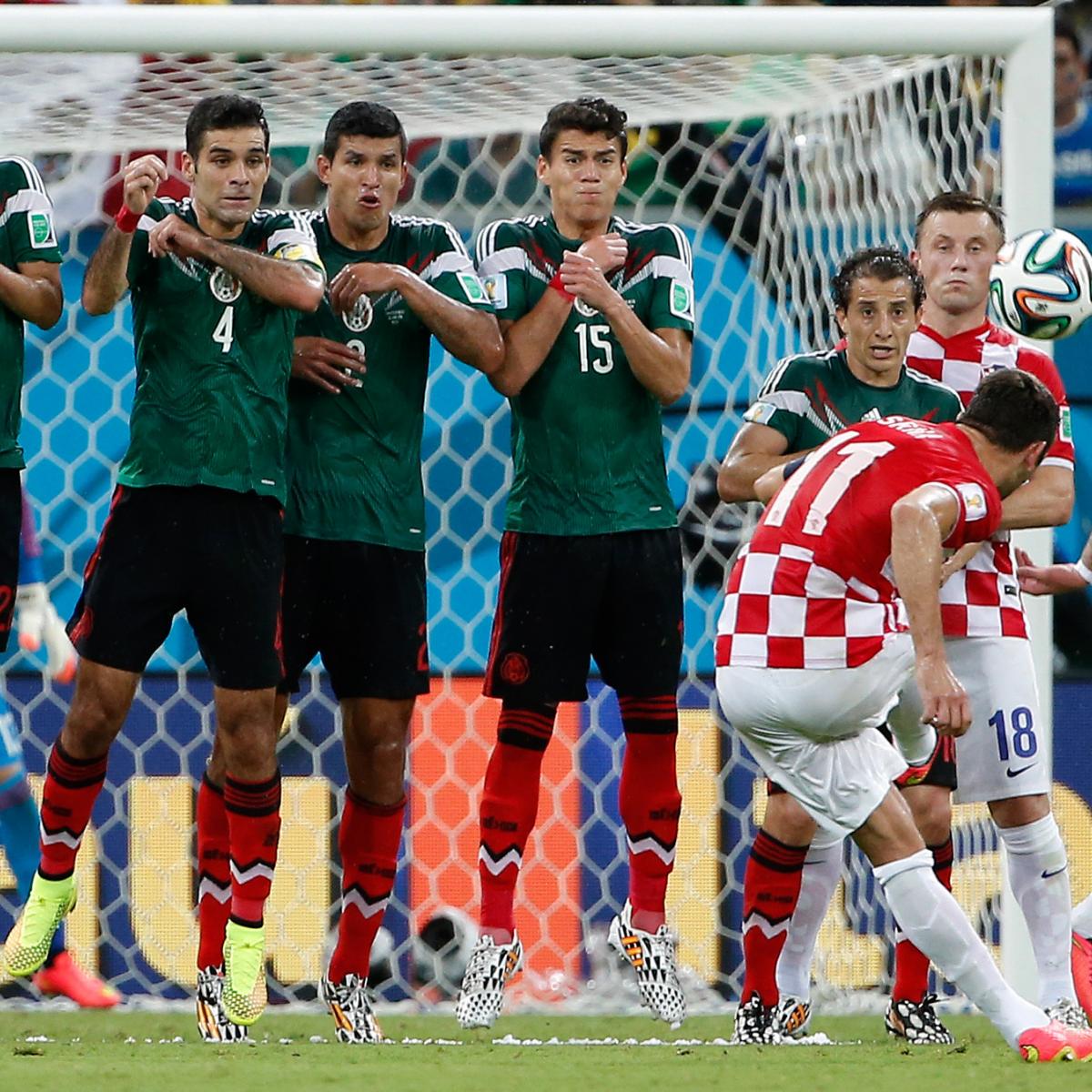
Tuchel has a history of favoring players who are "clutch." In his Chelsea days, he leaned on players who could execute under pressure, even if they weren't the most aesthetically pleasing. Palmer’s nonchalance is his greatest weapon. Unlike Foden, who can be crowded out of games, Palmer possesses a strange, languid ability to find time where none exists. He is also the best set-piece specialist in the squad. In the slim margins of international football, where a single corner or free-kick often decides a quarter-final, Palmer’s dead-ball delivery might be the factor that pushes him ahead of his more established rivals.
The Defensive Balance No One Is Discussing
Every conversation about England's attack eventually hits a wall: the double pivot. You cannot play a dedicated number ten if your two holding midfielders cannot cover the ground behind them. Declan Rice is a locked-in starter, but his partner remains a massive question mark. If Tuchel plays Kobbie Mainoo or Adam Wharton, he has a ball-playing base that allows a number ten to stay high and focus on the final third. If he is forced to play a more defensive, limited partner next to Rice, the number ten will inevitably be dragged back into their own half to help build the play.
This is where the "heavyweight" nature of the English squad becomes a hindrance. To play a true number ten, you need two disciplined "water carriers" behind them. England currently has an abundance of architects and a shortage of bricklayers. Tuchel’s first major move might not be picking a playmaker, but rather identifying the two most boring players in the country to sit behind them. If he cannot find that balance, the number ten—whoever it is—will spend the entire game frustrated and isolated.
The Tactical Blueprint
We should expect Tuchel to experiment with a three-at-the-back system. It is his comfort zone. In this setup, the "number ten" role effectively disappears, replaced by two attacking midfielders who operate behind a lone striker (presumably Harry Kane).
- Option A: Bellingham and Foden as dual creators. This offers work rate and technical brilliance but lacks the width needed to stretch modern defenses.
- Option B: Palmer and Saka as inverted wingers moving inside. This is more traditional and provides better balance, but it leaves Bellingham on the bench or forced into a deep role he might not enjoy.
- Option C: The ruthless cull. Tuchel picks one creative hub and surrounds them with pure runners.
The last option is the one England fans fear most, but it is the one that has historically won trophies. France won the World Cup with Antoine Griezmann as a disciplined ten and Blaise Matuidi—a defensive midfielder—playing on the wing for balance. Argentina won with a midfield designed entirely to service Lionel Messi. England’s problem is that they have four players who think they are the "Messi" of the team.
Harry Kane’s Waning Mobility
The elephant in the room is the captain. Harry Kane’s tendency to drop into the number ten space is a nightmare for whoever is actually assigned to play there. When Kane retreats thirty yards to ping a diagonal ball, he occupies the exact space where Bellingham or Palmer want to operate. At the same time, he leaves the penalty box empty.
Tuchel knows Kane better than anyone after their time together in Munich. He knows that Kane needs runners beyond him to be effective. If the number ten is a "static" playmaker like Foden, the attack becomes stagnant. If the number ten is an "explosive" runner like Bellingham, they can swap positions with Kane, creating a rotational chaos that is hard to mark. The selection of the number ten isn't just about who is the better player; it is about who can best compensate for the fact that England’s greatest-ever goalscorer is no longer a traditional number nine.
The Verdict of the Cold Professional
Thomas Tuchel was not hired to be a "pathway" coach or a culture builder. He was hired to win the 2026 World Cup. He has eighteen months to solve a puzzle that has defeated every England manager since 1966. His reputation is built on making the hard decisions that others shy away from.
The most likely outcome? A move away from the "all-star" philosophy. Tuchel will identify the player who most closely follows his tactical instructions, not the one who sells the most jerseys. If that means benching the La Liga Player of the Year or the Premier League Player of the Season, he will do it without blinking. The era of trying to fit every star into the lineup is over. The era of the "system" has arrived.
Watch the defensive transitions in the first few games of the Tuchel era. If the number ten isn't sprinting back to cover their zone, they won't be in the starting lineup for the next game. It is that simple. The battle for England's creative heart will not be won with a back-heel or a sixty-yard pass; it will be won by the player who proves they can exist within the rigid, demanding architecture of a Thomas Tuchel team.
Would you like me to analyze how Tuchel's specific tactical shifts at Bayern Munich might provide a template for his use of Harry Kane and a number ten?