Iran has formally rejected the Trump administration’s 15-point ultimatum, labeling the document an "extortionist’s manifesto" that makes diplomatic resolution impossible. The response, issued through intermediaries in Muscat and later confirmed by state-aligned media in Tehran, signals a dangerous hardening of positions. While the White House characterizes its list of demands as a path toward a "Grand Bargain," the Iranian leadership views it as a scripted prelude to regime collapse or kinetic intervention. This is not a negotiation. It is a collision course between a revitalized "Maximum Pressure" campaign and a revolutionary state that has spent the last decade diversifying its survival strategies.
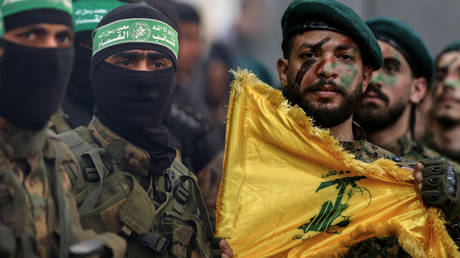
The standoff centers on a document that far exceeds the scope of the 2015 nuclear deal. The 15 points demand not only the permanent cessation of all uranium enrichment but also the total dismantling of Iran’s ballistic missile program, the withdrawal of all IRGC-affiliated forces from Syria and Iraq, and an end to support for Hezbollah, Hamas, and the Houthis. For Washington, these are the prerequisites for Iran to function as a "normal nation." For Tehran, these points represent the total surrender of its national sovereignty and regional defense architecture.
The Strategy of Impossible Demands
Experienced diplomats recognize the 15-point list for what it is. It is a strategic wall. By setting the bar at a level they know Tehran cannot reach without a total internal collapse, the administration creates a justification for indefinite economic strangulation. The logic is simple. If Iran refuses, the sanctions remain and intensify. If Iran attempts to comply, the internal friction between reformers and hardliners likely tears the country apart from the inside.
Tehran’s rejection was not just a "no." It was an indictment of the current American foreign policy framework. Foreign Ministry officials argued that the ultimatum ignores the reality of the Middle East in 2026. Since the first Trump term, Iran has deepened its military and economic ties with Beijing and Moscow. The "Look to the East" policy is no longer a theoretical backup plan. It is a functioning lifeline. When the White House demands that Iran cease all trade that bypasses U.S. sanctions, it is demanding that China and Russia also surrender their strategic interests in the Persian Gulf. They won't.
The Missile Gap and Regional Deterrence
The most contentious point remains the demand to scrap the ballistic missile program. To the IRGC, these missiles are the only thing preventing a repeat of the Iran-Iraq war or a direct Western invasion. They have watched the destruction of conventional militaries in the region that lacked a credible deterrent.
Precision-guided munitions are the crown jewels of the Iranian defense establishment. They are the leverage that keeps regional rivals at bay. By demanding their removal, the U.S. is asking Iran to stand naked in a neighborhood where it has many enemies. The Iranian response explicitly stated that "national defense is not a matter for negotiation," a phrase that has become a mantra for the Supreme Leader’s inner circle.
Economic Resilience vs Global Isolation
The White House maintains that the Iranian economy is on the brink of a "total systemic failure." They point to the skyrocketing inflation and the devalued rial as proof that the 15 points will eventually be swallowed out of necessity. However, this assessment overlooks the shadow economy.
Iran has mastered the art of "ghost fleets" and illicit oil transfers. Through a complex network of front companies and ship-to-ship transfers in international waters, Tehran continues to move enough crude to keep the lights on. It is a gritty, expensive way to run a country, but it works. The administration’s gamble is that they can close these loopholes faster than Iran can open new ones. History suggests otherwise. Every new sanction creates a new middleman, a new route, and a higher premium for those willing to break the rules.
The Role of the Arab Neighbors
A massive factor often ignored in the headlines is the shifting stance of the Gulf monarchies. Unlike the first Maximum Pressure era, Riyadh and Abu Dhabi are no longer cheerleading for a total war. They have engaged in their own de-escalation talks with Tehran. They realize that if the U.S. pushes Iran into a corner, the first targets of a desperate IRGC will be the desalination plants and oil refineries of the Arabian Peninsula.
The 15-point ultimatum puts these neighbors in an awkward position. They want Iran’s regional meddling to stop, but they don't want a regional conflagration that incinerates their "Vision 2030" infrastructure projects. They are looking for a middle ground that the U.S. document does not provide.
The Nuclear Threshold Paradox
By demanding a total end to enrichment, the U.S. may be inadvertently pushing Iran toward the very outcome it seeks to prevent. If the diplomatic path is officially declared dead by the 15-point ultimatum, the "breakout time" becomes a moot point. Hardliners in Tehran are already arguing that if the country is going to be treated like a nuclear-armed rogue state regardless of its actions, it might as well have the weapon to show for it.
The intelligence community is watching the Fordow and Natanz facilities with increasing anxiety. Enrichment at 60% purity is a stone’s throw from weapons-grade. The 15 points do not offer a gradual "step-for-step" reduction. It is an all-or-nothing proposition. In the world of high-stakes geopolitics, all-or-nothing usually results in nothing.
Misreading the Iranian Street
There is a recurring belief in Washington that economic pain will lead to a popular uprising that overthrows the clerical establishment. While the Iranian public is undoubtedly exhausted and angry at the government’s mismanagement, there is little evidence that they want a U.S.-backed transition.
Nationalism is a powerful drug. When an external power issues a list of 15 commands that read like a surrender document, it often has the unintended effect of rallying the population around the flag, however reluctantly. The "Maximum Pressure" campaign of the past did not lead to a collapse; it led to a more radical, more entrenched leadership in Tehran. The current ultimatum appears to be repeating that cycle with even higher stakes.
The Muscat Channel is Fading
For years, the Sultanate of Oman has acted as the "quiet room" where the U.S. and Iran could exchange messages without the theater of public grandstanding. Those who have been privy to recent exchanges suggest the room has gone cold. The 15 points were not delivered as a basis for discussion; they were delivered as an edict.
When one side stops listening and the other stops talking, the only remaining language is force. We are seeing the deployment of more carrier strike groups to the region and the simultaneous "red-lining" of Iranian proxy activities. The margin for error has vanished. A single miscalculation by a drone operator in the Red Sea or a nervous captain in the Strait of Hormuz could now trigger the very war that both sides claim they want to avoid.
The U.S. believes it has the ultimate leverage. Tehran believes it has the ultimate endurance. This is the brutal truth of the current crisis. It is a stalemate disguised as an ultimatum.
If the goal was truly to change Iranian behavior, the document would have included off-ramps and incremental incentives. Instead, it is a binary choice: total capitulation or total confrontation. Tehran has made its choice clear. Now the world waits to see if Washington was prepared for a "no."
The clock is not just ticking; it is accelerating toward a midnight that nobody is truly ready for.