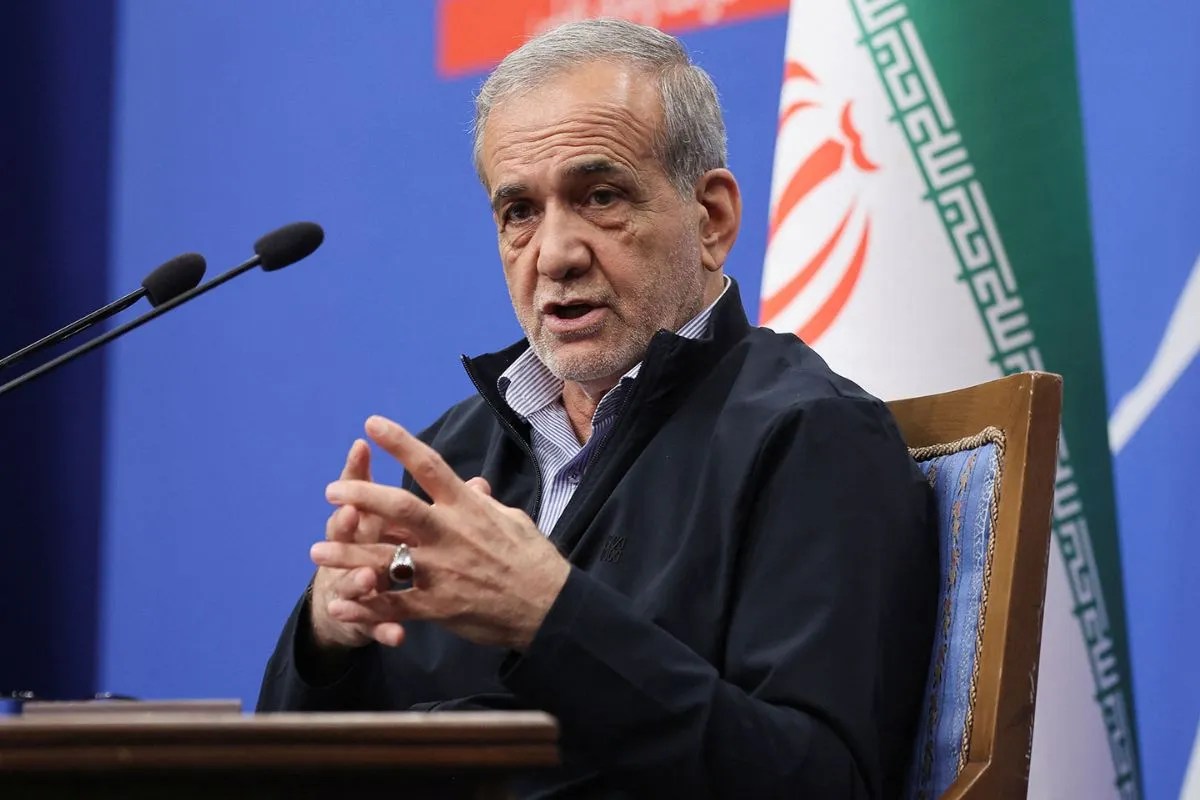
Fear-mongering sells. It fills the gaps between ad breaks and props up stagnant news cycles. The latest headline cycle regarding Iran’s threats to strike West Asia's electrical plants—specifically those allegedly powering U.S. bases—is a masterclass in superficial analysis. The media wants you to believe we are one flipped switch away from a regional dark age. They are wrong.
Threatening a power plant is the geopolitical equivalent of a bar fighter shouting "hold me back." If you actually intended to win the fight, you’d have swung already. In the world of high-stakes electronic and kinetic warfare, telegraphing a strike on civilian-integrated infrastructure is a sign of operational weakness, not tactical prowess.
The Grid is Not a Single Point of Failure
The "lazy consensus" suggests that hitting a thermal power plant in a place like the UAE or Jordan would cripple U.S. military capabilities. This assumes the U.S. military relies on the local civilian grid for mission-critical operations.
It doesn't.
I have spent enough time around military logistics to tell you that "The Grid" is a convenience for the barracks, not a requirement for the batteries. Every major U.S. installation in the Middle East—from Al Udeid to Camp Arifjan—operates on a redundant, islanded microgrid system. They utilize massive diesel-generator farms and, increasingly, localized solar-plus-storage arrays that can sustain high-draw operations indefinitely without a single watt from the host nation’s public utility.
When Iran threatens a regional power plant, they aren't threatening the U.S. military’s ability to launch a drone or coordinate a strike. They are threatening the air conditioning of local civilians. In the calculus of modern warfare, that is a PR disaster for the aggressor, not a strategic victory.
The Myth of the Fragile Middle Eastern Utility
Journalists love to paint the Middle East as a fragile web of sand and wire. In reality, the Gulf states possess some of the most modern, modular, and resilient power architectures on the planet. Unlike the aging, patchwork mess of the American Northeast or the UK’s centralized vulnerabilities, these systems were built with rapid expansion and "black start" capabilities in mind.
A "black start" is the ability to restart a power station without relying on an external transmission network. Most modern plants in the region are designed with internal combustion turbines or dedicated hydro-links that allow them to reboot within hours, not days.
If Iran hits a transformer station, they cause a localized blackout. They do not cause a systemic collapse. To actually "darken" a nation, you need to hit the high-voltage transmission lines (the pylons) in a coordinated, simultaneous wave across thousands of miles. This requires a level of precision and volume that Iran’s current missile inventory—while impressive in sheer numbers—cannot sustain without leaving their own borders wide open to a counter-volley.
Why "Proportionality" is a Trap for Amateurs
We often hear the term "proportional response." If Iran hits a power plant, the assumption is that the U.S. or Israel will hit an Iranian power plant.
This is amateur-hour thinking.
If a state actor targets civilian infrastructure, they have exited the realm of conventional deterrence and entered the realm of total war. The response to a grid strike isn't a "grid for a grid." The response is the immediate neutralization of the command-and-control nodes that issued the order.
By threatening electrical plants, Iran is betting that the West is too "civilized" to escalate beyond infrastructure. They are gambling on a stalemate. But history shows that infrastructure wars never stay focused on infrastructure. They migrate to the leadership.
The Real Cost of a Grid Strike
Let’s look at the numbers. A standard 1GW gas-fired power plant costs roughly $1 billion to build. A single Iranian Khorramshahr-4 missile costs a fraction of that. On paper, the ROI looks great for the attacker.
However, the "collateral cost" is where the math fails:
- Diplomatic Suicide: Striking a plant in a third-party country (like Kuwait or Saudi Arabia) to "get at" the U.S. turns the entire Arab world against Tehran instantly.
- Economic Backlash: The global insurance markets would de-flag any vessel entering the Persian Gulf. Iran’s own oil exports—the lifeblood of their resistance economy—would vanish overnight.
- Cyber Reciprocity: If you prove you are willing to use kinetic force against a grid, you invite a cyber-kinetic response. Israel’s cyber capabilities are not just about stealing data; they are about causing physical hardware to melt down.
Stop Asking if They Can and Start Asking Why They Won’t
The most common question I see is: "Does Iran have the range to hit these plants?"
Yes. Of course they do. Range is a solved problem. The real question is: "Why has Iran spent forty years threatening to do things they never actually do?"
The answer is Strategic Ambiguity.
The threat is more valuable than the action. Once you fire the missile, you lose your leverage. You have spent your "fear currency." As long as the threat exists, the U.S. has to spend billions on Patriot batteries and THAAD deployments. The moment Iran actually hits a power plant, the "fear" is replaced by a "target list."
The Unconventional Truth: The Grid is a Distraction
If you want to worry about something, don't worry about a missile hitting a power plant. Worry about the desalination plants.
In the Middle East, electricity is a luxury; water is a hard limit. Most power plants in the Gulf are "cogeneration" plants—they produce electricity and desalinate seawater simultaneously. If you take out the power, you stop the water.
The U.S. military can live without host-nation power. They cannot easily import enough water for 50,000 troops if the local taps run dry. This is the "nuance" the mainstream media misses. They focus on the "lights going out" because it makes for a better visual, but the "water running out" is the actual existential threat.
Even then, the U.S. Navy’s Fifth Fleet has enough onboard desalination capacity to act as a floating utility for its own personnel. The only people who suffer in Iran's threatened scenario are the very people Iran claims to be "liberating" from Western influence.
A Scenerio for the Skeptics
Imagine a scenario where a swarm of "one-way" attack drones successfully penetrates the air defenses of a major UAE power hub. The lights go out in Dubai. The elevators stop. The world screams.
Within sixty seconds, the U.S. military’s autonomous power systems engage. The radar stays up. The jets are fueled. The command center doesn't even flicker.
Within sixty minutes, the U.S. and its allies have a "moral mandate" to eliminate every launch site in Western Iran.
Who won that exchange? Not Tehran.
The Actionable Reality
Stop tracking every breathless tweet about "imminent strikes" on power stations. These are rhetorical devices used to satisfy internal hardliners and rattle international oil markets.
If you are an investor or a policy observer, look at the distribution of mobile power assets in the region. That is the true barometer of tension. When you see the U.S. moving massive quantities of modular microgrid hardware into "over-the-horizon" positions, then—and only then—should you believe they expect the civilian grid to fail.
Until then, it’s just noise.
The "West Asia electrical plants" are not the Achilles' heel of the American military. They are the hostages Iran holds to keep the West from being too aggressive. But a hostage is only useful as long as they are alive. Killing the grid ends the negotiation and starts the execution.
Tehran knows this. The Hindu’s editorial board seemingly does not.
Ignore the headlines. Watch the generators.
If the lights go out, the U.S. military will be the only ones left in the room who can still see in the dark.