The resumption of the 1,200 MW Punatsangchhu-I (P-I) hydroelectric project in Bhutan marks a pivot from a decade of geological failure to a high-stakes engineering salvage operation. While the restart is framed as a diplomatic milestone between New Delhi and Thimphu, the technical reality is dictated by the subsidence kinetics of the project’s right bank. The seven-year hiatus was not a result of fiscal insolvency but a fundamental breakdown in slope stability that rendered the original dam design untenable. To understand the P-I recovery is to understand the intersection of Himalayan orogeny, bilateral debt-to-equity ratios, and the transition from traditional gravity dams to barrages in volatile seismic zones.
The Triad of Failure Variables
The suspension of P-I in 2017 was precipitated by three distinct but interlocking variables that paralyzed the project’s development. In related updates, we also covered: The Inflation Scapegoat Why War in Iran is Not the Real Reason Your Grocery Bill is Exploding.
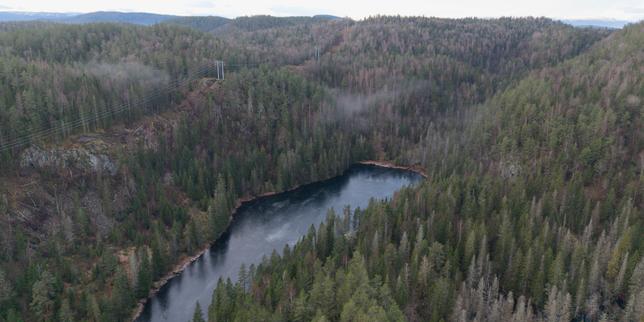
- Geological Instability (The Right Bank Subsidence): The primary physical bottleneck was the discovery of a massive "shear zone" on the right bank. In dam construction, a shear zone acts as a lubricated plane of weakness. Continuous sliding of the mountain slope made it impossible to anchor the dam wall safely. Standard stabilization techniques—rock bolting and shotcreting—proved insufficient against the volume of moving earth.
- The Sunk Cost Trap: By the time the 2017 halt occurred, billions of Ngultrum (and Rupees) had been spent. Abandoning the site would have resulted in a total loss of the existing infrastructure, including the power house and water conductor systems. The decision to resume is a calculated attempt to extract value from these fixed assets despite the escalating cost of the dam itself.
- Technological Misalignment: The original plan called for a large concrete gravity dam. Gravity dams rely on their own weight and a solid foundation to resist the force of the reservoir. The geological profile of the Punatsangchhu basin, characterized by soft rock and high seismic activity, creates a misalignment between the structure’s rigidity and the environment’s fluidity.
The Strategic Shift From Dam to Barrage
The most significant analytical shift in the project's resumption is the abandonment of the high-dam concept in favor of a barrage. This is not a cosmetic change; it is a fundamental shift in hydraulic engineering.
- Load Distribution: A barrage is lower and utilizes a series of gates to control water flow and levels. Unlike a dam, which stores vast quantities of potential energy behind a massive wall, a barrage manages the river's kinetic energy more dynamically. This reduces the vertical pressure on the compromised riverbed.
- Sediment Management: The Himalayas are young mountains with high erosion rates. High dams in this region face rapid siltation, which reduces their lifespan. A barrage allows for more efficient flushing of sediment, maintaining the operational efficiency of the turbines without the risk of reservoir clogging.
- Seismic Resilience: In the event of an earthquake, a lower-profile barrage presents a smaller "moment arm" for tectonic forces to act upon. This reduces the probability of a catastrophic breach that would devastate downstream communities.
The Economic Equation of Bhutanese Hydro-Export
Bhutan’s macro-economic stability is tethered to its hydropower export capacity to India. The P-I project represents a critical component of the "10,000 MW by 2020" initiative—a goal that was missed but remains the north star for the Royal Government of Bhutan. The Wall Street Journal has provided coverage on this important issue in great detail.
The Debt-Service Ratio
Bhutan’s external debt is heavily weighted toward hydropower loans from India. These loans are structured as "self-liquidating," meaning the revenue generated from selling electricity back to India pays off the debt. However, the seven-year delay in P-I has created a liquidity crunch. The interest during construction (IDC) has ballooned, shifting the project from a high-margin asset to a low-margin recovery play.
The Tariff Mechanism
The price per unit of electricity (the tariff) is negotiated between the two governments. For P-I to be viable, the tariff must be high enough to cover the increased capital expenditure (CAPEX) caused by the seven-year delay and the cost of the new barrage construction. However, India’s internal shift toward solar and wind power creates a "price ceiling" for Himalayan hydro. If the P-I tariff exceeds the cost of Indian solar plus storage, the economic justification for the project weakens.
Operational Risks in the Reconstruction Phase
Resuming work on a stalled mega-project introduces risks that do not exist in greenfield developments.
Structural Fatigue: Machinery and partially completed tunnels have sat idle for seven years in a high-humidity, high-silt environment. The first phase of the restart requires a "forensic engineering" audit of every existing component. Metal fatigue in reinforcement bars and the degradation of concrete linings are primary concerns.
Contractual Complexity: The original contractors have faced years of "idling charges." Renegotiating these contracts in an inflationary environment requires a precise escalation formula. Failure to align the incentives of the engineering firms with the new technical requirements of the barrage will lead to further delays.
Hydraulic Head Optimization: The move from a dam to a barrage typically results in a lower "head" (the vertical distance the water falls). Since power generation is a function of $P = \eta \cdot \rho \cdot g \cdot h \cdot \dot{V}$ (where $h$ is the head), any reduction in height must be compensated for by increasing the efficiency ($\eta$) of the turbines or the volume of flow ($\dot{V}$) diverted through the intake tunnels.
Geopolitical Realism and Energy Security
The P-I project is a physical manifestation of the India-Bhutan "Special Relationship." For India, the project serves as a buffer against regional competitors and secures a steady supply of base-load power to balance its volatile renewable grid. For Bhutan, it is the primary engine of GDP growth.
The decision to proceed with a barrage at the "same site" rather than moving the project upstream or downstream is a compromise driven by the existing $80%$ completion of the downstream powerhouse. Moving the site would have required a total write-off of the powerhouse, a financial blow that neither government was willing to sustain.
The success of this recovery depends on three specific maneuvers:
- Immediate implementation of real-time slope monitoring: Using interferometric synthetic aperture radar (InSAR) to detect millimeter-scale movements in the right bank before they escalate into landslides.
- The decoupling of IDC from the tariff base: To keep the electricity price competitive, a portion of the interest accumulated during the seven-year halt may need to be restructured or converted into a grant by the Indian government.
- Cross-basin optimization: Coordinating the flow of P-I with the already operational Punatsangchhu-II (P-II) downstream to ensure that water discharge from the P-I barrage does not overwhelm the intake capacity of the P-II reservoir.
The restart of Punatsangchhu-I is less a celebration of progress and more an exercise in industrial damage control. The transition to a barrage is a belated admission that the geological reality of the Himalayas cannot be overcome by concrete alone. The project now serves as a global case study for "sunk cost" management in large-scale infrastructure.