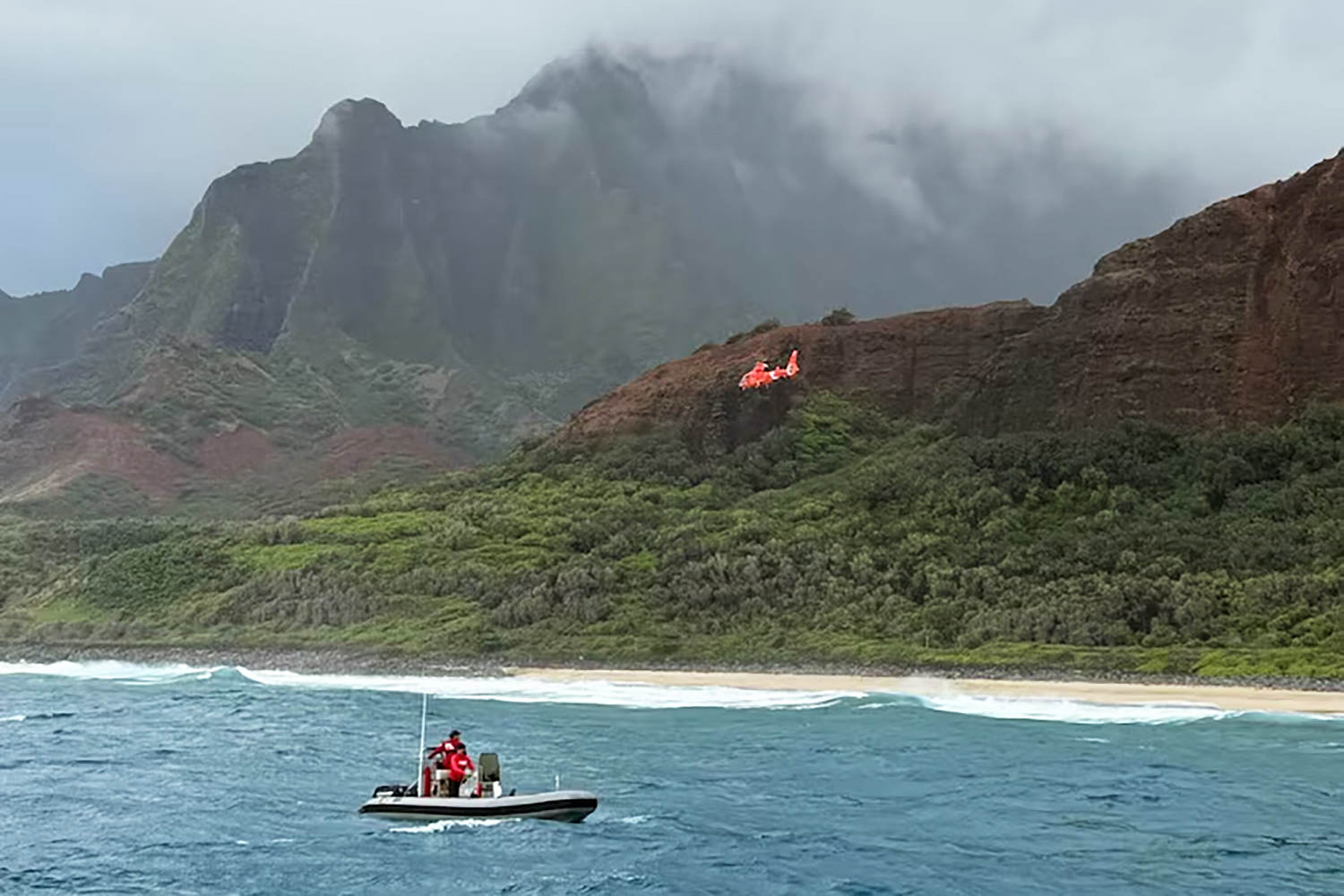
The crash of a Robinson R44 helicopter at Kalalau Beach on Kauai’s Na Pali Coast, resulting in three fatalities, represents a critical intersection of high-frequency tourism demand and extreme micro-climatic volatility. While immediate reporting focuses on the tragic loss of life, a rigorous analysis of the event requires deconstructing the operational environment, the mechanical constraints of the airframe, and the specific geographic bottlenecks that define Kauai’s northern coastline.
The Triad of Operational Risk on the Na Pali Coast
Aviation safety in the Hawaiian islands is not a monolithic concept. It is governed by three distinct risk pillars that, when synchronized, create a narrow margin for error.
- Orographic Turbulence and Micro-Climates: The Na Pali Coast is characterized by fluted ridges rising 4,000 feet from sea level. As northeasterly trade winds encounter these vertical faces, they are forced upward (orographic lift) and subsequently tumble over the leeward side as "rotors." These localized wind events can exceed the performance envelopes of light civilian aircraft, causing sudden altitude loss or spatial disorientation.
- The Robinson R44 Power-to-Weight Ratio: The R44 is a piston-engine helicopter. Unlike turbine-powered aircraft used by larger tour operators, piston engines suffer more pronounced performance degradation in high-humidity, high-temperature environments. This reduces the "hover out of ground effect" (HOGE) ceiling, limiting the pilot's ability to recover from a sudden down-draft or power settling event near the cliffs.
- The Single-Engine Vulnerability: In the event of a mechanical failure over the Na Pali Coast, there are virtually zero "hard" landing spots. Kalalau Beach is one of the few sandy egress points, but it is frequently shrouded in mist or occupied by hikers, complicating emergency autorotation maneuvers.
Mechanical Analysis of the Robinson R44 System
The Robinson R44 utilizes a two-bladed, semi-rigid "teetering" rotor system. While efficient for cost-effective tourism, this design is susceptible to a condition known as "mast bumping" during low-G maneuvers.
When a pilot encounters severe turbulence—common at Kalalau Beach—and reacts with abrupt forward cyclic, the rotor disk can unload. In a low-G state, the tail rotor's thrust can cause the fuselage to roll rapidly. If the pilot attempts to correct this roll before restoring positive G-load, the rotor hub can strike the mast, leading to catastrophic in-flight breakup. This specific mechanical limitation necessitates highly specialized training that transcends standard Part 135 commercial certification.
The Thermal Gradient Constraint
Density altitude is often misunderstood as a purely high-altitude phenomenon. In Hawaii, the combination of 80°F temperatures and high relative humidity increases the "effective" altitude the aircraft feels. This reduces lift and engine horsepower simultaneously. For a fully loaded R44 carrying a pilot and two passengers, the margin between "power required" and "power available" narrows significantly when transitioning from the cooler, stable air over the ocean to the turbulent, rising air near the Kalalau valley walls.
Geographic Bottlenecks and Search and Rescue Limitations
The crash site at Kalalau Beach presents an asymmetric challenge for recovery and investigation. The location is inaccessible by road, meaning all forensic data—including the recovery of the airframe—must be conducted via heavy-lift helicopter (e.g., a Sikorsky S-61 or CH-47).
The National Transportation Safety Board (NTSB) investigation will likely focus on the "man-machine-environment" triad:
- Maintenance Logs: Scrutinizing the 100-hour and annual inspections required for commercial sightseeing aircraft.
- Pilot Experience: Assessing the total hours in type, specifically focusing on "mountain time" and local area knowledge.
- GPS Data: Reconstructing the flight path to determine if the aircraft was flying a "nap-of-the-earth" profile that left insufficient room for emergency maneuvers.
The Economic Pressure of Tour Flight Cadence
The business model for light helicopter tours relies on high utilization rates. Each airframe must fly a specific number of "turns" per day to remain profitable after accounting for insurance premiums, which have surged in the Hawaii market over the last decade. This creates a subtle but persistent pressure on go/no-go decision-making.
While the Federal Aviation Administration (FAA) regulates these flights under Part 135 (commuter and on-demand operations), there is a growing push for more stringent "Hawaii-specific" safety protocols. These include mandatory flight tracking systems that transmit data in real-time, bypassing the need to recover "black boxes" which are not typically required on small helicopters.
Tactical Safety Requirements for Aerial Tourism
To mitigate future occurrences, operators must move beyond compliance and toward predictive risk management.
- Implementation of Real-Time Weather Sensors: Currently, pilots rely on "pilot reports" (PIREPs) and visual cues. Installing automated weather stations (AWS) at key coastal points like Kalalau would provide hard data on wind shear before a pilot enters the valley.
- Standardization of "Safe Ceiling" Altitudes: Voluntarily increasing the minimum altitude for coastal tours would provide the necessary "potential energy" (altitude) required to execute a successful autorotation to the water or the beach in the event of engine failure.
- Engine Upgrades: Transitioning from the R44 (piston) to the R66 (turbine) would provide a significant power margin, though at a higher price point for the consumer.
The investigation into the Kalalau crash will take 12 to 24 months to reach a final determination of probable cause. However, the immediate takeaway for the industry is the necessity of treating the Na Pali Coast not as a scenic backdrop, but as a high-energy, high-risk flight environment that demands specialized airframes and rigorous, terrain-specific pilot proficiency.
Operators should immediately audit their "low-G" avoidance training protocols and consider reducing passenger payloads during peak afternoon thermal windows to restore the performance margins lost to density altitude.