National happiness is not a measure of collective euphoria but a metric of systemic resilience and the efficiency of the social contract. The World Happiness Report (WHR) consistently identifies Finland as the global leader while placing India at 116th—notably behind Pakistan. This divergence reveals a fundamental breakdown in the correlation between raw economic growth and life evaluation. To understand this gap, one must move beyond the "happiness" nomenclature and analyze the three structural pillars that dictate these rankings: Institutional Trust, Social Safety Net Density, and the Autonomy-Security Trade-off.
The Mechanics of Subjective Well-Being
The WHR utilizes the Cantril Ladder, asking respondents to rate their current lives on a scale of 0 to 10. While critics argue this is culturally biased, the data consistently tracks six specific variables: GDP per capita, social support, healthy life expectancy, freedom to make life choices, generosity, and perceptions of corruption. If you liked this article, you might want to look at: this related article.
The primary friction in the India-Pakistan comparison lies in the weighting of Social Support and Perceptions of Corruption. India’s rapid urbanization and the erosion of traditional rural support structures have created a "transition lag." In this phase, the old systems of community-based welfare have dissolved, but the state-sponsored institutional replacements are not yet mature. Pakistan, despite lower macroeconomic stability, often reports higher levels of perceived social cohesion and lower expectations of the state, which paradoxically buffers the "unhappiness" score during periods of volatility.
The Finnish Model: High-Trust Equilibrium
Finland’s dominance is the result of a high-trust equilibrium. This is an operational state where the cost of transaction—both economic and social—is minimized because the default assumption is honesty. For another look on this development, refer to the latest update from The Guardian.
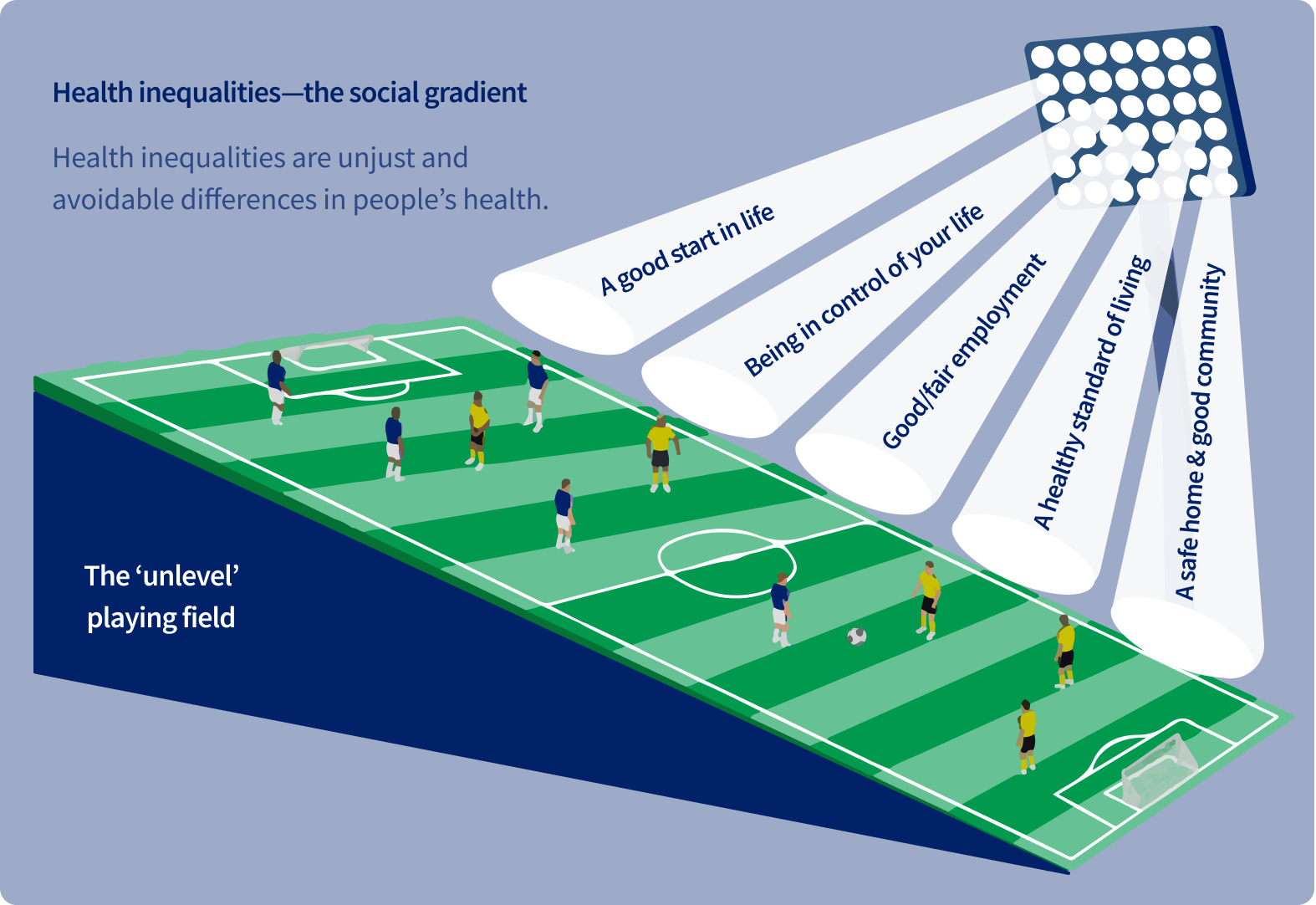
- The Redistribution Efficiency Ratio: Finland does not simply tax at high rates; it converts those taxes into tangible security (healthcare, education, transit) with minimal leakage. This reduces "anticipatory anxiety," a primary driver of low happiness scores in developing economies.
- Horizontal Equity: The gap between the highest and lowest earners is narrow. In a sociological context, this minimizes "relative deprivation," where individuals feel unsuccessful not because they lack resources, but because they perceive a massive distance between themselves and the elite.
- Predictability as a Service: The Finnish state functions as a risk-mitigation engine. When the "downside" of life (job loss, illness) is capped by the state, the population exhibits a higher baseline of life satisfaction.
Analyzing the India-Pakistan Paradox
The 116th ranking for India versus Pakistan’s higher placement suggests a breakdown in the relationship between prosperity and perception. Several structural factors explain this delta:
The Urbanization Trap
India’s growth is driven by massive internal migration. While this increases GDP per capita, it creates a "social support deficit." Migrants in Tier-1 cities often lack the "kinship density" found in Pakistani social structures, which remain more agrarian and community-centric. In the Cantril Ladder, having "someone to count on in times of trouble" is a heavy multiplier. India’s transition to an atomized, individualistic economy has temporarily lowered this score.
Expectation Inflation
Economic momentum creates a moving target for satisfaction. As India’s middle class grows, the "aspiration gap" widens. When the reality of infrastructure, air quality, and bureaucratic friction fails to keep pace with income growth, the result is a net decrease in life evaluation. In contrast, lower-growth environments often maintain "expectation stability," where the gap between what one has and what one expects remains narrow.
Institutional Friction and Corruption
Perceptions of corruption act as a direct tax on mental well-being. In India, the high visibility of bureaucratic hurdles in daily life—from property registration to basic services—feeds a narrative of systemic unfairness. Even if Pakistan faces similar or worse objective corruption, the delta or the rate of change in how people perceive their agency within the system is what moves the ranking.
The Quantitative Limits of GDP
GDP is a measure of output, not utility. The 116th position for India highlights the Easterlin Paradox: the observation that at a certain point, further increases in wealth do not lead to proportional increases in happiness.
- The Marginal Utility of Wealth: In Finland, the marginal utility of an extra 1,000 USD is low because basic needs are met. In India, it is high, yet the systemic "brakes"—traffic, pollution, and lack of leisure time—negate the psychological gain of that income.
- Healthy Life Expectancy: This variable is a massive drag on India’s ranking. While medical technology has improved, the "quality of years" is impacted by environmental stressors. Finland’s high score in environmental health provides a persistent "well-being floor" that GDP cannot easily buy.
The Autonomy-Security Matrix
A critical component of the WHR is the "freedom to make life choices." This is often misunderstood as political freedom, but in a data-driven sense, it refers to Economic Mobility and Social Permission.
In many high-ranking nations, the "cost of failure" is low. An individual can change careers, start a business, or exit a marriage without facing total economic or social ruin. In lower-ranking nations, the "social cost of deviation" is high. This creates a psychological weight where individuals feel trapped by circumstances, even if their income is rising. India’s score suffers here due to the lingering "structural rigidity" of social expectations and the lack of a universal bankruptcy or unemployment cushion.
Recalibrating National Strategy
To move up the ladder, the strategy must shift from "growth at all costs" to "wellbeing-adjusted growth." The following interventions are the only viable path to closing the gap with high-trust nations:
- Decentralized Social Infrastructure: Moving beyond mega-cities to create "livability hubs" that preserve social support density while providing economic opportunity.
- Transparency as a Utility: Treating the reduction of corruption not as a moral crusade, but as a technical optimization to reduce the "cognitive load" on citizens.
- Environmental Baseline Protections: Recognizing that air and water quality are not "luxury goods" but foundational requirements for the "Healthy Life Expectancy" variable.
The 116th ranking is a leading indicator of social friction. If the internal mechanics of the social contract—trust, support, and agency—are not repaired, economic expansion will continue to produce a dissatisfied populace, ultimately leading to "growth stagnation" as the human capital erodes under the weight of systemic stress.
Prioritize the build-out of "trust-tech"—digital architectures that remove human intermediaries from essential services—to aggressively lower the corruption perception index before the next reporting cycle.