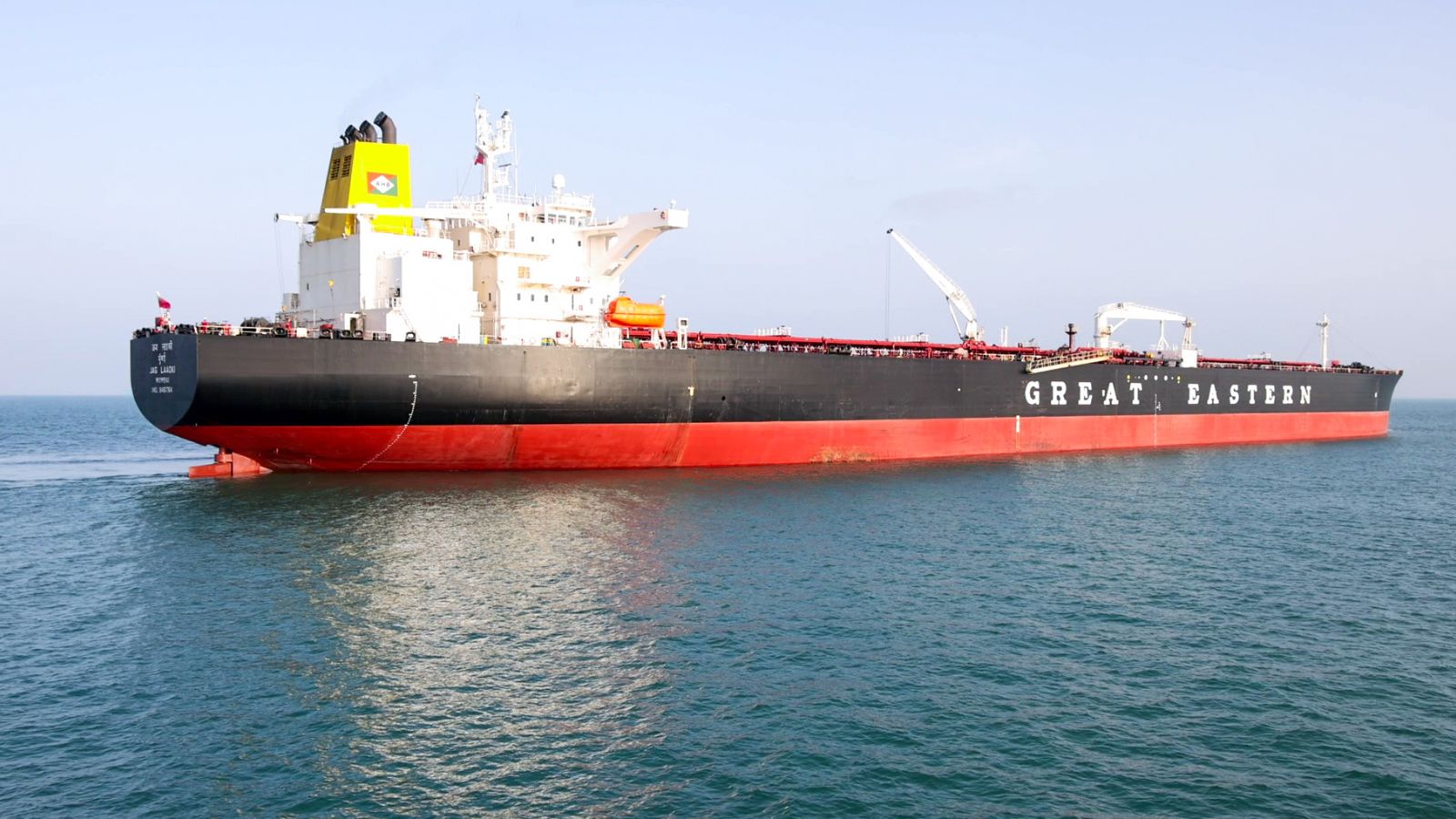
The issuance of a temporary license to Iran for the sale of "on-water" crude oil represents a tactical deployment of energy policy designed to achieve immediate downward pressure on global Brent and WTI benchmarks. This move is not a shift in long-term geopolitical alignment but a calculated intervention in the global supply-demand curve. By targeting specific inventories—oil already extracted and stored in tankers—the administration bypasses the lag time associated with upstream production increases, effectively injecting a massive, one-time supply shock into the market.
The Inventory Release Mechanism
The efficacy of this license rests on the distinction between production capacity and existing inventory. Traditional shifts in OPEC+ quotas or domestic drilling permits take months to manifest as physical barrels at the refinery gate. In contrast, the "oil at sea" represents a latent supply that is already geographically positioned to enter the trade cycle.
- Volume Density: Estimates suggest tens of millions of barrels are currently held in floating storage. Releasing this volume simultaneously functions as a synthetic increase in global spare capacity.
- Price Elasticity Response: Markets price in future scarcity. By removing the "sanction premium" from these specific barrels, the administration forces a recalibration of the risk-adjusted price of oil.
- Refinery Integration: Because this oil is already in transit or near-port, it can be integrated into the global refining system within a 15-to-30-day window, providing a much sharper cooling effect on gasoline and distillate prices than long-term policy shifts.
Three Pillars of the Temporary License Strategy
The administration’s decision functions through three distinct economic and political vectors. Each pillar must remain stable for the policy to achieve its intended deflationary outcome without compromising the broader sanctions architecture.
1. The Time-Bound Compliance Envelope
The "temporary" nature of the license is its most critical feature. It creates a "use it or lose it" incentive for Iranian entities and global buyers. This temporal constraint prevents the market from factoring in a permanent return of Iranian supply, which keeps long-term investment in domestic US production viable while solving a short-term political crisis. If the license were indefinite, it would collapse the price floor necessary for US shale operators to maintain their capital expenditure (CapEx) programs.
2. Supply-Side Psychology
Oil prices are driven as much by perception as by physical flow. By signaling a willingness to pragmatically adjust sanctions for the sake of domestic price stability, the administration reduces the "geopolitical hedging" that traders use to bid up futures contracts. The presence of these barrels acts as a cap on speculative rallies. The market now has to account for the "Trump Volatility Factor"—the possibility of sudden, targeted executive actions that can instantly increase supply.
3. The Clearing of the Ghost Fleet
Iran has long utilized a "ghost fleet" of tankers to bypass sanctions, often using ship-to-ship transfers and obscured transponders. This shadow infrastructure creates market inefficiency and environmental risk. By granting a formal license, the US forces these transactions into the light. This allows for:
- Standardized payment tracking (even if restricted).
- Reduction in the shipping "risk premium" that inflates the cost of freight.
- Direct oversight of which refineries (typically in East Asia) are absorbing the supply.
The Mathematical Reality of the Price Drop
The relationship between this supply release and the price at the pump is governed by the global refining margin and the Brent-WTI spread. To understand the impact, one must look at the marginal barrel.
The global economy consumes approximately 102 million barrels per day. A release of 20 to 40 million barrels over a short period represents a significant percentage of the daily global surplus. When the supply-demand balance shifts by even 1%, the price response is often non-linear. The historical coefficient suggests that for every 1 million barrels per day of unexpected supply added to the market, the price of Brent crude can see a downward pressure of $2 to $5 per barrel, depending on current inventory levels in OECD countries.
Strategic Constraints and Execution Risks
While the policy is a potent tool for price suppression, it is not without systemic friction. The strategy faces three primary bottlenecks that could limit its effectiveness.
The Refinement Mismatch
Not all oil is created equal. Iranian crude is generally "heavy" or "sour" (high sulfur content). Many modern refineries, particularly those optimized for "light, sweet" US shale, cannot process an unlimited amount of heavy Iranian crude without adjusting their chemical catalysts and processes. If the refineries capable of handling this specific grade are already at 95% utilization, the influx of Iranian oil will simply sit in land-based storage, failing to lower the price of finished gasoline.
The Sanctions Paradox
Granting a license to a sanctioned adversary creates a "moral hazard" in the geopolitical sphere. It signals to other producers (such as Russia or Venezuela) that US sanctions are flexible when domestic inflation becomes a political liability. This could weaken the long-term leverage of the US Treasury Department, as nations may begin to bet on future "temporary" waivers during election cycles or periods of economic volatility.
Banking and Logistics Friction
Even with a US license, many global banks are hesitant to facilitate transactions involving Iranian entities due to the risk of "over-compliance." The logistical chain—insurance, ship-owners, and port authorities—remains wary of future reversals in policy. If the financial plumbing for these trades is not clearly defined, the oil will remain at sea regardless of the legal status of the license.
The Capital Expenditure Fallout
A primary risk of this "quick fix" is the signal it sends to the US domestic energy sector. The US oil industry operates on a multi-year investment horizon. When the executive branch uses sanctioned foreign oil as a "relief valve" to lower prices, it creates an environment of price unpredictability.
- Drilling Stagnation: If operators fear the price will be artificially suppressed, they may delay Final Investment Decisions (FIDs) on new wells.
- Service Inflation: The cost of labor and equipment in the Permian Basin remains high. If the price of oil drops below the "break-even" point (roughly $55-$65 for many US plays) due to foreign supply injections, US production will naturally contract, leading to a tighter market and higher prices 18 months from now.
Structural Comparison: Strategic Petroleum Reserve (SPR) vs. Licensed Inventory
The use of a license for Iranian oil is a more efficient deflationary tool than a standard SPR release. When the US releases oil from the SPR, it is depleting a finite domestic emergency resource that must eventually be repurchased, often at higher prices.
By licensing Iranian "on-water" oil, the administration achieves the same supply increase without:
- Reducing US emergency reserves.
- Incurring the fiscal cost of repurchasing oil later.
- Using taxpayer-funded infrastructure for storage and transport.
It effectively treats Iranian inventory as a "shadow SPR" that the US can tap into via regulatory decree rather than physical withdrawal.
The Displacement Effect
A critical component often overlooked is the displacement of other grades. If East Asian refineries (the primary destination for Iranian crude) switch to this newly "legal" supply, they will reduce their demand for other regional grades, such as those from West Africa or the Middle East. This creates a "trickle-down" surplus in those markets, eventually forcing prices down globally as those producers compete for the remaining buyers in Europe and the Americas.
Strategic Forecast: The Implementation Playbook
The success of this maneuver will be measured by the speed of the Brent price retreat over the next 60 days. To maximize the impact of this policy, the following steps are required:
- Clarification of Financial Channels: The Treasury must issue "Comfort Letters" to specific international banks to ensure the capital can move without fear of retroactive penalties. Without these, the license is a dead letter.
- Targeted Refinery Coordination: The administration should coordinate with major refining hubs in India and South Korea to ensure they have the capacity to absorb the heavy Iranian sour grades immediately, displacing their demand for lighter, more expensive crudes.
- Clear Sunset Provisions: To prevent a domestic production crash, the administration must provide a hard date for the expiration of the license, signaling to US producers that the "floor" under the market will return once the on-water inventory is cleared.
The optimal play is to treat this as a surgical strike on the energy futures market. By flooding the zone with available, near-market barrels, the administration creates a "bear trap" for speculators. The move effectively de-risks the energy sector’s contribution to the Consumer Price Index (CPI) in the immediate term, provided the administration can successfully navigate the tension between short-term economic relief and long-term national security objectives. Success depends entirely on the speed of the "on-water" liquidation; any delay in the actual unloading of these tankers will result in a "price bounce" as the market realizes the supply is still locked behind logistical and financial barriers.
Monitor the Baltic Dirty Tanker Index and the Brent-Dubai spread over the next three weeks. A narrowing spread will indicate that the Iranian supply is successfully entering the market and displacing more expensive alternatives. If the spread remains wide, the license has failed to overcome the logistical friction of the sanctions regime. Regardless of the geopolitical optics, the economic reality is clear: the administration has chosen to trade long-term sanctions consistency for immediate, tangible relief at the pump. Move to increase positions in high-yield refining stocks that specialize in heavy-sour processing, as their margins will expand on the back of cheaper Iranian feedstock.