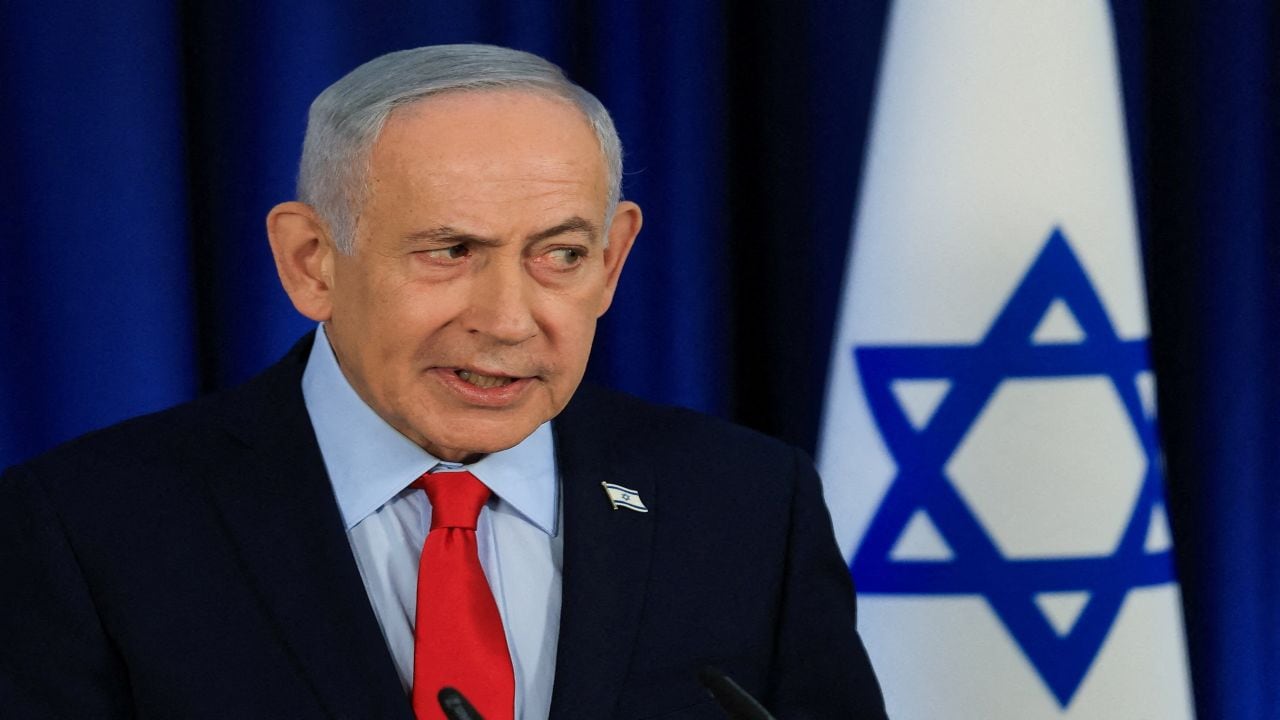
The request by Prime Minister Benjamin Netanyahu’s legal team to postpone his testimony in Case 1000, Case 2000, and Case 4000 is not merely a procedural motion; it is a calculation of resource allocation and constitutional friction. By citing the exigencies of a multi-front conflict, the defense seeks to redefine the "judicial clock" against the "operational clock" of the state. This tension exposes a structural conflict between the principle of a speedy trial and the functional continuity of the executive branch during a national security crisis.
The Tri-Front Constraint Model
The request for a 10-week delay rests on a three-pronged logistical argument that Netanyahu’s counsel suggests makes simultaneous trial participation and national leadership mathematically impossible. To analyze the validity of the delay, one must quantify the Prime Minister’s cognitive and temporal bandwidth through three specific constraints. For an alternative view, read: this related article.
- The Preparation Gap: Netanyahu’s testimony requires a comprehensive review of thousands of pages of evidence and prior depositions. In a standard high-stakes white-collar trial, a defendant of this stature would typically dedicate 20 to 40 hours per week to witness preparation.
- The Security Mandate: Unlike a private citizen, the Prime Minister cannot enter a courtroom or a preparation suite without a massive security infrastructure. The physical requirements of securing a Jerusalem District Court during active hostilities in Gaza and Lebanon divert specialized units (Shin Bet) from active operational duties.
- The Executive Decision Cycle: National security decisions, particularly regarding Iranian regional influence and hostage negotiations, operate on a 24/7 cycle. The defense argues that the "mental state" required for precise legal testimony is incompatible with the high-cortisol environment of a war cabinet.
Legal Precedent vs. Functional Necessity
The Israeli judicial system operates on the principle that "all are equal before the law," a doctrine that previously compelled former Prime Minister Ehud Olmert to resign to manage his legal defense. However, Netanyahu’s strategy utilizes a different legal lever: the inability of the prosecution to prove that a short-term delay causes "irreparable prejudice" to the case.
The prosecution’s counter-argument hinges on the Degradation of Evidence. As years pass, witness memories fade and the public’s interest in judicial closure is eroded. In Case 4000 (the Bezeq-Walla affair), which involves complex allegations of regulatory benefits in exchange for favorable media coverage, the specificity of testimony is paramount. A delay of several months, when added to the years the trial has already consumed, threatens the integrity of the cross-examination process. Related analysis on this trend has been shared by The New York Times.
The Mechanics of Case 4000 and the Quid Pro Quo Framework
To understand why the timing of this testimony is so sensitive, one must deconstruct the central pillar of the indictment: the regulatory-media feedback loop.
- The Regulatory Lever: The Ministry of Communications’ approval of the Bezeq-Yes merger.
- The Media Variable: Influence over the editorial direction of the Walla! news portal.
- The Nexus: The prosecution must prove that the Prime Minister’s actions were specifically motivated by the promise of editorial control, rather than standard policy objectives.
Netanyahu’s testimony is the final, most critical variable in this equation. By delaying his appearance, the defense maintains a "strategic ambiguity" that prevents the prosecution from locking in his narrative while the political and military environment remains fluid.
The Hostile Environment Variable
The current security situation introduces a "Force Majeure" element into the judicial proceedings. The defense team has noted that several key meetings required for trial preparation were canceled or truncated due to rocket fire or urgent security briefings. This creates a Procedural Bottleneck.
If the court denies the delay, it risks creating a grounds for appeal based on "ineffective assistance of counsel" or the "inability to mount a full and fair defense." If the court grants the delay, it signals that the executive’s operational needs supersede the judiciary’s schedule. This creates a precedent where any future leader involved in a security crisis can effectively freeze criminal proceedings.
Quantitative Analysis of Trial Duration
The Netanyahu trial is already one of the longest in Israeli history. The lifecycle of the case can be broken down into specific phases of inefficiency:
- Phase 1: Investigation and Indictment (2016–2019): characterized by high-volume document recovery and international depositions.
- Phase 2: Preliminary Motions (2020–2021): focused on the legality of the investigative methods and the "Sea of Information" arguments regarding disclosure.
- Phase 3: Prosecution Case (2021–2024): the presentation of state witnesses, including former close aides like Shlomo Filber and Nir Hefetz.
- Phase 4: The Defense Opening (2024–Present): the current stage, where the defendant must finally answer the cumulative weight of the prosecution’s evidence.
Each delay in Phase 4 has a multiplier effect on the total trial length. A 10-week delay in testimony likely results in a 4-to-6-month delay in the final verdict, as it pushes the subsequent phases of closing arguments and judicial deliberation into the next calendar year.
The Cost of Judicial Suspension
The fiscal and social costs of an indefinite trial are non-trivial. The Israeli public spends millions of shekels annually on the specialized prosecution task force and the court’s dedicated resources. More critically, the Political Risk Premium increases. As long as the trial remains in a state of suspension, the Prime Minister’s policy decisions—particularly those involving the judiciary or the appointment of legal officials—are viewed through the lens of a potential conflict of interest.
This creates a feedback loop:
- War necessitates a delay in trial.
- Trial delay extends the period of perceived conflict of interest.
- Perceived conflict of interest fuels domestic political polarization.
- Polarization complicates the national consensus required for the war effort.
The Probabilistic Outcome of the Motion
Based on historical rulings in the Jerusalem District Court, a binary outcome (full approval or full denial) is unlikely. The court typically favors a Mediated Compromise.
The most probable path is a "Split-Schedule" ruling. The court may grant a shorter adjournment—perhaps 4 to 6 weeks—while mandating that a portion of the testimony be heard in a secure facility or via a truncated weekly schedule. This allows the judiciary to maintain the appearance of momentum while acknowledging the physical and temporal realities of the Prime Minister’s wartime schedule.
The defense's request should be viewed as a "Price Discovery" mechanism. They are testing the court's appetite for flexibility in the face of an unprecedented national crisis. If the court yields, it confirms that the "Reasonableness" of a trial schedule is subjective and subordinate to the state's survival. If the court holds firm, it sets the stage for a constitutional showdown that will define the limits of executive privilege in Israel for the next generation.
The strategy for the defense now shifts to the documentation of "New Facts" on the ground. Every security incident, every cabinet meeting, and every diplomatic mission will be logged as evidence of the impossibility of trial attendance. This transforms the Prime Minister’s daily schedule into a legal exhibit. The prosecution, conversely, must now argue that the Prime Minister is not an "indispensable man" in every minute detail of the war effort, a move that carries significant political and optics risks.
The final determination will hinge on whether the judges view the Prime Minister as a defendant who happens to be a leader, or a leader who happens to be a defendant. The former requires immediate testimony; the latter permits the requested 10-week reprieve. The court’s decision will ultimately quantify the exact value of the Prime Minister’s time in the eyes of the law.