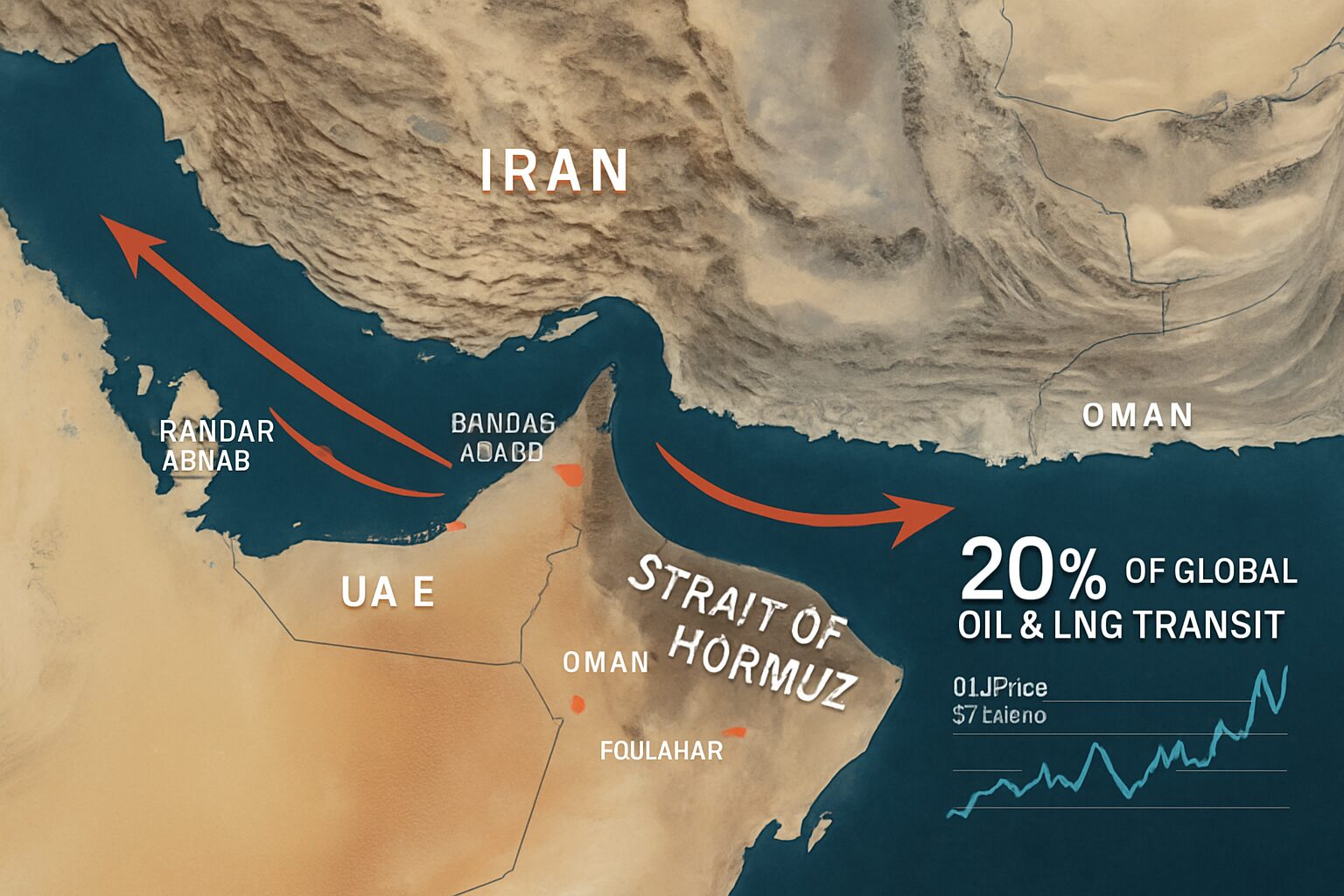
The global energy market is currently held hostage by twenty-one miles of water. Since late February 2026, the Strait of Hormuz—the world’s most sensitive maritime jugular—has been effectively paralyzed. While the Iranian regime attempts to use the waterway as a financial and geopolitical lever, Israeli Prime Minister Benjamin Netanyahu has made it clear that the era of maritime "blackmail" is over. However, the reality on the water is far more complex than a simple standoff. It is a high-stakes convergence of intelligence warfare, drone technology, and a desperate search for infrastructure that doesn't rely on a single chokepoint.
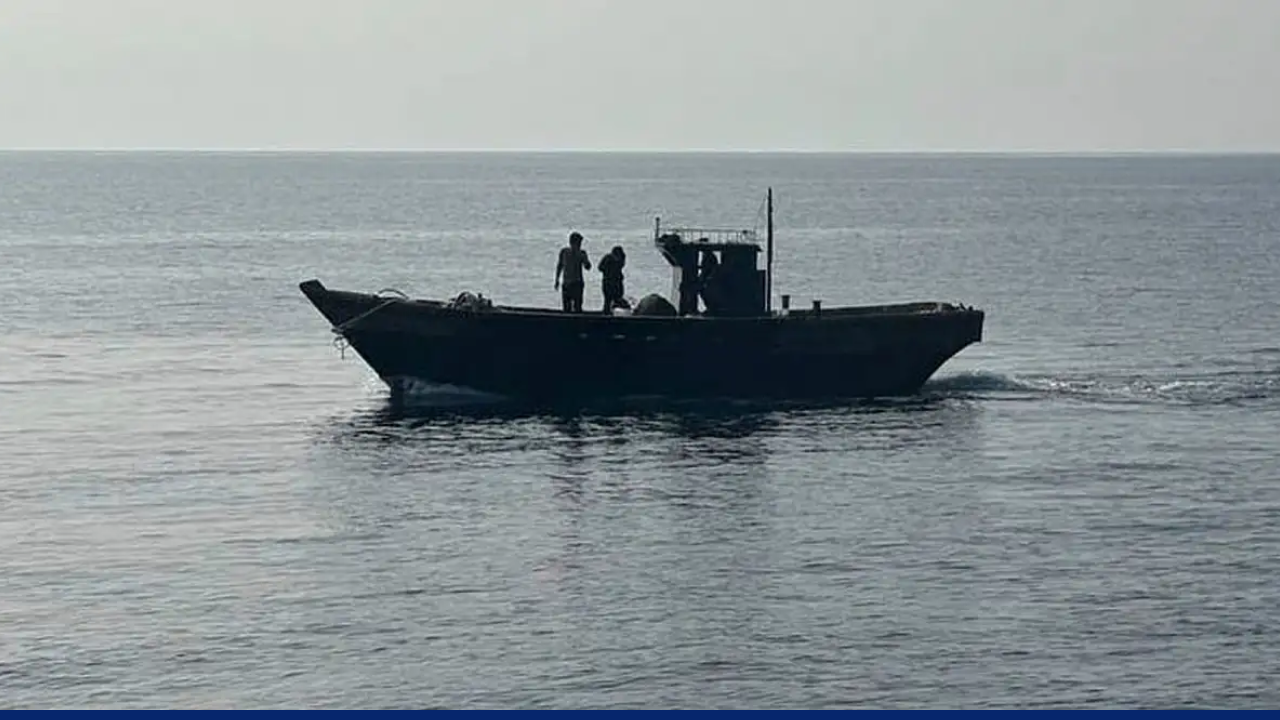
The current crisis escalated rapidly following the joint U.S.-Israeli strikes on Iranian military and nuclear infrastructure on February 28, 2026. Since then, the Islamic Revolutionary Guard Corps (IRGC) has transitioned from threats to kinetic action, deploying suicide drone boats and anti-ship missiles against commercial tankers. For the global economy, the stakes are absolute. Approximately 20% of the world’s oil and liquefied natural gas (LNG) passes through this corridor. With traffic reduced by nearly 70% in the last three weeks, the "blackmail" Netanyahu refers to isn't just a political talking point; it is an active tax on global stability. Recently making news lately: The Kinetic Deficit Dynamics of Pakistan Afghanistan Cross Border Conflict.
The Intelligence Shield and the Israeli Role
Netanyahu’s recent assertions that Israel is helping the United States "open up" the route are not merely rhetorical. According to military analysts and recent operational reports, Israel’s contribution is centered on Signal Intelligence (SIGINT) and Electronic Warfare (EW). The Israeli Defense Forces (IDF) and Mossad have spent decades mapping the IRGC’s "shadow fleet" and its coastal missile batteries.
This cooperation manifests in several critical ways: More details into this topic are explored by The Washington Post.
- Target Identification: Israeli satellite and drone surveillance provide real-time tracking of IRGC fast-attack craft before they leave Iranian territorial waters.
- Electronic Deception: Deployment of advanced jamming technologies to neutralize the GPS-guided systems of Iranian-made drones, such as the Shahed variants currently hounding tankers.
- Subsurface Monitoring: Utilizing autonomous underwater vehicles (AUVs) to detect limpet mines, a favorite tool of Iranian sabotage.
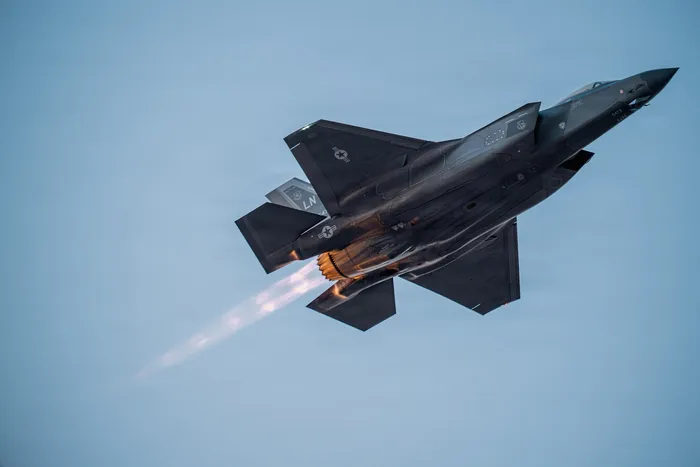
While the U.S. Fifth Fleet provides the heavy kinetic presence, Israel provides the digital eyes. This partnership aims to create a "safe corridor," but the logistical nightmare of escorting every tanker through a zone littered with "smart" mines and drone swarms is unprecedented.
The $120 Barrel and the Failure of Deterrence
Despite the combined might of the U.S. and Israel, the market remains unconvinced that the route is secure. Brent crude surged to $119.50 earlier this month, reflecting a massive "war risk premium." Insurance costs for tankers have skyrocketed. A single vessel valued at $200 million now faces hull war risk premiums as high as **$7.5 million per transit**. For many shipping lines, the math simply doesn't work.
The "blackmail" Netanyahu describes is rooted in this economic asymmetry. Iran does not need to win a naval battle; it only needs to make the cost of transit high enough that the world’s insurers blink first. The IRGC has even floated a proposal in their parliament to demand "tolls and taxes" from any ship seeking safe passage—a move that would effectively turn an international waterway into a private Iranian revenue stream.
Beyond the Strait: The Race for Alternative Arteries
The most significant takeaway from Netanyahu’s recent briefing was not the military cooperation, but the admission that the Strait of Hormuz may never be "safe" again in the traditional sense. The Prime Minister is now championing a radical shift in regional infrastructure.
The vision involves bypassing the Persian Gulf entirely. This would mean a massive expansion of oil and gas pipelines running West through the Arabian Peninsula, terminating at Israeli Mediterranean ports like Eilat and Ashdod. This "land bridge" is no longer a theoretical peace project; it is being discussed as a national security necessity for the West.
If energy can flow from the fields of Saudi Arabia and the UAE directly to the Mediterranean, the Strait of Hormuz loses its status as a global kill-switch. However, building this capacity would take years and billions in investment, leaving the world vulnerable in the immediate term.
The Technical Reality of Modern Maritime Warfare
We are seeing a shift in how maritime routes are defended. Traditional carrier strike groups are formidable, but they are designed for blue-water combat against other navies. They are less effective against the "death by a thousand cuts" strategy employed by Iran.
The defense of the Strait now relies on:
- Directed Energy Weapons: The U.S. and Israel are reportedly testing laser-based systems to incinerate incoming drones at a fraction of the cost of interceptor missiles.
- AI-Driven Threat Detection: Processing thousands of data points from radar and sonar to distinguish between a fishing dhow and a disguised IRGC explosive boat.
- Cyber-Interdiction: Disrupting the command-and-control links that allow Iran to coordinate swarm attacks.
The Endgame of the 2026 Crisis
Netanyahu claims that Iran is being "decimated" and that its capacity to enrich uranium or produce ballistic missiles has been crippled. While the kinetic strikes may have damaged the hardware, the "blackmail" remains effective as long as the global energy supply chain is brittle.
The resolution of this conflict won't just be found in a ceasefire. It will be found in whether the U.S. and Israel can prove that they can keep the water moving despite the constant threat of asymmetric attack. Until a tanker can transit the Strait without a $7 million insurance premium, the "blackmail" is, in a very real sense, still working.
The focus must now shift from mere defense to a total restructuring of how energy moves across the planet. If the Strait of Hormuz remains a bottleneck, the global economy remains a hostage. Netanyahu’s strategy is to break the bottle entirely.
Would you like me to analyze the specific impact of these maritime disruptions on Asian industrial markets or explore the technical specifications of the new "land bridge" pipeline proposals?