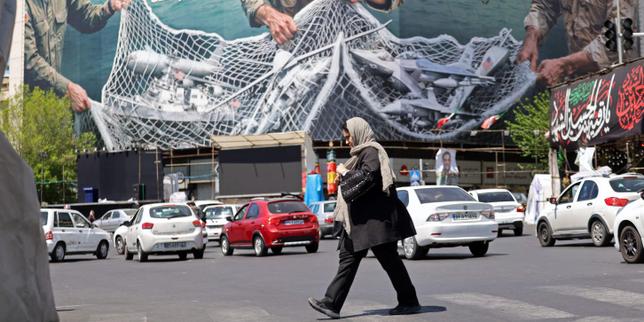
Tehran is no longer just rattling a saber; it is sharpening a guillotine for the global economy. By positioning the Strait of Hormuz as a geopolitical kill-switch, Iran has moved beyond mere naval drills into a doctrine of sustained, attritional blockade designed to break the will of the West over months, not days. This isn't a bluff. It is a calculated survival strategy that bets on the world's inability to endure $200-a-barrel oil while the Islamic Republic manages its internal dissent through a permanent state of emergency.
The math of the chokepoint is brutal. Roughly 20% of the world’s liquid petroleum passes through this narrow strip of water. If the flow stops, the global supply chain doesn't just stutter—it seizes. While many analysts focus on a "Tanker War" style confrontation involving direct missile strikes, the real danger lies in a "gray zone" blockade. This involves a mix of smart mines, swarm boats, and drone strikes that make insurance premiums so high that no commercial captain will risk the transit.
The Architecture of a Permanent Siege
Western military planners often talk about "re-opening" the Strait as if it were a door that just needs a firm kick. It isn't. Iran has spent decades turning the Persian Gulf into a dense, layered defense ecosystem. They aren't looking to win a traditional naval engagement against a U.S. carrier strike group. They are looking to make the cost of protection higher than the value of the cargo.
Unlike the open ocean, the Strait is a shallow, cramped environment. This favors the underdog. Iran’s Islamic Revolutionary Guard Corps Navy (IRGCN) operates thousands of fast-attack craft. These aren't just speedboats; they are platforms for high-speed torpedoes and short-range missiles. In a saturated environment, even the most advanced Aegis combat system can be overwhelmed by sheer numbers.
The Subsurface Menace
Beyond the surface, the Iranian navy has invested heavily in midget submarines like the Ghadir-class. These vessels are difficult to detect in the noisy, shallow waters of the Gulf. Their primary mission isn't to sink the entire Fifth Fleet, but to lay sophisticated, "smart" mines that can distinguish between a military hull and a civilian tanker.
A single explosion in the shipping lane creates a psychological blockade. Once a "no-go" zone is established by Lloyd’s of London or other major insurers, the Strait is effectively closed regardless of whether the Iranian navy is still afloat.
Why the Global Economy Cannot Pivot
The common counter-argument is that pipelines will save us. Saudi Arabia and the United Arab Emirates have invested billions in bypass routes that ship crude to the Red Sea or the Gulf of Oman. These pipes are massive engineering feats, but they are fundamentally insufficient.
At best, these pipelines can handle about 6.5 million barrels per day. That leaves more than 12 million barrels stranded. There is no "Plan B" for a shortfall of that magnitude. The result is an immediate, violent spike in energy prices that would trigger a global recession faster than any central bank could react.
The Infrastructure Vulnerability
Furthermore, these pipelines are static targets. They run through hundreds of miles of desert, often near borders where Iranian-aligned proxies operate. A coordinated sabotage campaign against pumping stations would render the "bypass" strategy moot. Iran knows that for a blockade to work, it must be total. They have mapped every pressure point in the regional energy grid.
The Asymmetric Advantage
Tehran is banking on a specific asymmetry of pain. The Iranian economy is already heavily sanctioned, isolated, and adapted to hardship. The West, conversely, is hyper-sensitive to energy costs. High gas prices at the pump translate directly into political instability in Washington, London, and Paris.
By initiating a blockade, Iran forces a choice: engage in a massive, bloody regional war to clear the Strait, or negotiate a new regional order on Tehran’s terms.
The Role of Drone Swarms
Recent conflicts have demonstrated the efficacy of low-cost, long-range loitering munitions. Iran’s Shahed family of drones has changed the cost-benefit analysis of naval defense. It costs a few thousand dollars to build a suicide drone; it costs millions for a destroyer to fire an interceptor missile. In a prolonged blockade, Iran can simply outspend the West in a war of attrition, draining the inventories of precision-guided munitions that the U.S. and its allies rely on.
The Domestic Imperative
We must look at why the regime would risk such a move now. Internal pressures in Iran are at a historic high. When a government faces existential threats from its own population, a foreign "martyrdom" scenario becomes an attractive tool for consolidation. A blockade serves as a nationalist rallying cry. It allows the state to implement martial law, silence remaining opposition, and blame every economic failure on "Western aggression."
This isn't about logic; it's about the survival of a specific power structure.
The False Promise of Technical Solutions
There are those who believe that autonomous underwater vehicles (AUVs) and advanced mine-sweeping technology will make a blockade impossible. These tools are impressive in a vacuum, but they struggle in a "hot" environment where they are being actively hunted.
Electronic Warfare and GPS Jamming
The Strait is an electronic warfare nightmare. Iran has demonstrated a sophisticated capability to jam GPS signals and spoof maritime navigation data. In several instances, commercial vessels have been led into Iranian territorial waters by manipulated signals. In a full-scale blockade scenario, the entire northern end of the Gulf would become a "dark zone" where traditional navigation fails, making the movement of massive, lumbering tankers a suicidal endeavor.
The Shadow of the Proxies
A blockade of the Strait would not happen in isolation. It would be the centerpiece of a multi-front "Ring of Fire" strategy. While the IRGCN holds the chokepoint, Hezbollah in Lebanon and the Houthis in Yemen would likely activate to pressure other trade routes, specifically the Bab el-Mandeb.
This creates a "double squeeze" on global shipping. If both the Strait of Hormuz and the entrance to the Red Sea are contested simultaneously, the Suez Canal becomes a dead end. The world would be forced to reroute all trade around the Cape of Good Hope, adding weeks to transit times and shattering the "just-in-time" logistics model that modern civilization depends on.
The Brinkmanship of the Cornered
The assumption that Iran will back down to avoid "total destruction" ignores the reality of their strategic depth. They have buried their command centers and missile silos deep inside mountains. They have decentralized their naval command so that local commanders can continue to harass shipping even if Tehran loses contact with the coast.
This is a strategy of "calculated irrationality." By convincing the world they are willing to burn the house down, they gain leverage that no conventional military force can provide. The blockade is not a move toward war; it is a move toward a new, brutal form of peace where the world pays a recurring tax to Tehran just to keep the lights on.
The international community is currently ill-prepared for a conflict that lasts more than a few weeks. Our stockpiles are low, our political patience is thin, and our economies are fragile. Iran has read the room. They aren't preparing for a battle; they are preparing to hold the world hostage until the ransom is paid in full.
Every day the Strait remains open is a day of borrowed time used to ignore the structural vulnerability of our energy security. The next time the IRGCN closes the gates, they won't be looking for a way to reopen them. They will be waiting for the world to break.
_
_