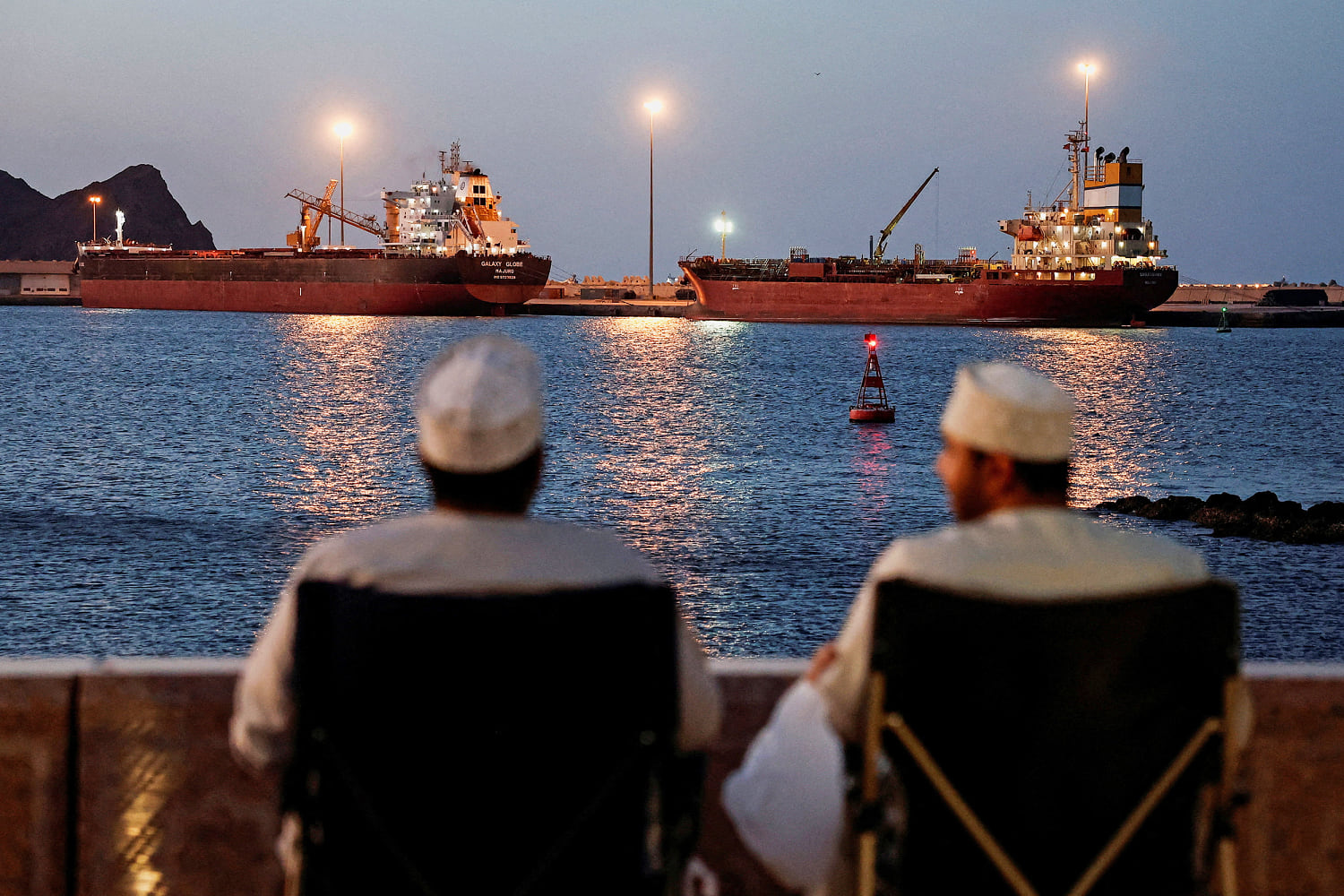
The maritime security of the Strait of Hormuz has shifted from a theoretical risk to an active crisis. Following recent kinetic attacks on commercial vessels in the world’s most critical energy artery, major economies have triggered a coordinated release of emergency oil reserves to prevent a total market seizure. While the immediate goal is to suppress price volatility, the move exposes a deeper fragility in the global energy supply chain. We are no longer looking at a temporary disruption; we are witnessing the breakdown of the invisible guarantees that keep global trade moving.
The Strait of Hormuz is a narrow passage where approximately 21 million barrels of oil pass every single day. That is roughly 21% of global petroleum liquids consumption. When tankers are targeted, the cost of shipping doesn’t just rise—it explodes. Insurance premiums for "war risk" in the Persian Gulf have spiked, forcing operators to reconsider the viability of their routes. The release of Strategic Petroleum Reserves (SPR) is a blunt instrument designed to signal to the markets that supply remains available, but it does nothing to address the physical insecurity of the tankers themselves.
The Physical Reality of the Chokepoint
Geopolitics in the Middle East often feels like an abstract game played in boardroom negotiations, but on the water, it is a matter of geography and physics. At its narrowest, the shipping lane in the Strait of Hormuz is only two miles wide in either direction. This creates a bottleneck that is impossible to bypass for the massive Very Large Crude Carriers (VLCCs) that feed the refineries of Asia and Europe.
When a ship is hit, the ripple effects are instantaneous. It isn't just about the lost cargo. The entire maritime industry operates on a system of trust and predictable risk. When that trust evaporates, the "shadow premium" on a barrel of oil—the extra cost added to account for the risk of it never arriving—can stay elevated for months. The recent attacks have proved that modern naval escorts, while capable, cannot be everywhere at once.
The Mechanics of the Emergency Reserve Release
The decision by multiple nations to tap into their emergency stockpiles is a desperate play for time. Under the framework of the International Energy Agency (IEA), member countries are required to hold oil stocks equivalent to at least 90 days of their net imports. Releasing these reserves is a signal of last resort.
The process involves flooding the market with additional supply to offset the "fear factor" driving up prices. However, this strategy has diminishing returns.
- Inventory Depletion: Every barrel pulled from the SPR is a barrel that must be replaced later, often at higher prices.
- Refinery Mismatch: Not all stored oil is the same. Emergency reserves often consist of "sour" crude, while many modern refineries require "sweet" light crude to produce gasoline and diesel efficiently.
- Market Psychology: If the market perceives the release as a sign of weakness or a lack of long-term solutions, prices can actually rise as traders bet on the eventual depletion of those very reserves.
The Economic Aftershocks
For the average consumer, the headlines focus on the price at the pump. For the analyst, the concern is the systemic inflation triggered by high energy costs. Energy is the primary input for almost everything. When it becomes more expensive to move a tanker through the Strait, it becomes more expensive to produce food in South America and ship electronics from Shenzhen.
The insurance market is the first place where the pain is felt. "War risk" premiums are not fixed costs; they are dynamic. A single incident can increase the cost of a single voyage by hundreds of thousands of dollars. These costs are never absorbed by the shipping companies; they are passed down through the supply chain until they land on the doorstep of the end consumer.
Why Military Might Isn't a Total Solution
There is a common misconception that a heavy naval presence can "solve" the Hormuz problem. It cannot. The geography favors asymmetric warfare. Small, fast-attack craft, sea mines, and shore-based missile batteries can threaten a billion-dollar tanker with relatively low-cost hardware.
The U.S. Fifth Fleet and its allies have maintained a presence in the region for decades, but the nature of the threat has evolved. We are seeing a move toward deniable attacks—incidents where the perpetrator isn't immediately clear, or where drones are used to provide a layer of separation between the attacker and the act. This ambiguity makes a conventional military response difficult. If you don't know exactly who fired the shot, who do you retaliate against?
The Asian Vulnerability
While the Western world often leads the diplomatic response to Middle Eastern instability, the true victims of a Hormuz shutdown are in Asia. China, India, Japan, and South Korea are the primary destinations for the oil flowing through the Strait.
China, in particular, finds itself in a precarious position. Despite its massive investments in renewable energy and its push for electric vehicles, its industrial base still runs on imported crude. A sustained disruption in the Strait of Hormuz would hit the Chinese manufacturing sector harder than any trade war or tariff. This explains why we are seeing an increased presence of the People’s Liberation Army Navy in the region. They are no longer content to let the West dictate the security of their energy lifelines.
The Long Road to Replacement
Can we bypass the Strait? Technically, yes, but not at the scale required. Saudi Arabia and the United Arab Emirates have pipelines that can move oil to the Red Sea or the Gulf of Oman, bypassing the chokepoint entirely. However, these pipelines have limited capacity. They can handle perhaps 6 to 7 million barrels per day—a far cry from the 21 million barrels that pass through the water.
Expanding this infrastructure takes years and billions of dollars in investment. It also requires the cooperation of multiple neighboring states, some of whom may not share the same strategic goals. For the foreseeable future, the world is tethered to that narrow strip of water between Iran and Oman.
The SPR Trap
Relying on emergency reserves creates a false sense of security. It is a pharmaceutical fix for a surgical problem. By artificially lowering prices in the short term, governments may actually discourage the necessary shifts in energy policy that would reduce our dependence on these volatile routes.
Furthermore, the replenishment of these reserves is a massive logistical and financial undertaking. When the U.S. and its allies eventually move to refill their tanks, they will be creating a massive floor for oil prices. They become the "buyer of last resort," ensuring that oil prices remain high even after the immediate crisis has passed.
The current situation is a stark reminder that the global economy is built on a foundation of precarious geography. Every time a tanker is struck, it isn't just a ship that is damaged—it is the entire framework of global energy security. The release of reserves might keep the lights on this week, but it does nothing to fix the structural vulnerabilities that have been ignored for far too long.
Monitor the spread between Brent and West Texas Intermediate (WTI) crude. If the gap widens significantly, it is a sign that the market is pricing in a localized Persian Gulf disaster that the global reserve release cannot fix.