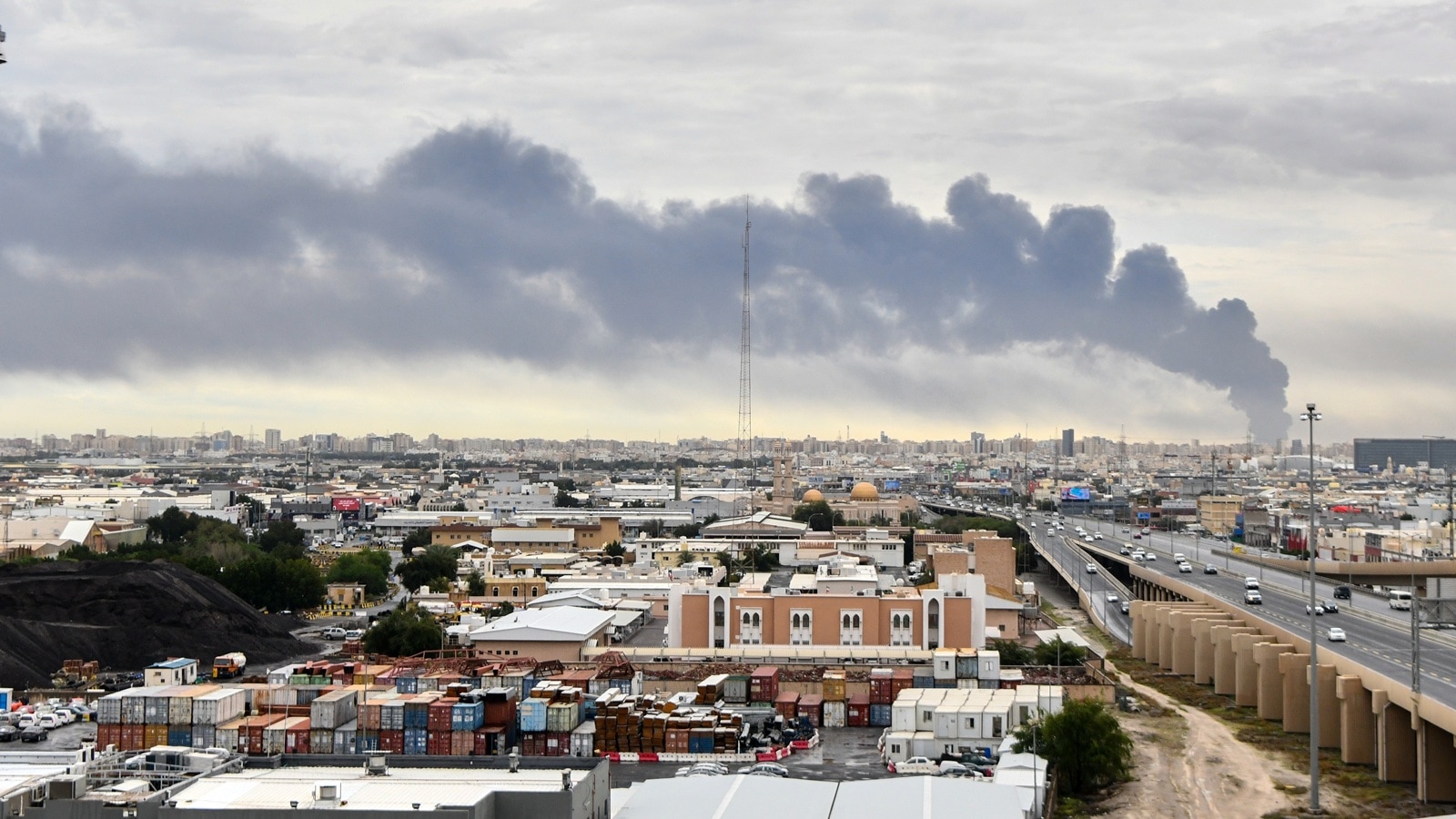
The saltwater in the Strait of Hormuz is thick enough to taste. It sticks to the skin of the sailors on the tankers, a brine mixed with the shimmering, iridescent sheen of crude oil that fuels a world thousands of miles away. Here, the world’s windpipe is only twenty-one miles wide at its narrowest pinch. One wrong move, one sunken hull, and the global economy gasps for air.
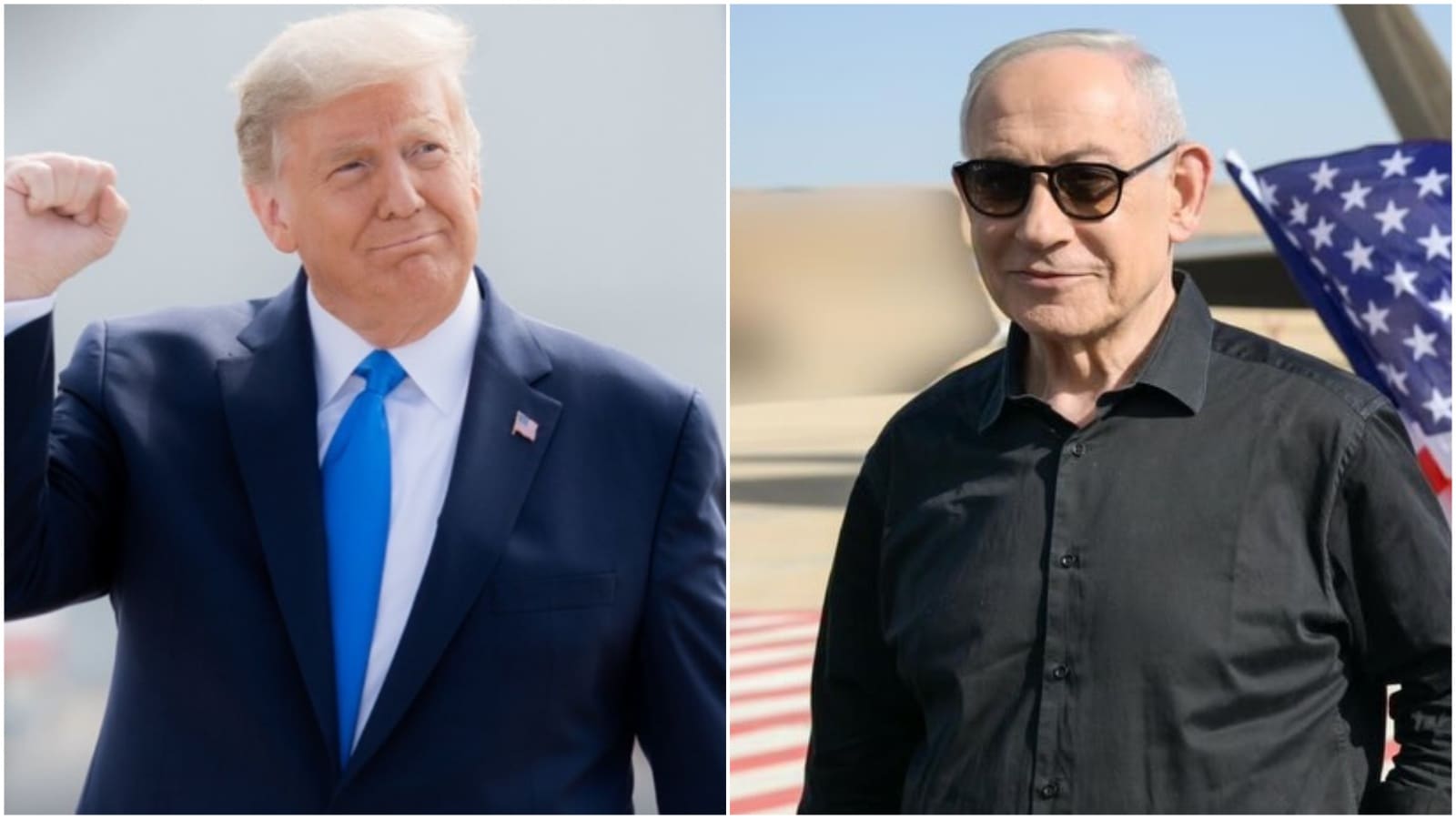
For decades, we were told this was the center of the chessboard. We were told that the United States would spend any amount of blood and treasure to keep those blue waters open. But lately, the air in Washington has changed. The humidity of the Persian Gulf is being replaced by the dry, isolationist chill of a shifting political reality. Donald Trump is looking at the exit signs, while Benjamin Netanyahu is doubling down on the bet of a lifetime.
The Ghost in the Water
Imagine a merchant captain named Elias. He isn't real, but his fear is. He stands on the bridge of a vessel carrying two million barrels of oil, watching the horizon for the fast-attack craft of the Iranian Revolutionary Guard. For Elias, the "Hormuz core goal" isn't a policy paper. It is the heartbeat he feels in his thumbs when the radar chirps.
Historically, the American promise to Elias was absolute. If Iran breathed too hard on the Strait, the U.S. Navy would move mountains. This was the Carter Doctrine, the unspoken law of the land since 1980. It stated that any attempt by an outside force to gain control of the Persian Gulf region would be regarded as an assault on the vital interests of the United States.
But Trump is a man of ledgers, not legacies. He looks at the map and sees a country that is now the world’s largest producer of oil and gas. Why, he asks his advisors, are we patrolling the backyard of nations that don't even like us? The math has shifted. The American public is tired of "forever wars" in sand-swept latitudes. Trump’s signal is clear: Hormuz is no longer the hill he is willing to die on.
This isn't just a change in strategy. It is a fundamental break in the psyche of the Middle East. When the neighborhood bully realizes the police have stopped patrolling the block, the entire social order begins to vibrate with a new, dangerous energy.
The View from Jerusalem
While Trump eyes the door, Benjamin Netanyahu is staring at the ceiling of a bunker, calculating the weight of a different kind of survival. To the Israeli Prime Minister, Iran is not a trade problem or a shipping nuisance. It is an existential shadow.
Netanyahu sees the American hesitation not as a chance for peace, but as a vacuum that will inevitably be filled by chaos. If the U.S. pulls back from the Strait, Iran doesn't just get the water; they get the momentum. They get the "land bridge" stretching from Tehran to the Mediterranean. They get the confidence to push their proxies, Hezbollah and Hamas, to the breaking point.
The tension between these two allies is a quiet, grinding friction. It is the sound of two gears that no longer mesh. Trump wants to wrap up the "Iran war" before it even starts, securing a legacy of domestic prosperity and avoided conflict. Netanyahu believes the war has been happening for forty years, and to stop now is to surrender the future of the Jewish state.
Consider the optics of a recent briefing. You have the Americans talking about "de-escalation" and "regional responsibility," which is diplomatic code for we’re going home. On the other side, you have the Israelis conducting long-range strike drills that simulate hits on Iranian nuclear facilities. They are moving in opposite directions at the same speed.
The Invisible Stakes of a Shallow Sea
The Strait of Hormuz is surprisingly shallow. In some places, it’s barely fifty meters deep. That matters because it makes it incredibly easy to mine. You don't need a high-tech navy to shut down the global economy. You just need some old Soviet-style "moored" mines and a few guys in a fiberglass boat.
If Trump signals that the U.S. is no longer the primary guarantor of Hormuz, the insurance rates for those tankers don't just go up. They vanish. No insurance, no shipping. No shipping, and the price of a gallon of gas in Ohio or a liter of petrol in London goes through the roof.
This is where the human-centric narrative hits the kitchen table. We talk about "geopolitical shifts," but we mean the ability of a single mother in Des Moines to afford the drive to work. We mean the power grid in Tokyo staying online during a winter freeze. The Strait of Hormuz is the thread that holds the sweater together.
The Iranian leadership knows this better than anyone. They play the Strait like a violin. They don't have to close it; they just have to threaten to close it. Every time a commander in Tehran mentions "the gates of the world," the markets twitch. For years, the U.S. presence was the sedative that kept the markets calm. Without it, we are all living in a state of permanent, low-grade anxiety.
The Mirage of an Early Exit
Trump’s desire to leave is a powerful political drug. It tastes like victory. It sounds like "America First." But history is a cruel editor.
When the U.S. pulled out of Iraq in 2011, the vacuum birthed ISIS. When the U.S. left Afghanistan, the world watched people falling from the wheel wells of C-17s. The Middle East has a way of dragging the reluctant back into its embrace.
The real danger isn't that the U.S. leaves. It’s that it says it’s leaving while still being tied to the consequences. If Netanyahu decides to strike Iran because he feels the American shield is weakening, the U.S. will be pulled into the fire anyway. Iran won't distinguish between an Israeli jet and the American satellite data that helped it find its target.
In this scenario, the "early exit" is a mirage. You can walk toward the horizon all day, but the desert stays the same.
The Weight of the Crown
Netanyahu is currently the longest-serving Prime Minister in Israel’s history. He has outlasted presidents, kings, and dictators. His entire political identity is built on being the "Mr. Security" who stopped Iran. For him, a Trump exit is a betrayal of the highest order, but also a clarifying moment.
If the Americans won't do it, Israel must.
That is the terrifying logic of the current moment. We are watching the outsourcing of global security to a nation that is currently embroiled in its own internal political crisis and a multi-front war. It is like asking a man whose house is on fire to also keep watch over the neighborhood’s gas main.
The weight of this responsibility is visible on the faces of the IDF planners. They know that a strike on Iran is not a one-day affair. It is a tectonic event. It would trigger a shower of missiles from Lebanon, a maritime blockade in the Red Sea, and a potential global recession.
But they also know the alternative. To them, the alternative is a nuclear-armed Iran that can wipe Tel Aviv off the map in the time it takes to drink a cup of coffee. When you are faced with two catastrophes, you choose the one where you at least have the steering wheel in your hands.
The Quiet Reality of the Sailors
Back in the Strait, the sun is setting. The heat is finally beginning to break, leaving behind a heavy, humid haze. The sailors on the Ever Given or the Maersk lines aren't thinking about Netanyahu or Trump. They are thinking about the dinner bell and the flickering Wi-Fi that lets them call home to Mumbai or Manila.
They are the human collateral in a game played by men in air-conditioned offices. If the "Hormuz goal" is abandoned, these men become the most vulnerable people on earth. They are the ones who will see the flash of the missile or the wake of the torpedo first.
The world is moving toward a fractured reality. We are trading the "Pax Americana"—the long, expensive, often flawed peace guaranteed by the U.S. Navy—for something much more volatile. It is a world of regional hegemons, of localized arms races, and of "every nation for itself."
It is a world where the Strait of Hormuz is no longer a core goal, but a free-for-all.
The water remains deep blue, nearly black as night falls. The tankers continue their slow, rhythmic march through the narrow gap. For now, the oil flows. For now, the lights stay on. But the anchor is being lifted, and the ship is starting to drift. We are all on board, whether we want to be or not, staring out at a dark horizon where the old rules no longer apply.
The brine is still on our skin. The taste is bitter. It’s the taste of a promise being retracted, one wave at a time.