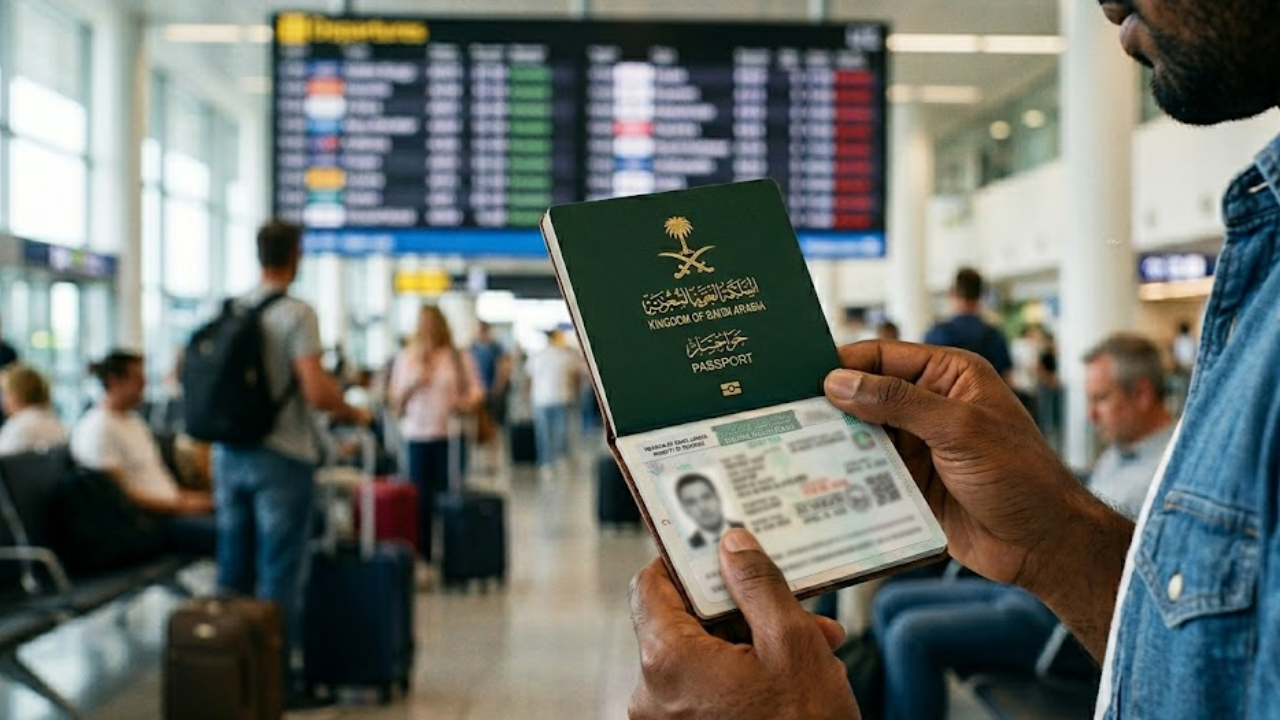
The headlines are screaming about "stranded" tourists and "war-torn" air corridors. They want you to believe that Saudi Arabia's recent visa amnesty—a fee-free exit and extension window ending April 18, 2026—is a desperate move by a kingdom under siege. It is not.
If you view the current regional volatility as a reason to panic-flee Riyadh or Jeddah, you are missing the most sophisticated piece of soft-power maneuvering in the modern era. While the world watches the US-Israel-Iran escalation with bated breath, Saudi Arabia is using this moment to prove it is the only adult in the room. This isn't a crisis response; it's a stress test for Vision 2030, and the Kingdom is passing. If you liked this piece, you should read: this related article.
The Myth of the Stranded Tourist
Mainstream outlets are obsessed with the "stranded" narrative. They paint a picture of helpless travelers trapped by closed airspaces and canceled flights. This framing is lazy. In reality, the Saudi Ministry of Interior’s decision to allow those with visas expired since February 25, 2026, to leave without fines or fees is a calculated display of administrative agility.
Most developing nations would see an airspace crisis as an opportunity to extract "overstay" revenue from captive audiences. Instead, Saudi Arabia is waiving the check-out bill. I’ve seen governments in the West grind to a halt over minor IT glitches; here, we see a massive bureaucracy pivot in 24 hours to accommodate hundreds of thousands of non-citizens. This isn't just "mercy"—it's a marketing campaign for the reliability of the Saudi state. For another angle on this story, see the recent update from Travel + Leisure.
Why the April 18 Deadline is a Logic Trap
The competitor articles warn you to "leave before the deadline or face penalties." They treat April 18 like a cliff. This is the wrong way to look at it.
The deadline is an artificial pressure valve. By setting a firm date, the Kingdom is forcing the hand of international carriers and foreign embassies to prioritize their citizens. It’s a diplomatic lever. If you are a traveler currently in the Kingdom, the "extension" option via the Absher platform is actually the more interesting story.
Think about it: while other regional hubs are effectively "closed for business," Saudi Arabia is inviting you to extend your stay—provided you have a host and pay the fee. This is a subtle but firm declaration that the Kingdom remains a sanctuary of stability. They aren't just letting you leave; they are proving they have the infrastructure to let you stay while the rest of the region burns.
Geopolitics as a Tourism Product
The "lazy consensus" says that war kills tourism. While true for the short term, Saudi Arabia is playing a decades-long game. By managing this "crisis" with such high-visibility efficiency, they are building something more valuable than current Q1 revenue: sovereign trust.
The UNWTO noted that the Middle East was the fastest-growing tourism region in 2025, with Saudi Arabia leading the pack. Skeptics argued this growth was fragile and could be wiped out by a single drone. Yet, here we are. Even with airspace disruptions, the Kingdom’s "Tawasul" service and Absher integration are functioning perfectly.
The Real Breakdown of the New Rules:
- The Exit: Fee-free, fine-free, and no prior formalities at the port of departure.
- The Extension: Available for visit, Umrah, and transit visas through the Absher platform.
- The Eligibility: Specifically for those whose visas expired between Feb 25 and Feb 26, 2026—a surgical response to the specific dates of the initial airspace lockdowns.
The Counter-Intuitive Play: Don't Rush the Exit
If you are a business traveler or a high-net-worth tourist, the panic-exit is a mistake. The current situation is the ultimate "buy the dip" moment for regional influence. While the crowd is fighting for the last seat on a diverted flight to Athens, those who utilize the extension rules are signaling their long-term commitment to the Saudi market.
I’ve watched companies pull out of regions at the first sign of smoke, only to spend millions trying to buy their way back in two years later. The Kingdom is watching who stays. The "fine-free" exit is for the backpackers and the panicked. The "extension" portal is for the partners.
The Infrastructure of Stability
Let’s look at the data. Despite the conflict, the King Abdullah Sport City Stadium still hosted major events earlier this year. The Red Sea Project hasn't paused. The infrastructure for Vision 2030 is built to withstand regional kinetic activity.
When the Ministry of Interior urges you to "regularize your status," they are testing your ability to follow their digital systems. The transition of the Saudi state from a petro-bureaucracy to a digital-first service provider is complete. If you can extend your visa on a smartphone while missiles are being intercepted 500 miles away, the system works.
Stop Asking "When Can I Leave?"
Start asking "What does this level of stability cost, and how can I capitalize on it?"
The "crisis" isn't the war—it's the failure of imagination in the travel industry. Saudi Arabia is currently the most stable "unstable" place on earth. They have turned a geopolitical nightmare into a demonstration of their Absher-driven efficiency.
The downside? Yes, the region is volatile. Yes, your flight might be delayed. But the administrative safety net the Kingdom has thrown under its visitors is unprecedented. You aren't "stranded" in a desert; you are a guest in a fortress that just opened its VIP lounge during a storm.
Check your Absher notifications. Pay the extension fee if you have business to finish. Or walk through the exit gate without paying a cent in fines. Either way, realize that you are witnessing the birth of a new kind of superpower—one that uses visa regulations as a shield and a sword.
Would you like me to analyze the specific flight capacity and alternative land routes currently open for those choosing the fine-free exit?