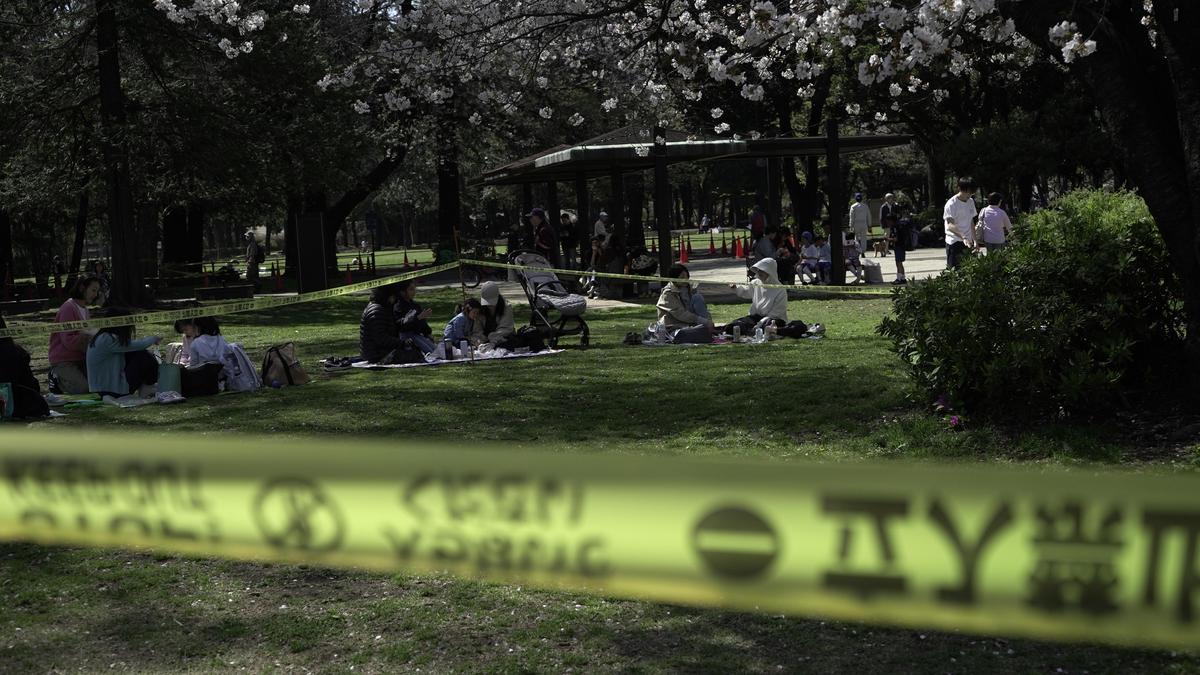
Tokyo is panicking over falling trees. The mainstream media is currently obsessed with a "crisis" under the pink canopy: aging Somei Yoshino cherry blossoms are collapsing, threatening tourists and marring the perfect Instagram aesthetic of Ueno Park. The "lazy consensus" screams for more inspections, more bracing, and more frantic life-support for sixty-year-old trunks that are effectively botanical zombies.
They are asking the wrong question. They want to know how to save the trees. They should be asking why we are so obsessed with a biological monoculture that was never meant to last.
The current safety panic isn't a forestry failure. It’s a branding failure. We have traded the soul of the Japanese spring for a fragile, mass-produced clone, and now the bill is coming due. If you’re worried about a branch hitting a tourist, the solution isn't more surgery. It's the chainsaw.
The Myth of the Eternal Sakura
Most people viewing the cherry blossoms believe they are witnessing an ancient, natural tradition. They aren't. They are looking at a mid-19th-century industrial product.
The Somei Yoshino is a hybrid. Because it is a clone, every single tree in Tokyo is genetically identical. They bloom at the same time, they look the same, and—here is the part the city planners ignored—they die at the same time. While a wild Yamazakura can live for centuries, the Somei Yoshino hits a wall at 60 to 80 years.
Tokyo’s canopy was largely replanted in a post-war frenzy. We are currently living through a demographic collapse of trees. Trying to "fix" this with localized pruning is like trying to stop a tidal wave with a mop.
The Safety Industrial Complex
The competitor narrative focuses on "safety concerns." This is the classic bureaucratic response: identify a risk, demand a budget, and perform "theatre" to appease the public.
I have seen municipal governments waste millions of yen injecting chemicals into rotting heartwood and installing unsightly metal crutches. It’s a sunk cost fallacy. These trees are susceptible to Phellinus punctatus and other decay fungi that eat them from the inside out. By the time a "safety inspector" spots a hollow, the tree has been structurally compromised for a decade.
We shouldn't be "protecting" the public from falling trees; we should be educating them on the reality of senescence. Nature is not a static museum exhibit. It is a cycle of birth and rot. By clinging to these specific trees, we are denying the very essence of mono no aware—the pathos of things—which is supposedly the entire point of the viewing tradition. The beauty is in the transience, yet we are trying to turn the parks into a high-maintenance geriatric ward.
The Monoculture Trap
The obsession with the Somei Yoshino has created a botanical vulnerability that mirrors the worst mistakes in modern agriculture.
- Genetic Fragility: One specific pathogen could theoretically wipe out the entire Tokyo canopy because there is zero genetic diversity.
- Visual Stagnation: The "wall of pink" look is a modern invention. Historical Japan celebrated a tapestry of colors—whites, deep reds, and greens—spread across a two-month period.
- Ecological Dead Zones: A monoculture of clones provides a limited window for local pollinators and offers little resilience against the "urban heat island" effect.
When a tree falls, the media calls it a tragedy. I call it an opening.
Dismantling the People Also Ask Nonsense
If you search for "Tokyo cherry blossom safety," you get a list of sanitized concerns. Let’s answer them with the honesty that city officials won't use.
Are the trees in Tokyo dangerous?
Yes. Any sixty-year-old clone with a hollow core and a heavy canopy is a liability. But the danger isn't the tree; it's the fact that we've crowded millions of people under a failing infrastructure because we're too sentimental to cut them down before they become hazards.
Why are the trees dying now?
Because we planted them all at the same time. We created a "population bulge" of trees. We are essentially surprised that a 1950s Ford is breaking down in 2026. It’s not a mystery; it’s a warranty expiration.
Can we save the old trees?
Why would you want to? A braced, cabled, and chemically injected tree is a pathetic sight. It lacks the vigor of a young sapling and the dignity of a wild ancient. We should be celebrating the transition, not fighting the clock.
The Unconventional Solution: Aggressive Deforestation
The bold move—the one no politician has the spine to suggest—is to clear-cut the failing sections of major parks.
Stop the piecemeal replacements. Stop waiting for a storm to decide which tree falls. We need to proactively remove the Somei Yoshino and replace them with a diverse mix of species like Cerasus jamasakura or Edo-higan.
Yes, it will look "ugly" for five years. Yes, the tourists will complain that the "wall of pink" has gaps. But this is the only way to build a resilient, multi-generational canopy that doesn't require a team of surgeons to keep it standing every April.
We have become so addicted to the "perfect" bloom that we've forgotten how to manage a forest. A forest requires death. It requires gaps in the canopy for light to reach the floor. By keeping these aging clones on life support, we are choking out the next generation.
The Cost of Sentimentality
The financial burden of maintaining these failing trees is astronomical. Every yen spent propping up a terminal Somei Yoshino is a yen not spent on diversifying our urban forests.
I’ve watched arborists struggle with the ethics of this for years. They know the tree is gone, but the local neighborhood association treats it like a sacred relic. This isn't Shintoism; it’s aesthetic stubbornness. We are prioritizing a specific shade of pale pink over the actual health of the urban ecosystem.
If you want a safe viewing season, you don't need more inspectors. You need more axes.
The collapse of Tokyo’s cherry blossoms isn't a disaster to be managed. It’s a long-overdue correction. The era of the mass-produced, cloned spring is over. It’s time to stop mourning the rot and start planting the variety that should have been there all along.
The most respectful thing you can do for an aging tree that is literally falling apart is to turn it into mulch and let something else grow. Anything else is just vanity disguised as conservation.
Pick up the saw. End the monoculture. Give us a spring that doesn't require a hard hat.