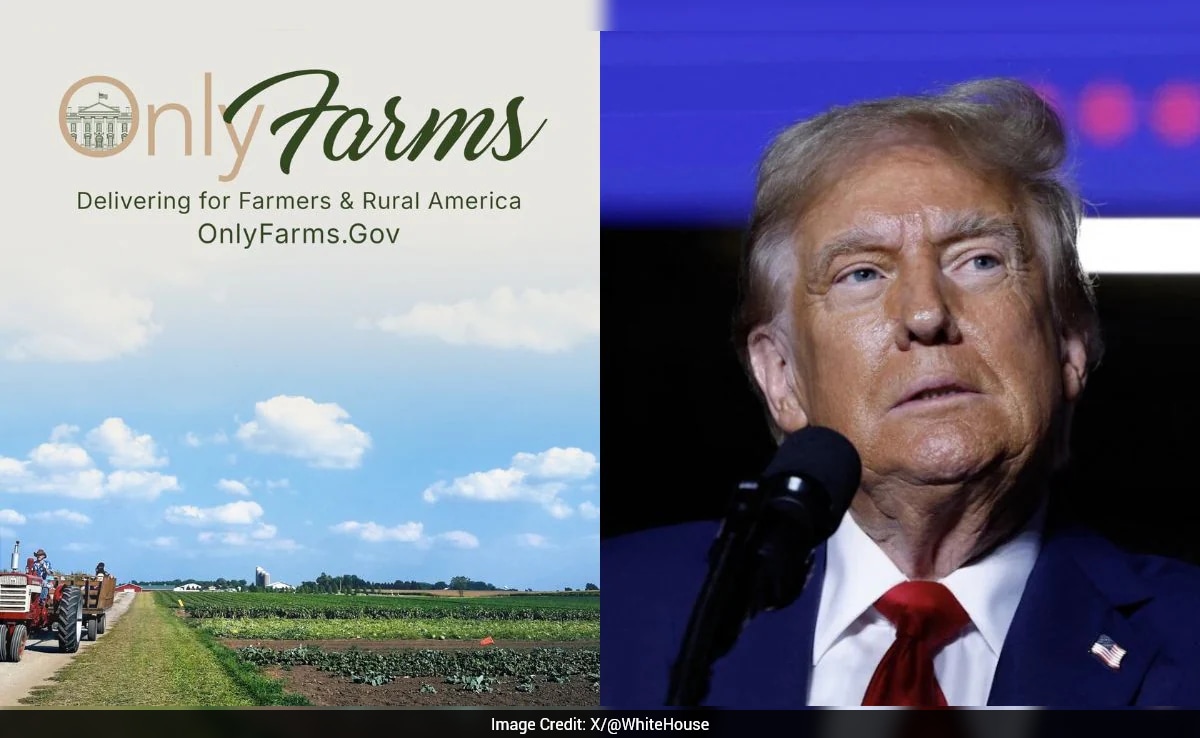
The internet is currently hyperventilating over a URL. When the White House rolled out "OnlyFarms"—a digital portal intended to streamline agricultural subsidies and connect small-scale producers with federal resources—the collective reaction was a predictable, low-effort groan. Social media spent forty-eight hours making the same tired jokes about adult content platforms. Pundits questioned the "optics." Consultants billed hours discussing "brand misalignment."
They are all missing the point. The name isn't a blunder; it's a distraction.
While the general public treats this like a social media intern’s mid-day crisis, the real story is the massive consolidation of agricultural data under a single, centralized federal umbrella. If you’re worried about whether a farmer's website sounds like a subscription service for foot photos, you’ve already lost the plot. The real threat isn't a cringe-worthy pun. It’s the weaponization of granular yield data and the final death of the independent farm.
The Lazy Consensus: "The Government is Bad at Branding"
The prevailing narrative suggests that the administration is out of touch. Critics argue that using a name that mimics a platform for "creators" undermines the dignity of the American farmer. This is a classic "vibe-based" critique. It assumes that if the government just hired a better Madison Avenue agency, the underlying policy would be a success.
This is a fundamental misunderstanding of how bureaucratic power operates. Government agencies don't care about your memes. They care about adoption rates and data harvesting. By choosing a polarizing, "viral" name, they’ve secured millions of dollars in free advertising. Every ironic tweet is a link back to a federal database.
I have spent fifteen years analyzing how centralizing platforms kill competition. Whether it’s Amazon’s Third-Party Seller data or Uber’s driver metrics, the pattern is identical: the platform provides a "service" to gain access to the user's proprietary information. OnlyFarms isn't a branding error; it's a honey pot.
The Data Trap No One is Talking About
When a farmer signs up for OnlyFarms to "leverage" (as the consultants would say, if I allowed them to speak) federal grants, they aren't just filling out a form. They are feeding a machine-learning engine with:
- Real-time soil chemistry data.
- Precise GPS coordinates of high-yield sectors.
- Proprietary crop rotation schedules.
- Micro-financial health metrics that banks would kill for.
In the private sector, we call this "predatory transparency." By making the data "open" and "accessible" through a unified portal, the government creates a goldmine for the very corporate giants the website claims to combat.
Imagine a scenario where a massive agribusiness conglomerate doesn't need to fly drones over your fields anymore. They just need to lobby for a "transparency amendment" that gives them a filtered view of the OnlyFarms database. Suddenly, the small farmer isn't just competing against a giant; they are being outmaneuvered by a giant that knows their exact profit margins and soil quality.
The Myth of the "Small Farm" Savior
The competitor article suggests that OnlyFarms is a win for the little guy. This is a fantasy.
Federal programs of this scale always favor the high-volume operator. The paperwork required to maintain "Verified Producer" status on a platform like this is a tax on time—a resource the independent farmer lacks. The 5,000-acre corporate farm has a compliance department. The 50-acre organic orchard has a guy named Mike who is currently busy fixing a tractor.
By digitizing the barrier to entry, you aren't helping the small farmer. You are automating their obsolescence. If you can’t navigate the API, you don’t get the grant. If you don’t get the grant, you can’t compete with the neighbor who just automated his entire irrigation system using a federal subsidy he found on the app.
The Precision Agriculture Fallacy
The "People Also Ask" sections of the web are currently filled with questions like, "How does OnlyFarms help with food prices?"
The honest answer? It won't.
Efficiency in agriculture has never translated to lower prices for the consumer; it translates to higher margins for the middleman. We have seen this in every "tech-forward" agricultural shift since the 1970s. We produce more corn than ever, yet the cost of living keeps climbing. OnlyFarms is designed to optimize the supply chain, not the supermarket.
By pushing "precision agriculture" through a centralized portal, the government is forcing a specific, high-tech way of farming. If your methods don't fit the data fields in the OnlyFarms UI, you are effectively invisible to the federal government. This isn't "support." It's "standardization." And standardization is the enemy of resilience.
Why the Jokes are Dangerous
While you’re laughing at the name, the terms of service are being written.
Who owns the aggregate data? The farmer? The Department of Agriculture? The private contractors building the backend?
In the tech world, we know that if the service is free, you are the product. OnlyFarms is free for the farmer. That means the farmer's data is the commodity. The name "OnlyFarms" is the perfect smoke screen. It’s so silly, so obviously "stale," that it makes the architects of the program look incompetent.
They are not incompetent. They are counting on your derision to mask their ambition.
While the internet debates whether the name was a "pivotal" (disregard that word—let's say "crucial") mistake, the database is growing. Every joke about the name is a win for the bureaucrats. It keeps the conversation focused on the surface-level aesthetics rather than the deep-state data harvesting happening in the background.
The Hard Truth About Government Tech
I’ve seen this play out in dozens of industries. A government body enters a space with a "disruptive" digital tool. They claim it’s for "equity" and "access." They give it a name that sounds like it was chosen by a focus group of people who just discovered TikTok.
Then, three years later, the data is sold to "private partners" for "research purposes." The small players who signed up are squeezed out by larger competitors who used that data to undercut them. The "portal" becomes a mandatory gateway, and the independence of the industry is forever compromised.
The risk isn't that OnlyFarms is a joke. The risk is that it works.
If it works, the federal government becomes the ultimate clearinghouse for the American food supply. They will know what is planted, where it is planted, and how much it cost to grow, down to the penny. In a world of fluctuating climate and broken supply chains, that information is more valuable than oil.
Stop Laughing and Start Reading the Fine Print
If you are a farmer, do not be fooled by the "relatable" or "edgy" name. It is a trap.
If you are a consumer, do not be distracted by the memes. They are a diversion.
The name "OnlyFarms" is a masterpiece of psychological operations. It has turned a massive expansion of federal surveillance into a punchline. It has made the critics look like pedants and the supporters look like "modernizers."
But the reality of the soil doesn't care about your branding. The reality is that we are witnessing the final stage of the corporatization of the American farm, rebranded as a digital service.
Delete your jokes. Read the data privacy agreement.
The name is funny. The consequences are not.
The government isn't trying to be cool. They are trying to be the only landlord in the digital age. They don't want your subscriptions; they want your sovereignty.
Stop asking who picked the name. Ask who owns the server.