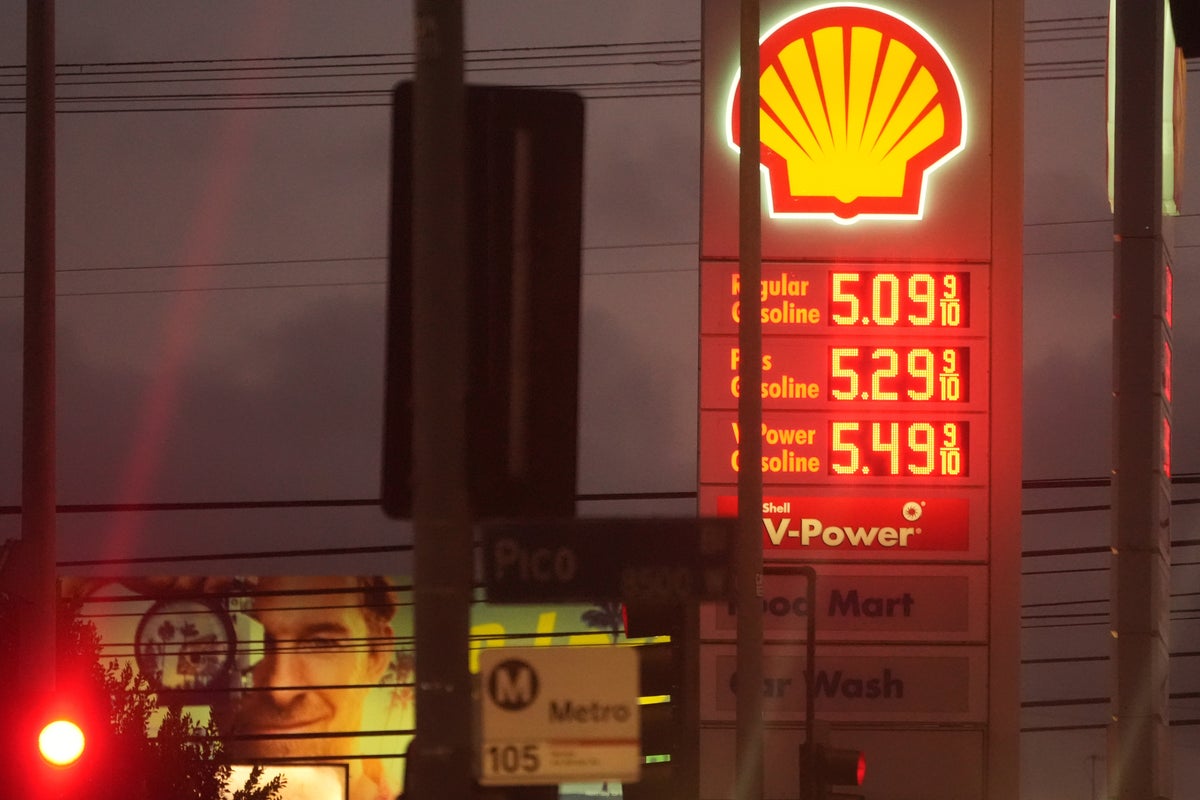
The national obsession with the "sticker shock" at the gas pump is a masterclass in economic illiteracy. Every time tensions flare in the Middle East and a barrel of Brent crude creeps toward triple digits, the media cycle defaults to a tired narrative: the "struggling" American commuter held hostage by geopolitical volatility.
It’s a lie. More accurately, it is a shallow observation that misses the structural reality of the 2026 energy market.
We aren't in 1973. We aren't even in 2008. The United States is currently the largest producer of crude oil in the history of the planet. When prices rise due to conflict involving Iran or any other regional power, the "pain" felt at the pump is actually a massive capital injection into the American industrial heartland. We are no longer the victim of high energy prices; we are the primary beneficiary.
If you want to be angry about the price of a gallon of 87-octane, be angry at your own inability to read a balance sheet.
The Myth of the Unified Aggravation
The competitor headlines claim Americans are "uniting in aggravation." This is a fantasy. The only people uniting are those who don't understand how the U.S. GDP is actually composed.
When gas prices climb, the Permian Basin doesn't weep. North Dakota doesn't mourn. The massive ecosystem of engineers, steel manufacturers, software providers, and logistics firms that support the American energy machine goes into overdrive.
I’ve spent years watching companies dump nine figures into "efficiency" projects only to realize that their best years—their highest margins and most aggressive hiring phases—coincide exactly with the moments the public is screaming about $5.00 a gallon.
The "aggravation" is a consumer-side phenomenon. On the industrial side, it's a gold rush. High prices provide the necessary margin to fund the next generation of extraction technology. Without these price spikes, the very innovation that keeps the U.S. energy independent would stagnate. You cannot have "cheap" energy and "secure" energy at the same time. Pick one.
Why "Pain at the Pump" is a Necessary Market Signal
Price is information.
When the price of gas goes up, the market is telling you two things:
- The risk premium for global supply has increased.
- Your current consumption habits are inefficient.
People love to complain about "greedy oil companies," but they rarely mention the massive surge in demand that occurs when prices are low. Cheap gas is a sedative. It encourages sprawl, rewards the purchase of 6,000-pound SUVs for grocery runs, and kills any incentive for corporate logistics fleets to optimize their routes.
The "sticker shock" isn't an injustice; it's a correction. It is the only mechanism powerful enough to force a shift in behavior. If gas stayed at $2.00 forever, the transition to more sustainable or domestic energy sources would happen at the pace of a glacier. High prices are the catalyst for the very "energy independence" politicians claim to want.
The Iran Fallacy: We Are Not Vulnerable
The standard narrative suggests that a war with Iran—or even the threat of one—puts the American economy at the mercy of the Strait of Hormuz.
This is an outdated, 20th-century fear.
Thanks to horizontal drilling and hydraulic fracturing, the "shale gale" has flipped the script. In a scenario where global supply is constricted, the U.S. oil industry doesn't just survive; it captures market share.
Let's do a thought experiment. Imagine a total blockade of the Persian Gulf. Global prices skyrocket. Yes, the cost of filling up your tank doubles. But simultaneously, the valuation of every domestic energy producer triples. Export demand for American LNG and crude hits fever pitch. The trade deficit shrinks. The dollar strengthens.
The "pain" is localized to the consumer's wallet, but the "gain" is systemic. We are trading a few cents at the pump for the total dominance of the global energy trade.
Understanding the Spread
The nuance most analysts miss is the difference between WTI (West Texas Intermediate) and Brent.
$$Price\ Spread = Brent - WTI$$
When Middle Eastern tensions rise, the spread widens. Brent (the global benchmark) gets expensive fast. WTI (the U.S. benchmark) often lags behind because of our domestic surplus. This creates a massive competitive advantage for American refiners. They buy the "cheaper" domestic crude and sell the finished product at "expensive" global prices.
This isn't a crisis. It's an arbitrage opportunity on a national scale.
The "Struggling Family" Narrative is a Distraction
Politicians love to stand in front of gas station signs and talk about "working families." It’s an easy trope. But if we look at the data, energy as a percentage of total household expenditure has been on a long-term downward trend for decades, despite the occasional spike.
The real "aggravation" isn't the price of gas; it's the stagnation of real wages and the rising cost of housing and healthcare. Gas is just the most visible price in our lives. It’s printed in three-foot-tall neon numbers on every street corner. You don't see the price of your health insurance or your property taxes updated daily on a billboard.
Focusing on the gas pump is a way for people to vent about a general loss of purchasing power without having to confront the more complex, systemic reasons why they feel broke. It's a psychological lightning rod, not an economic one.
The Downside No One Wants to Admit
Is my perspective heartless? Perhaps. There are real downsides to my "high prices are good" stance.
For one, it is regressive. A billionaire and a delivery driver pay the same price for a gallon of gas. For the delivery driver, that extra $20 a week is a direct hit to their grocery budget. I’m not ignoring that.
But the "fix" isn't to artificially lower prices or tap the Strategic Petroleum Reserve every time someone tweets about a drone strike. Tapping the SPR to lower prices for voters is like eating your seed corn because you’re too lazy to cook dinner. It destroys our long-term leverage for a short-term political sugar high.
If we want to help those families, we should do it through direct fiscal policy, not by breaking the price signals of the global energy market.
The Technology Play: Why the Pump Doesn't Matter
We are currently in the middle of the most significant energy transition in human history. The integration of AI into grid management and the rapid scaling of solid-state battery tech means that the "gas pump" is becoming a legacy interface.
Every time gas prices spike, the ROI on an EV or a home solar installation improves by 15-20%. The "aggravation" you feel at the pump is actually the sound of the old world dying.
Companies like Tesla, Rivian, and the legacy giants finally moving into the space (Ford, GM) thrive on high gas prices. It is their best marketing tool. If you want to stop being "aggravated," stop betting on a 19th-century internal combustion engine.
The technology to bypass the gas station exists. The only reason more people haven't adopted it is that gas has been too cheap for too long.
Stop Asking "When Will Prices Go Down?"
That is the wrong question. It’s a loser’s question.
The right question is: "How do I position myself to profit from the volatility?"
Whether that's through investing in the domestic energy sector, upgrading your own personal energy infrastructure, or simply realizing that a higher price for gas is the cost of living in the world's only energy superpower—you need to change your frame of reference.
The "sticker shock" isn't a tragedy. It's the price of entry for a dominant, self-sustaining American economy that no longer has to beg for oil from people who hate us.
Stop whining. Start hedging.
Buy the dip in domestic energy stocks while the rest of the country is busy complaining to a news reporter about an extra $15 on their credit card statement.
The war in the Middle East might be a tragedy, but the reaction at the gas pump is just a math problem that most people are failing.
If you’re still looking at the neon sign and feeling "aggravated," you’re not an insider. You’re the mark.
Stop waiting for the government to save you from a market signal.