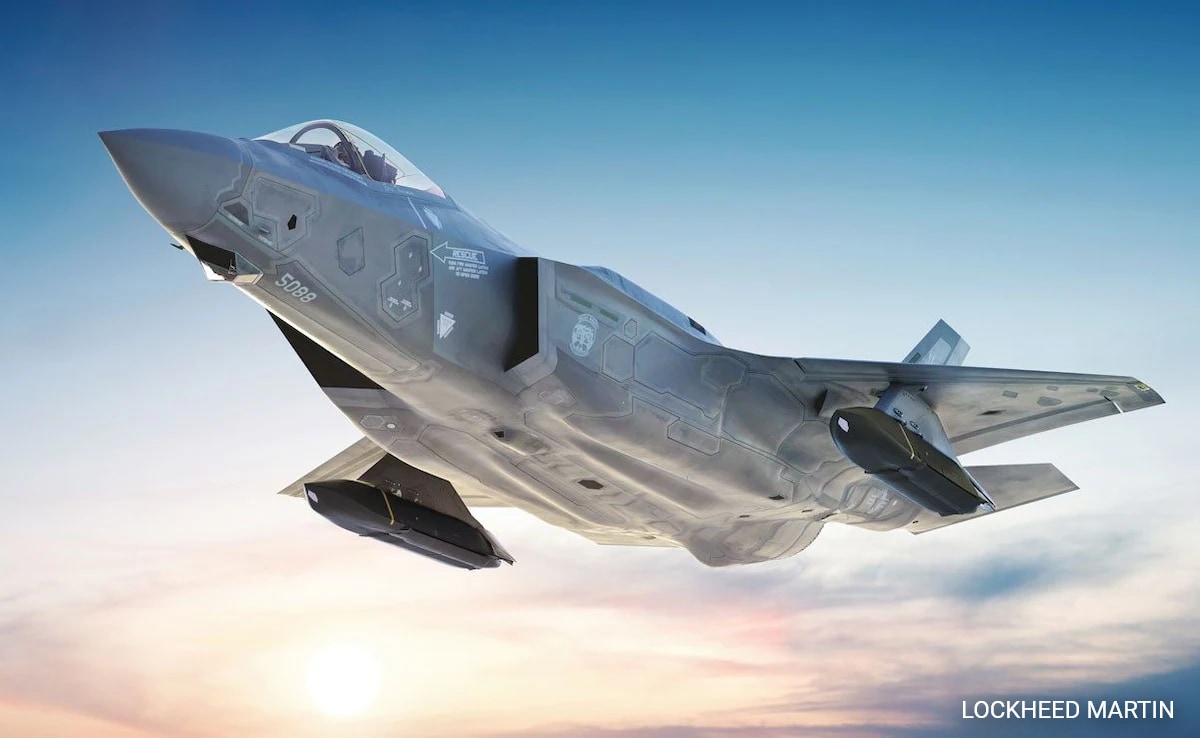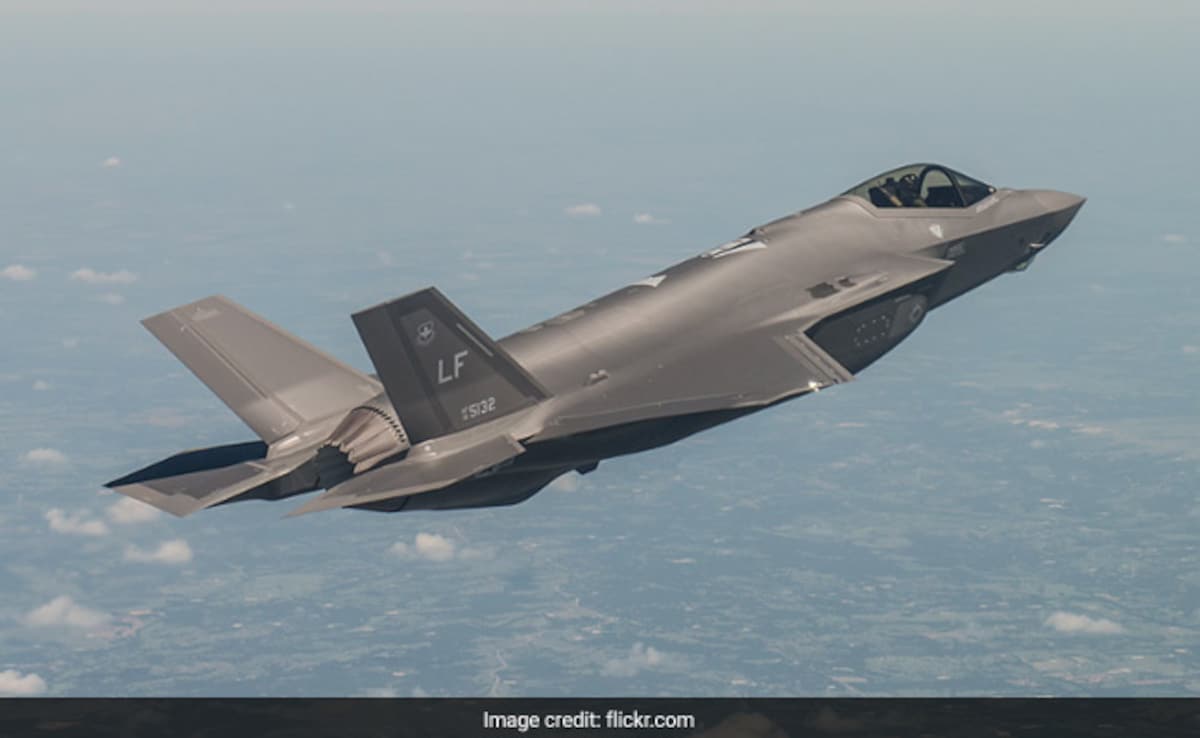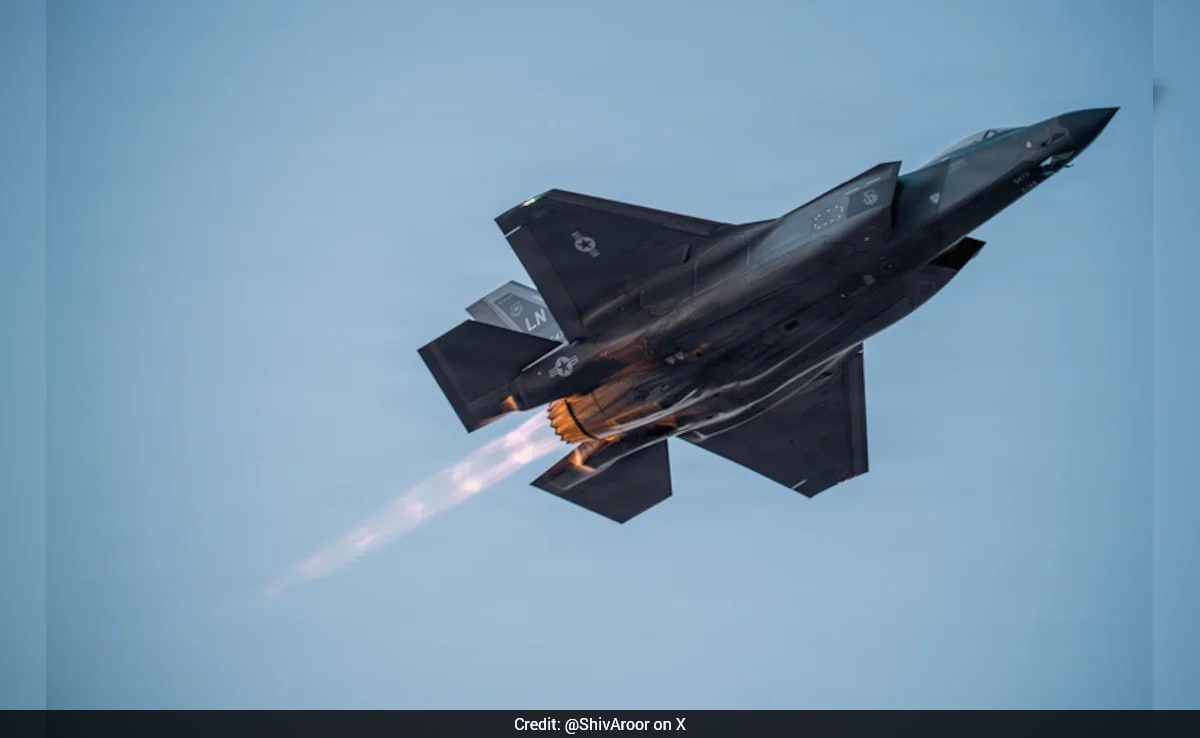
Clickbait sells. It’s the easiest trade in the world. You take a grainy, low-resolution video of a desert skyline, slap a headline about a downed F-35 over Iran on it, and watch the ad revenue roll in from people who couldn't tell a transponder from a toaster. But if you actually believe that a $135 million Fifth-Generation fighter just got swatted out of the sky by an Iranian AD system, you aren't just misinformed. You're fundamentally misunderstanding the physics of modern suppression of enemy air defenses (SEAD).
The competitor narrative is lazy. It relies on the "David vs. Goliath" trope—the idea that a plucky, outdated defense system can unmask the world's most expensive ghost. It’s a comforting story for those who hate the military-industrial complex, but it’s a fairy tale. Learn more on a related issue: this related article.
Here is the reality that the "experts" won't tell you: if an F-35 is actually hit over Iranian airspace, it isn't a failure of stealth technology. It's a failure of operational intelligence and the hubris of thinking we can "low-observable" our way out of bad physics.
The Stealth Myth: Invisibility vs. Low Probability of Detection
Let’s burn the biggest misconception first. Stealth is not invisibility. It never was. If you’re still using the word "invisible," stop talking about defense tech. Additional reporting by The Next Web highlights similar views on the subject.
Stealth is about reducing the Radar Cross Section (RCS). An F-35 is designed to look like a metal marble or a bird on a radar screen. But even a marble is visible if you’re looking with a powerful enough flashlight and your eyes are adjusted to the dark.
Current Iranian capabilities, specifically their Russian-integrated systems like the S-300PMU2 and the homegrown Bavar-373, utilize "Long-Wavelength" radar.
- VHF and UHF radars can absolutely "see" stealth aircraft.
- The catch? They can't see them with enough precision to guide a missile to the target. It’s like knowing there’s a fly in a dark room because you can hear it buzzing, but being unable to hit it with a flyswatter.
The "Moment the F-35 was hit" videos almost always show a kinetic explosion in the mid-altitudes. If an F-35 is operating in a contested environment like Iran, it isn't flying at 20,000 feet like a commercial airliner waiting to be intercepted. It's managing its electronic emissions so tightly that the ground-based operators wouldn't even know which sector of the sky to scan.
The Physics of the "Hit"
To actually hit a Fifth-Gen fighter, you need a "kill chain" that remains unbroken.
- Detection: Finding the blip.
- Tracking: Keeping the blip in sight.
- Targeting: Locking a fire-control radar onto that blip.
- Engagement: Launching the interceptor.
Stealth is designed to break the chain at step 3. The S-300 might "detect" a disturbance in the UHF band, but the moment it tries to hand that data off to a high-frequency X-band engagement radar to actually guide a missile, the F-35's shape and radar-absorbent material (RAM) scatter those waves into nothingness.
When you see a video of a "hit," you’re usually seeing a drone, a decoy, or a catastrophic mechanical failure being rebranded as a combat victory for domestic propaganda. I’ve seen defense contractors lose their minds over "leaked" footage that turned out to be a bird strike on a trainer jet. Don't be the sucker who falls for the grainy pixels.
The Danger of the "Stealth Crutch"
The real tragedy isn't that stealth is a lie; it's that we've become so obsessed with it that we’ve neglected the basics. I've spent years watching the Pentagon dump billions into the "all-in-one" solution. The F-35 is a flying supercomputer. It’s a sensor node. It’s supposed to be the "Quarterback of the Sky."
But what happens when the defense is playing a game the Quarterback doesn't recognize?
Passive Detection: The Silent Killer
While everyone is arguing about radar, the real threat to stealth is Infrared Search and Track (IRST). Heat is a law of thermodynamics you cannot bypass. Even if your RCS is the size of a mosquito, your engines are still pumping out massive amounts of thermal energy.
Imagine a scenario where an Iranian pilot in a much older Su-35 uses passive IRST sensors to find the heat plume of an F-35. He isn't emitting any radar waves. The F-35’s pilot, relying on his "stealth" to keep him safe, might not even realize he’s being hunted until a heat-seeking missile is already off the rail.
This is the nuance the clickbait articles miss. They focus on the "stealth" failing against "radar," when the actual vulnerability is the heat signature in a high-density infrared environment. We are teaching pilots to trust the machine more than their instincts. That is where the real "hit" happens.
Stop Asking if Iran Can Hit an F-35
You’re asking the wrong question. The question isn't "Can they hit it?" The question is "Can they afford to try?"
Air defense is a game of economics and probability. To take down a single F-35, a country like Iran would likely have to saturate a corridor of sky with dozens of interceptors, effectively blinding their own defensive grid for hours and leaving their nuclear facilities wide open to a follow-up strike.
The Attrition Trap
We’ve built a military that cannot afford to lose a single airframe.
- F-35A Cost: ~$80 million (variable by lot).
- Iranian Sayyad-4 Missile Cost: A fraction of that.
Even if the "hit" in the video is fake today, the math of tomorrow favors the defender. If an adversary can force a Fifth-Gen fighter to turn back or dump its ordnance because of a perceived threat, they’ve won without ever firing a shot. This is "mission kill" vs. "kinetic kill." The competitor article focuses on the explosion. I’m telling you to focus on the deterrence.
If an F-35 was actually hit, it wouldn't be a secret for long. The wreckage of a stealth fighter is the most valuable intelligence asset on the planet. If Iran had it, they wouldn't be posting blurry videos on social media; they’d be parading the turbine blades through the streets of Tehran and inviting Chinese and Russian engineers for a "study session."
The Propaganda of the "Leaked Video"
Most "combat footage" from contested airspace is digitally altered or misattributed. During the initial stages of the Ukraine conflict, we saw video game footage from Digital Combat Simulator (DCS) being passed off as real-world dogfights by major news outlets.
Why does this happen? Because the public has no frame of reference for what a modern BVR (Beyond Visual Range) engagement looks like.
- You don't see the enemy.
- You don't see the missile.
- You see a blip on a screen vanish.
Actual air combat in the 2020s is boring to watch. It’s data management. It’s managing the $S_{min}$ (minimum signal strength) of your own returns. If a video shows a dramatic, Hollywood-style explosion with a plane spiraling down in flames, it’s almost certainly not a Fifth-Gen engagement. These planes are designed to kill you from 60 miles away before you even power up your search radar.
Identifying the Fake
Next time you see a "Moment an F-35 Was Hit" video, look for these three red flags:
- Visual Range: If you can see the plane and the missile in the same frame, it’s fake or a catastrophic pilot error. Modern stealth operates at distances where the human eye is useless.
- Impact Signature: Stealth aircraft use internal weapon bays. If the "F-35" in the video has missiles hanging off its wings, it's either in "Beast Mode" (meaning stealth wasn't a priority) or it's not an F-35.
- The Debris Field: A plane traveling at Mach 1.2 doesn't just "fall." It disintegrates across kilometers.
The Hard Truth: We Are Over-Reliant on "Magic"
I've seen the US Air Force's internal assessments on what happens when the "magic" of stealth is stripped away. We have a generation of pilots who have never flown in an environment where they weren't the apex predator.
The danger isn't that an Iranian missile is better than an American jet. The danger is that we have ignored Electronic Warfare (EW) and Cognitive Electronic Warfare in favor of shiny black paint.
If an F-35 goes down, it’s because:
- The pilot's ALIS/ODIN software glitched.
- The LPI (Low Probability of Intercept) data link was triangulated.
- The mission planning failed to account for multi-static radar arrays.
We need to stop treating the F-35 like a superhero and start treating it like a tool—a tool that can break, be countered, and eventually, be rendered obsolete.
The competitor wants you to be shocked by a video. I want you to be worried about the system. Stealth is a depreciating asset. Every day a Fifth-Gen fighter flies, adversaries collect data. They are training AI models on our flight patterns and our radar returns. The "hit" isn't a single moment in the sky; it's a decade of data collection finally reaching a tipping point.
Stop looking for explosions. Start looking at the signal-to-noise ratio. The moment we lose the electronic war, the physical war is already over.
Throw away the "stealth is invincible" narrative. It's a security risk. If we keep pretending our tech is infallible, the first real video of a downed F-35 won't just be a shock—it will be a systemic collapse.
Go ahead. Watch the grainy video. Enjoy the pixels. But understand that the real threat to American air superiority isn't a missile in Iran—it's the complacency of thinking we can't be touched.