The moon is a sliver of bone in the desert sky. For millions across the Gulf, that delicate crescent marks the end of Ramadan and the beginning of Eid al-Fitr, a time when the scent of cardamom coffee and burning oud usually defines the air. But this year, the atmosphere carries a different weight. It is a heaviness that doesn't come from the humidity of the coast or the heat of the dunes. It comes from the metallic glint of things that do not belong to the natural world.
While families lay out new clothes and prepare trays of honeyed sweets, the horizon is crowded. It isn't just birds or passenger jets up there anymore. The geography of the Middle East has been rewritten by a new kind of architecture: an invisible ceiling of ballistics and drones.
The New Geometry of the Morning
Consider a father in a quiet suburb of Riyadh or a grandmother in a high-rise in Dubai. They wake before dawn. They perform their ablutions. They prepare for the communal prayer that signals the start of the holiday. In years past, the only concern might have been the traffic or the rising temperature. Today, there is a subconscious habit of glancing upward.
This isn't paranoia. It is a fundamental shift in how life is lived in one of the most technologically advanced regions on earth. The Gulf countries have spent decades building glittering miracles of glass and steel. They have turned sand into global hubs of finance and tourism. Yet, the very technology that allows for such rapid growth—autonomous systems, precision engineering, rapid data transfer—has also birthed the primary threat to that stability.
The sky has been "democratized," but not in the way Silicon Valley dreamers once envisioned. Inexpensive, one-way attack drones and sophisticated cruise missiles have turned the airspace into a chessboard where the pieces move at supersonic speeds. This is the reality of Eid in 2024 and beyond. The celebration continues, but it does so under the shadow of a shield that must be perfect every single second of every single day.
The Invisible Shield
To understand the stakes, we have to look at the sheer math of defense. When an interceptor missile is launched to stop an incoming threat, it is a feat of physics that borders on the miraculous. Imagine trying to hit a speeding bullet with another speeding bullet, while both are moving through a shifting medium of wind and heat.
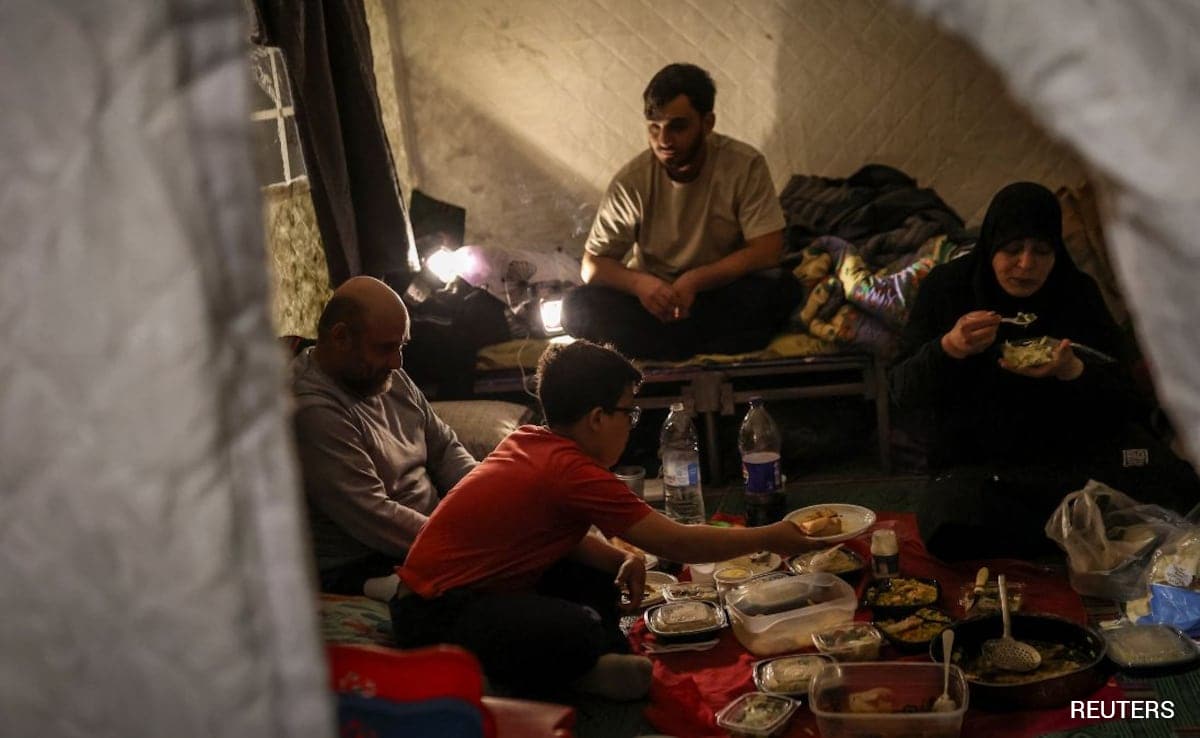
But the human cost isn't found in the price tag of a Patriot battery or a THAAD installation. It is found in the quiet tension of a dinner table.
Take a hypothetical family in the Eastern Province of Saudi Arabia. Let's call the father Omar. He is a systems engineer, a man who understands the logistics of the modern world. As he watches his children play in the garden, he knows that just a few hundred miles away, the regional tensions are simmering. He knows that "de-escalation" is a word used by diplomats, but "readiness" is the word lived by the men and women operating the radar arrays.
The contrast is jarring. On one hand, you have the profound, ancient tradition of Eid—a time of forgiveness, charity, and community. On the other, you have the cold, binary logic of automated defense systems. One is rooted in the soul; the other is rooted in sensors and silicon.
The Weight of the Horizon
The regional landscape has changed because the barrier to entry for warfare has collapsed. Twenty years ago, threatening a nation's capital required an air force, a massive budget, and years of pilot training. Today, it requires a workshop, some commercially available GPS components, and a steady supply of fiberglass.
This shift has forced the Gulf states into a permanent state of high-tech vigilance. They aren't just celebrating a holiday; they are maintaining a perimeter. The "Sky Rules" have changed. When drones can be launched from the back of a truck and disappear into the clutter of radar, the concept of a "front line" vanishes. The front line is now the roof of your house. It is the park where you take your kids.
Yet, there is a peculiar resilience in the human spirit. If you walk through the markets of Doha or the malls of Kuwait City on the eve of Eid, you won't see a population cowering. You see a defiance of the mundane. People buy their Omani halwa. They argue over the best way to cook a lamb. They plan trips to see relatives in neighboring states.
This isn't because they are unaware of the missiles or the drones. It is because they have integrated the risk into the fabric of their existence. It is a collective, unspoken agreement: we will not let the machinery of ghost-warfare dictate the rhythm of our hearts.
The Physics of Peace
The complexity of the current situation lies in the speed of the threat. A ballistic missile doesn't give you time to contemplate. It offers a window of minutes. A drone swarm offers a problem of saturation—too many targets for a traditional system to track.
Think about the technical burden placed on the operators of these defense networks during a major holiday. While the rest of the country is sleeping off a heavy lunch, these individuals are staring at screens, filtering out the "noise" of civilian aviation to look for the one signature that doesn't fit. They are the silent custodians of the celebration.
The stakes are higher now because the region is no longer just an oil exporter. It is a global laboratory for the future. Whether it is the frantic construction of NEOM or the soaring ambitions of the Mars Mission in the UAE, the Gulf is betting on a future that is high-tech and interconnected. That vulnerability is the price of progress. Every new skyscraper is a symbol of success, but it is also a fixed point on a map.
The Silence After the Prayer
There is a moment right after the Eid prayer ends. Thousands of people stand up at once, their voices a low murmur of "Eid Mubarak." For a second, there is a profound silence. In that silence, you can almost hear the world turning.
In that moment, the missiles and the drones feel like artifacts of a different dimension. They belong to a world of geopolitics and power struggles, a world that seems small compared to the vastness of the faith and the family bonds being celebrated on the ground.
But the reality remains. The sky is no longer a void. It is a theater. The Gulf countries are preparing for Eid not just by cleaning their homes and buying gifts, but by ensuring that the invisible shield holds firm. They are balancing on a tightrope between the ancient and the ultramodern.
The drones may rule the skies, but they do not rule the streets. They do not rule the kitchens where mothers are stirring huge pots of rice, nor the majlis where elders are telling stories of the days before the skyscrapers rose.
As the sun sets on the first day of the holiday, the lights of the cities flicker on. From above, they look like a carpet of diamonds spread across the dark velvet of the desert. Somewhere out there, the sensors are spinning. The radars are sweeping. The missiles are nested in their silos, waiting for a command that everyone hopes will never come.
Down below, a child laughs, holding a sparkler that mimics the stars, unaware that for his peace to exist, the sky must be watched with an intensity that never sleeps.


