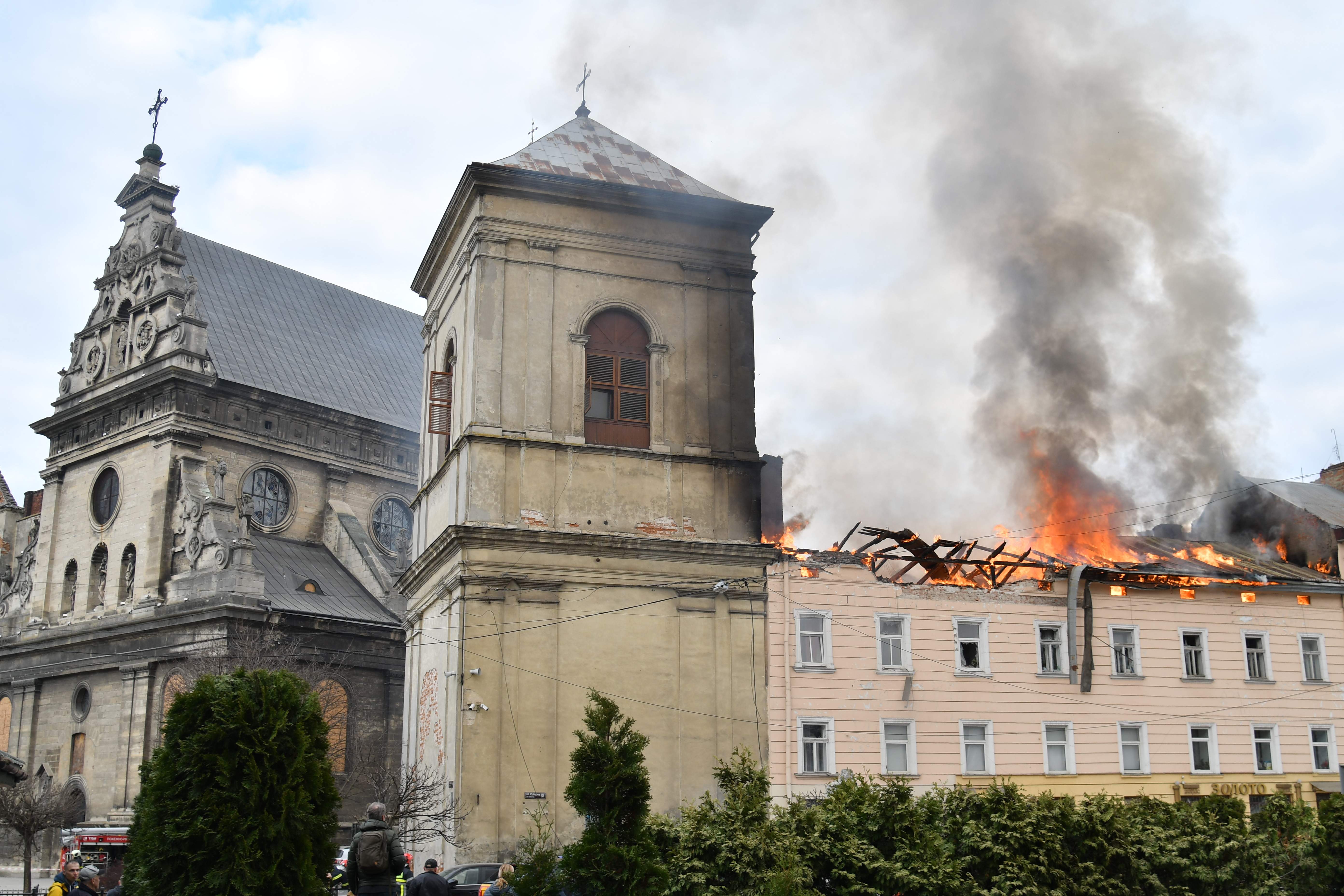
The tea in the small cafe near Tahrir Square is always served too hot and too sweet. It is a stubborn tradition in a city that has learned to find comfort in the constants. But lately, the steam rising from the glass cups doesn’t just carry the scent of cardamom. It carries the weight of a vibration that shouldn’t be there. It is the low, rhythmic hum of drones and the sharp, distant crack of ordnance that belongs to nations thousands of miles away.
Baghdad is a city that knows how to hold its breath. It has practiced the art for decades. Yet, there is a specific kind of exhaustion that sets in when your home becomes the preferred chessboard for two giants who refuse to move their game to their own lawns. This is the reality of Iraq today. It is a nation caught in the gravitational pull of Washington and Tehran, two forces that seem capable of only communicating through the language of explosions.
The Messengers of Discontent
On a Tuesday that should have been defined by mundane bureaucracy, the Prime Minister’s office issued a series of summons. In the sterile, high-walled world of diplomacy, a "summons" is a formal reprimand, a polite way of saying the blood is staining the carpet. The envoys of the United States and Iran were called to explain the latest round of "deadly attacks" on Iraqi soil.
But talk to the shopkeeper in Karada, or the student at Baghdad University, and they will tell you that a summons is just a piece of paper. It does little to muffle the sound of a Hellfire missile or the drone of an Iranian-made Shahed.
Imagine, for a moment, a family living in a modest apartment in the outskirts of the city. Let’s call the father Ahmed. Ahmed isn’t a politician. He isn’t a militiaman. He is a man who worries about the price of tomatoes and whether his daughter’s internet connection will hold up long enough for her to finish her exams. To Ahmed, the geopolitical "tit-for-tat" described by analysts in D.C. or Tehran isn't a strategic maneuver. It is a terrifying lottery. When a US strike targets a militia leader in a crowded neighborhood, or when a pro-Iranian group launches a rocket at a base housing American "advisors," the debris doesn't care about the ideology of the person it hits.
It just falls.
A Sovereignty of Shadows
The Iraqi government finds itself in a position that is less like a sovereign power and more like a tightrope walker during a sandstorm.
Prime Minister Mohammed Shia al-Sudani is tasked with a mission that borders on the impossible. He must maintain the support of the various political factions within his own country—many of which are deeply beholden to Iran—while simultaneously ensuring that the United States doesn’t decide to pull the plug on the military and economic support that keeps the country from sliding back into the chaos of the mid-2000s.
The "deadly attacks" mentioned in the official reports are the byproduct of a shadow war. For years, the US has maintained a presence in Iraq to train forces and prevent the resurgence of ISIS. For just as long, Iran has viewed this presence as an existential threat on its doorstep. They use local proxies—Iraqi militias—to harass the Americans. The Americans, in turn, retaliate with precision strikes.
The tragedy lies in the location. The theater for this performance is always Iraq.
This isn't a theoretical struggle. It is a physical one. Since late 2023, the frequency of these exchanges has spiked. Every time a regional tension flares—be it in Gaza, Lebanon, or the Red Sea—the pressure cooker in Baghdad whistles a little louder. The "invisible stakes" here aren't just about territory or oil. They are about the psychological soul of a people who just want to be left alone.
The Cost of the Proxy
When we talk about "militias" and "coalition forces," we often lose the human element in the jargon. Consider the young Iraqi soldier. He is a man who likely joined the service for a paycheck and a sense of duty to protect his village from the black flags of extremists. Now, he finds himself stationed at a base that is a magnet for Iranian-backed rockets. If he dies in a strike, is he a martyr for his country, or is he collateral damage in a feud he never signed up for?
The U.S. argues that its strikes are necessary for "self-defense." They claim they are picking off high-value targets who orchestrate attacks against Western interests. On the other side, Iran’s envoys will speak of "resistance" against "imperialist occupation." Both sides use Iraq as a megaphone to shout at one another.
But a megaphone doesn't feel the vibration; it only passes it through. Iraq is the metal, the casing, and the electronics being rattled to pieces by the volume of the screams.
The economic toll is just as visceral. Investors don't like cities where the sky occasionally rains fire. The "holistic" development of the country—a term often used in glossy brochures but rarely seen on the ground—is stalled every time a diplomatic crisis erupts. Why build a factory if the road leading to it might be closed for a week because of a drone strike? Why stay in Baghdad if you have the skills to move to Dubai or London? The brain drain is a silent hemorrhage, a slow emptying of the country’s future.
Breaking the Cycle of Echoes
The summoning of the envoys is an act of desperation. It is a signal to the world that the Iraqi state is trying to assert its own identity. But sovereignty isn't granted; it is taken. And it is hard to take sovereignty when your neighbors and your allies have keys to your front door and a habit of rearranging the furniture without asking.
There is a growing movement among the Iraqi youth—the generation that didn't live through the 2003 invasion but has lived through everything that followed. They are tired of the "Resistance" narrative and they are tired of the "Liberation" narrative. They want a narrative of "Normalcy."
Normalcy means being able to walk down the street without checking the sky. It means a government that answers to the people in the cafes, not the handlers in foreign capitals.
The conflict between the US and Iran is often described as a "cold war." But for the people on the ground in Baghdad, Erbil, and Anbar, there is nothing cold about it. The heat of the explosions is real. The heat of the anger is real. And the heat of that cardamom tea, which Ahmed drinks while watching the news on a flickering screen, is the only thing he can actually control.
He watches the news of the envoys being summoned. He sees the stiff suits and the prepared statements. He knows that tonight, like every night, he will lie in bed and listen to the silence of the city, hoping it stays that way. Because in Iraq, silence is the most expensive luxury of all.
As the sun sets over the Tigris, casting a long, golden shadow across the ancient city, the question remains. How long can a nation survive as a battlefield before there is nothing left to fight over? The diplomats will meet, the papers will be signed, and the envoys will return to their fortified compounds. But the people of Iraq will remain in the crossfire, waiting for a day when their sky belongs to them again.
The tea has gone cold. The sugar has settled at the bottom of the glass. The city waits.