The air inside a federal courtroom in Washington D.C. doesn't smell like progress. It smells like old paper, floor wax, and the heavy, invisible weight of bureaucracy. When the judge’s gavel finally struck the mahogany bench this week, it wasn't just a sound. It was a door slamming shut.
Anthropic, the billion-dollar darling of the artificial intelligence world, found itself on the wrong side of that door. They wanted in. They wanted their Claude models—the sophisticated, safety-conscious algorithms that many argue are the most "human" AI systems ever built—to be the brain behind the shield of national defense. The Pentagon said no. A federal judge just backed them up.
This isn't a story about software licenses or procurement spreadsheets. It is a story about the frantic, high-stakes race to define who controls the mind of the modern military. It is about a clash between the agile, idealistic world of Silicon Valley and the immovable, fortress-like reality of the Department of Defense.
The Ghost in the Machine
Consider a hypothetical analyst named Sarah. She sits in a windowless room in Virginia, tasked with sifting through petabytes of intercepted data to identify a threat before it manifests. Sarah is tired. Her eyes ache. She needs a partner that doesn't blink, doesn't get bored, and—crucially—doesn't hallucinate a ghost into existence.
Anthropic’s pitch to the Pentagon was that Claude could be that partner. Unlike some of its more erratic competitors, Claude is built on a foundation of "Constitutional AI." It is designed to have a conscience, or at least the digital equivalent of one. It is meant to be the "safe" AI, the one that won't go rogue or suggest a catastrophic course of action because it misunderstood a prompt.
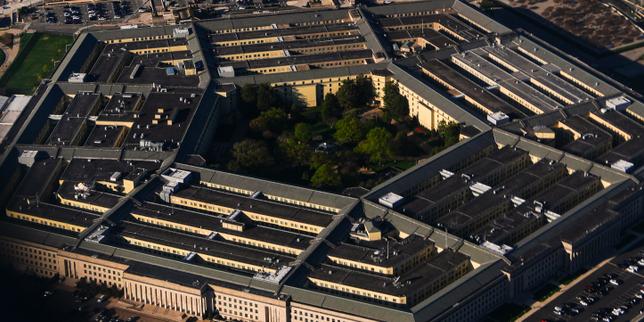
But the Pentagon operates on a different kind of safety. In the halls of the E-Ring, safety isn't just about code; it’s about control. It’s about knowing exactly where every byte of data goes and who has the key. When the Department of Defense issued its ban on Anthropic’s technology for certain high-level integrations, it wasn't necessarily a critique of the AI’s intelligence. It was a territorial marking.
The lawsuit filed by Anthropic was an attempt to freeze that ban, a legal "wait a minute" aimed at preventing a competitor—likely a name like Microsoft or Amazon—from cementing a monopoly on the future of warfare.
The Weight of the Gavel
Judge James Boasberg didn't spend his time debating the nuances of neural networks. His ruling was colder. He looked at the mechanics of government power. The court’s refusal to suspend the ban sends a clear, chilling message to every startup dreaming of a government contract: The Pentagon is not a playground.
The legal reality is that the military has broad, almost sweeping authority to decide what tech enters its perimeter. If the generals decide a specific architecture is a risk—whether that risk is technical, political, or purely procedural—the courts are notoriously hesitant to second-guess them.
Anthropic argued that the ban was arbitrary. They suggested it was a move that ignored the actual merits of their technology in favor of established titans who already have the "badges" and the clearances. In the tech world, this is the ultimate frustration. You build a better mousetrap, but the person with the mouse problem refuses to buy it because they’ve been friends with the old mousetrap salesman for thirty years.
But for the Pentagon, those thirty years represent something Anthropic doesn't have yet: a track record of total, unblinking compliance.
The Invisible Stakes of a Digital Lockdown
We often talk about the "AI arms race" as if it’s a sprint toward a finish line. It’s not. It’s a slow, agonizing crawl through a minefield.
When the court sided with the government, it effectively validated a "closed-door" policy. The danger here isn't just that Anthropic loses a contract. The danger is that the most advanced safety features in the world might be kept out of the hands of the people who need them most. If Sarah, our analyst in Virginia, is forced to use a less-sophisticated, "approved" AI simply because the paperwork was easier, the risk of a mistake doesn't go down. It goes up.
There is a profound irony in the fact that the company most vocal about AI safety is being blocked by the organization most concerned with national security.
The court’s decision hinges on a concept called "irreparable harm." To get an injunction, Anthropic had to prove that being banned from this specific procurement process would destroy them in a way that money couldn't fix. The judge wasn't convinced. To the court, this was just another business dispute. To the engineers at Anthropic, it felt like being told their vision for a safer, AI-driven defense was being suffocated in the crib.
A Monopoly on the Future
What happens when only one or two companies are allowed to speak to the machines that run our world?
History shows that when the military-industrial complex narrows its vision to a few select partners, innovation stalls. Prices go up. Thinking becomes rigid. We saw it with the great aerospace mergers of the late 20th century. Now, we are seeing it with the intelligence of the 21st.
The Pentagon's ban isn't just a temporary hurdle. It’s a signal to the venture capitalists and the brilliant minds in San Francisco that the "disruptive" model of business doesn't work when you’re dealing with the nuclear triad or global surveillance. The gates are heavy. The guards are suspicious.
Anthropic wanted to prove that a small, ethics-focused company could compete with the giants of the industry on the most important stage in the world. Instead, they received a masterclass in the power of the status quo. The "Constitutional AI" they championed met the literal Constitution of the United States, and the court decided that the Executive Branch's right to run its own house outweighed a startup's right to a fair shake.
The Silence After the Storm
The courtroom cleared out quickly. The lawyers packed their leather briefcases. The reporters filed their staccato updates. But the implications of that silence will ripple for years.
Somewhere in a lab, a researcher is tweaking a line of code, trying to make Claude just a little bit smarter, a little more empathetic, a little more reliable. They do this under the belief that better technology will eventually win because it is, quite simply, better.
They are learning a hard truth.
In the world of high-stakes defense, "better" is a subjective term. "Authorized" is the only word that matters. The Pentagon’s wall remains standing, not because it is perfect, but because it is theirs. And for now, the most sophisticated artificial mind ever created is forced to sit on the sidewalk, looking through the bars, waiting for a key that may never come.
The lights in the courtroom flickered off. The gavel sat cold on the bench. The machines continue to learn, but they are learning in a world where the most powerful gatekeepers are still made of flesh, blood, and a stubborn refusal to change the locks.