The iron gate at the end of the driveway does not look like a battlefield. It is just metal, painted a respectable shade of black, guarding a garden that has seen better days. But in the quiet, high-altitude air of Hong Kong’s Kadoorie Hill, this gate now represents the final, physical frontier of a legal war that has moved far beyond the courtrooms. When the Secretary for Security moves to seize the bricks and mortar of a man already behind bars, the story is no longer about a single tycoon. It is about the evaporation of ownership itself.
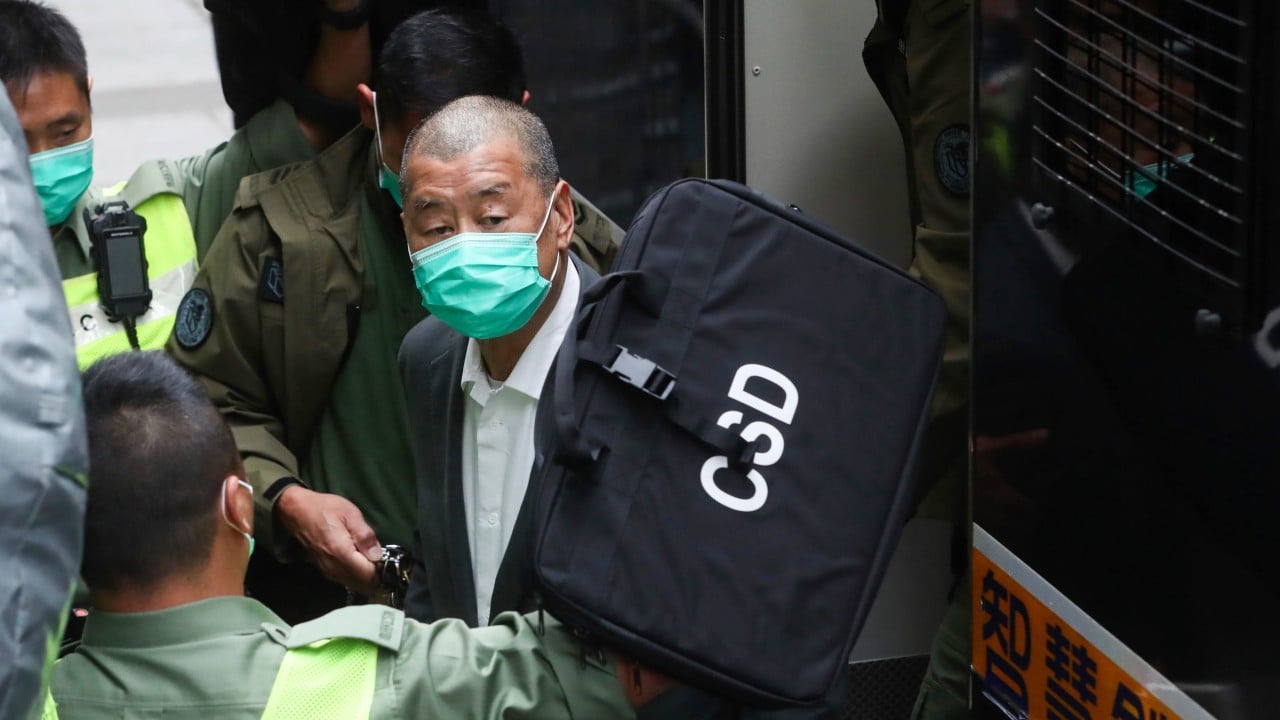
Jimmy Lai is eighty years old. He sits in a cell while the city he helped build through ink and outrage continues to pulse below him. For years, the narrative around the founder of the defunct Apple Daily newspaper was defined by noise—shouted headlines, street protests, the thrum of printing presses. Now, the noise has been replaced by the scratching of pens on forfeiture orders. The Hong Kong government is currently petitioning the High Court to permanently take his property, including his home and his shares in Next Digital, under the powers of the National Security Law.
They call it a "confiscation order." The term sounds clinical. It suggests a tidying up of loose ends. In reality, it is a surgical removal of a man’s footprint from the earth.
To understand the weight of this, one must look past the politics and into the marrow of how a city functions. Hong Kong was always a place built on the sanctity of the contract. You worked, you earned, you bought, and you owned. That was the unspoken deal. Whether you were a billionaire in a mansion or a vendor selling fish balls in Mong Kok, the law was the floor beneath your feet. It was solid.
When the floor begins to turn into water, everyone feels the tremor.
The legal mechanism being used here is a specific tool designed to target the proceeds of crime. Specifically, authorities are targeting three properties on Kadoorie Hill and Lai's total stake in his media empire. The argument is that these assets are inextricably linked to "offences endangering national security." By moving for forfeiture, the state is seeking to ensure that these assets never return to Lai’s hands, or his family’s, regardless of future appeals or the ticking of the clock.
Consider the hypothetical perspective of a local property appraiser. For decades, his job was simple math: square footage multiplied by market sentiment. Now, he must look at a deed and wonder if the political weather can devalue a foundation more quickly than a market crash. The value of a home is traditionally found in its permanence. If the state can reach back through time and declare that the roof over your head is a forfeit instrument of a crime defined years after the house was purchased, the math changes. The risk becomes unquantifiable.
Jimmy Lai’s transition from a clothing mogul to a media titan was a quintessentially Hong Kong journey. He arrived as a penniless refugee and built a kingdom. That kingdom is now being dismantled piece by piece, not by a competitor, but by a legal system that has undergone a fundamental recalibration.
The shares in Next Digital are already effectively worthless; the company was delisted and forced into liquidation after its bank accounts were frozen. This left thousands of minority shareholders—ordinary citizens who believed in the brand or simply wanted a piece of a profitable company—holding empty envelopes. Their money didn't disappear because of a bad business cycle. It vanished because the entity they invested in was declared a threat to the state.
This is where the human element hits the hardest. We often view these high-stakes legal battles as a clash of titans—the government versus the dissident. We forget the secretaries, the delivery drivers, and the small-time investors who watched their life savings evaporate because the company they worked for became a legal contagion. When the government seeks a forfeiture order, they are closing the book on the possibility of any restitution for those caught in the crossfire.
The process is moving through the High Court with a grim, rhythmic efficiency. There are no crowds outside the courtroom anymore. The spectacles of 2019 have been replaced by the mundane silence of administrative filings. This is the "new normal" that has been discussed in hushed tones across the boardroom tables of Central.
Security. Stability. These are the words the authorities use to justify the seizure. They argue that by removing the financial base of those who would challenge the order of the city, they are ensuring a peaceful future for the other seven million residents. It is a logic of subtraction: the city is safer when the "bad actors" have nothing left.
But property has a memory.
In any other city, a forfeiture of this scale would be the lead story for months. In Hong Kong, it is a Tuesday. People read the news on their phones, adjust their masks, and board the MTR. They have learned the art of looking away. Yet, in the back of the mind, a question lingers. If the most famous man in the city can have his home erased from his portfolio by a stroke of a pen, what does that mean for the shopkeeper? What does it mean for the expatriate executive who moved here because they believed their assets were shielded by a firewall of British-influenced common law?
The firewall has been breached. The fire is inside the house.
The legal proceedings regarding the Kadoorie Hill properties are expected to be complex, involving arguments about the direct connection between the real estate and the alleged crimes. The prosecution must prove that these homes were used in the commission of an offense or purchased with the fruits of one. In the context of national security, that definition is terrifyingly elastic. If a meeting was held in a living room, does the living room become a weapon? If a phone call was made from a balcony, does the balcony become the proceeds of a crime?
These are not just academic questions for lawyers to debate over expensive coffee. They are the new rules of engagement for anyone doing business in the region. The uncertainty is the point. When the boundaries of what can be seized are blurred, the only safe move is total compliance.
There is a specific kind of coldness in seeing a home turned into a "case number." A home is where children grow up, where meals are shared, and where a person expects to find sanctuary at the end of a long life. To see it treated as a pawn in a geopolitical endgame is a reminder of how fragile our "rights" truly are. They exist only as long as the power above us decides to recognize them.
Jimmy Lai will likely never see the inside of those Kadoorie Hill properties again. He knows this. The government knows this. The forfeiture order is a formality, a final stamp on a letter that was written years ago. It is the ritualistic burial of a legacy.
As the sun sets over the Kowloon skyline, casting long, orange shadows over the hills, the black gates remain shut. The garden grows a little more wild each day. The neighbors walk their dogs past the house, perhaps quickening their pace, perhaps wondering who will live there next. They don't talk about it. In the new Hong Kong, silence is the most valuable asset you can own.
But silence doesn't pay the mortgage, and it doesn't protect the deed. It only masks the sound of the foundation being chipped away, one court order at a time. The house still stands, but its soul has been legally vacated, leaving behind a hollow shell of brick and mortar that serves as a monument to the day the rules changed forever.