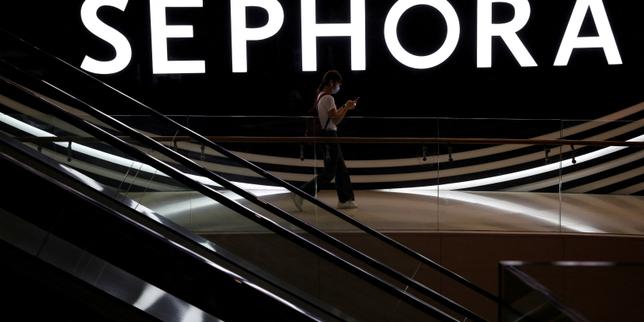
The Italian Competition Authority (AGCM) has officially moved from observation to action. This isn't just another slap on the wrist for a retail giant. It is a targeted investigation into LVMH, specifically its powerhouse brands Sephora and Benefit, over the aggressive marketing of high-potency skincare to children. The core of the probe focuses on a phenomenon that has haunted retail aisles for the last eighteen months. We are talking about "Sephora Kids." These are pre-teens and children under twelve who are buying, and being sold, products containing active ingredients like retinol and exfoliating acids that were never intended for prepubescent skin.
Italy’s regulators are questioning whether these companies intentionally ignored the biological age of their customers to chase a TikTok-driven revenue spike. The investigation explores the fine line between "organic trends" and "calculated negligence." While Sephora might argue it simply provides a platform for various brands, the AGCM is looking at the point-of-sale experience. They want to know why a ten-year-old can walk into a store and walk out with a $70 jar of firming cream containing chemicals that can trigger severe dermatitis or permanent skin barrier damage in children.
The Viral Engine of Childhood Insecurity
The current crisis didn't happen in a vacuum. It was manufactured by an ecosystem of social media influencers and brand placement. Sephora became the "third place" for a generation that no longer has malls or parks. But unlike the toy stores of the past, Sephora sells a promise of perfection that is fundamentally at odds with the biological reality of a child.
Benefit and Sephora are accused of failing to implement age-gating or clear warning labels on products that are clearly being marketed toward younger demographics through bright packaging and "fun" textures. The Italian authorities are scrutinizing the specific use of influencers who appeal to the "Mini-Me" demographic. When a brand sees its sales of a specific anti-aging serum triple because of nine-year-old "skinfluencers," the ethical obligation to intervene becomes a legal liability if they remain silent.
The Biological Mismatch
Children’s skin is significantly thinner than adult skin. It absorbs substances more rapidly. It does not need "resurfacing." When a child applies a 10% AHA/BHA peel, they aren't achieving a glow; they are inducing a chemical burn. The long-term implications are even more concerning. Dermatologists have seen a massive uptick in contact allergies and photosensitivity in patients who haven't even hit puberty.
LVMH knows this. Their internal R&D departments are some of the most sophisticated in the world. They understand the toxicology of their ingredients better than anyone. The investigation suggests that the company allowed the "Sephora Kids" trend to flourish because the margins were too good to ignore. It is a classic case of corporate silence being used as a marketing strategy. By not saying "this isn't for you," they implicitly said "everyone is welcome."
The Failure of Self Regulation
The beauty industry has long operated on a "trust us" basis. In Europe, the regulations are stricter than in the US, but they still rely heavily on the manufacturer to determine the "intended use" of a product. If a brand labels a cream as "anti-aging," they technically aren't marketing it to kids. However, the AGCM is looking at substantive reality over formal labels.
If a store layout places a high-potency "Benefit" product next to glittery lip glosses and colorful displays that attract children, the "intended use" argument falls apart. It becomes a matter of predatory placement. Italy is leading the charge here, but France and the UK are watching closely. This case could set a precedent where retailers are held responsible for the demographic composition of their buyers for specific hazardous categories.
Corporate Accountability vs Trend Exploitation
LVMH is the crown jewel of European luxury. Their defense will likely hinge on the idea of parental responsibility. They will argue that it is up to the guardian to monitor what a child buys. But that defense ignores the power of the modern retail environment. Sephora stores are designed as high-sensory playgrounds. The lighting, the testers, and the "Beauty Insider" rewards programs are all calibrated to trigger a dopamine response.
The investigation is digging into the loyalty program data. The AGCM wants to see if Sephora's algorithms were pushing notifications for anti-aging products to accounts owned by minors. If the data shows that the company’s digital infrastructure was actively nudging children toward adult skincare, the fines will be the least of their worries. They would be facing a total overhaul of their digital marketing stack across the EU.
The Economic Incentive of Silence
Let's look at the numbers. The "pre-juvenation" market is the fastest-growing segment in beauty. Growth in traditional adult demographics has plateaued. To keep the stock price climbing, LVMH needed a new well. They found it in the daughters of their existing customers.
By allowing the "Sephora Kids" trend to go unchecked, Sephora effectively lowered the Customer Acquisition Cost (CAC) for the next generation. They hooked them early. A twelve-year-old who is already loyal to the Sephora ecosystem is worth tens of thousands of dollars in "Lifetime Value" (LTV). The AGCM's investigation is a direct threat to this long-term financial strategy. It suggests that some revenue is, in fact, "dirty" if it comes from compromising the health of minors.
Technical Oversight and Retail Negligence
- Ingredient Transparency: The probe looks at whether Benefit failed to disclose the risks of certain botanicals and synthetics when used on young skin.
- In-Store Guidance: Secret shoppers in Italy reportedly found that staff rarely intervened when children attempted to purchase products with high concentrations of active acids.
- Algorithmic Bias: Investigation into whether the Sephora app’s recommendation engine treats a 13-year-old's search history the same as a 35-year-old's.
The Industry’s Turning Point
This isn't a localized Italian problem. It is a systemic failure of the global beauty industry to adapt to the power of social media. For decades, beauty brands controlled the narrative through magazines and TV. Now, the narrative is controlled by twelve-year-olds with ring lights. Brands have enjoyed the benefits of this "decentralized marketing" without taking on any of the responsibility.
The Italian investigation is a signal that the era of "plausible deniability" is over. If you profit from a trend that harms children, you are liable for that harm. It doesn't matter if you didn't film the TikTok yourself. If you stocked the shelf, tuned the algorithm, and took the money, you are a participant.
Retailers need to implement hard stops at the point of sale. A simple "Age Restricted" prompt on a cash register for certain SKUs would solve a large portion of this problem. The fact that Sephora hasn't done this voluntarily speaks volumes about their priorities. They are waiting for the law to force their hand because the voluntary path would hurt the quarterly earnings report.
LVMH is currently fighting a war on two fronts: maintaining its image as a purveyor of "prestige" while operating a retail environment that has become increasingly chaotic and, according to the AGCM, potentially deceptive. The outcome of this investigation will likely dictate how beauty products are sold across the entire European Union for the next decade.
The immediate requirement for LVMH is a total audit of their "pre-teen" engagement strategy. They must decide if the short-term surge from selling retinol to children is worth the long-term destruction of their brand's "prestige" status and the looming threat of massive regulatory fines. The Italian authorities are no longer asking for cooperation. They are demanding an accounting of the cost of doing business in a world where childhood has become a marketable commodity. Companies must now choose between the bottom line and the biological safety of their youngest consumers. There is no middle ground left to occupy.
The most effective way to stop this is to hit the brands where it hurts: the "authorized retailer" agreements. If brands like Benefit are found to be complicit, they could face bans or mandatory "black box" warnings on packaging across Italy. This would be a catastrophic blow to the aesthetic of "luxury" that LVMH spends billions to maintain.
Retailers should immediately move to categorize skincare products by active-ingredient strength and implement mandatory age-verification for any product containing retinoids or high-percentage acids. This is not a radical suggestion; it is a basic safety standard that has been ignored for far too long. If the industry won't police its own aisles, the state will do it for them, and the state's methods are rarely subtle or cheap.