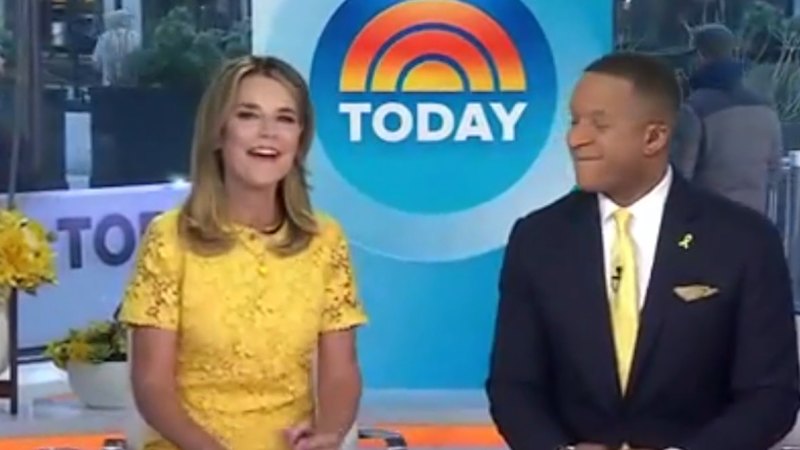
The press release is predictable. The headlines are sycophantic. The narrative is set: Savannah Guthrie is returning to her post, and we are all supposed to pretend that the morning show "throne" still matters.
It doesn't.
The industry obsession with the "return" of a legacy anchor is a symptom of a dying medium clinging to a 1994 playbook. We treat these transitions like the changing of the guard at Buckingham Palace, ignoring the fact that the palace is currently being converted into luxury condos for TikTok creators. The "anchor as a deity" era is over. If you think a single personality—no matter how polished or legally trained—can save the linear morning show from its inevitable slide into irrelevance, you aren't paying attention to the data.
The Myth of the Unreplaceable Anchor
The prevailing wisdom suggests that the anchor is the brand. NBC spends millions to convince you that Guthrie or Hoda Kotb or whoever sits in those swivel chairs is your "morning friend." This is a calculated psychological play designed to build viewer loyalty in an age of infinite choice.
But here is the truth the networks won't tell you: The audience isn't loyal to the person; they are loyal to the routine.
When a major anchor leaves or takes a hiatus, the ratings dip. The trades panic. Then, three months later, the numbers stabilize. Why? Because the person eating cereal at 7:15 AM doesn't actually care about the nuanced interviewing skills of a Georgetown Law grad. They want the weather, a few headlines, and a sense of normalcy. The "talent" is a glorified placeholder for the viewer's own morning habits.
I’ve seen network executives sweat through their bespoke suits over contract negotiations, terrified that a star's departure will sink the ship. It never does. The ship is already sinking because of cord-cutting and the democratization of information. The anchor isn't the captain; they’re the band playing on the deck of the Titanic.
The High Cost of Artificial Authenticity
Network TV is currently trapped in a "relatability arms race." They want Savannah Guthrie to be both a hard-hitting journalist and your quirky best friend who loves a good viral recipe. This duality is exhausting and, increasingly, transparent.
The modern viewer has a high-definition "BS detector." They can smell the scripting. They see the teleprompter reflection in the eyes. While the legacy media tries to engineer "moments," the real world has moved to unpolished, long-form content.
Consider the math:
- The Network Morning Show: Costs hundreds of thousands of dollars per hour to produce, requires a staff of hundreds, and reaches an aging demographic that is shrinking by 10% to 15% annually.
- The Independent Creator: Costs the price of a ring light and a microphone, reaches a global audience, and commands higher trust levels because they don't have to pivot to a commercial for cholesterol medication every six minutes.
The "return" of an anchor is celebrated as a win for stability. In reality, it’s a failure of imagination. It's a refusal to pivot away from a high-overhead model that relies on the "God Voice" of the traditional news anchor.
Stop Asking if the Anchor is Back
The question "When is Savannah coming back?" is the wrong question. The real question is: "Why does it matter?"
If the goal of a news program is to inform, the linear morning show is the least efficient way to do it. You are forced to sit through segments on celebrity breakups and "life hacks" to get three minutes of actual news. The "anchor" is the glue that holds this inefficient mess together. Without the star power, the whole format reveals itself as a bloated, time-wasting relic.
The Legal Analyst Trap
One of the main arguments for Guthrie’s specific value is her legal background. She can "dissect" complex cases. Sure. But we live in an era where you can go directly to the source. You can read the filings on PACER. You can follow legal scholars on social media who provide real-time analysis without the constraints of a 90-second segment window and a producer screaming in their ear to "wrap it up."
The "expert anchor" is a middleman. And the internet is the greatest disintermediation tool in human history.
The Cult of Personality is a Liability
When a network ties its entire identity to one or two faces, they create a massive point of failure. We’ve seen this time and again. A scandal, a contract dispute, or a simple desire to spend more time with family, and the network is left scrambling.
They are building their houses on rented land.
True authority in 2026 isn't about who has the best lighting or the most expensive wardrobe. It’s about who provides the most value with the least amount of friction. The traditional morning show is high-friction. It’s appointment viewing in an on-demand world.
The Uncomfortable Reality of Ratings
Let's look at the "People Also Ask" obsession with anchor salaries and returns. People want to know if their favorite host is coming back because they crave the comfort of the status quo.
But look at the demo. The 18-49 demographic—the one advertisers actually pay for—is fleeing linear TV. Those who remain are largely doing so out of inertia. Celebrating a "return to TV" is like celebrating the return of a specific telegraph operator. It’s nice for the five people still using the telegraph, but the rest of the world has moved on to fiber optics.
The downsides of my perspective? It’s cynical. It ignores the genuine talent these individuals possess. Savannah Guthrie is an objectively skilled broadcaster. But skill in an obsolete medium is a tragedy, not a triumph.
The Actionable Truth for the Viewer
Stop waiting for a "return" to tell you the world is okay. The news cycle doesn't start when the cameras in Studio 1A turn on.
- Diversify your inputs: If you get your worldview from a single morning show, you are seeing a curated, sanitized version of reality designed to keep advertisers happy.
- Acknowledge the theater: Watch the "return" if you enjoy the spectacle, but don't confuse it with essential journalism. It is lifestyle programming with a news veneer.
- Follow the talent, not the chair: If you truly value Guthrie’s insight, look for where she speaks without a teleprompter. That’s where the real value lies—not in the scripted "banter" between segments.
The era of the "Main Event" anchor is dead. We are just waiting for the networks to realize they’re throwing a party in an empty room.
The return of a star isn't a comeback. It's a stay of execution.