Sabri Essid thought he could hide in the chaos of a collapsing caliphate. He was wrong. The French "half-brother" of Mohamed Merah—the terrorist who attacked Toulouse in 2012—is finally facing a courtroom in Paris. This isn't just another terrorism trial. It's a landmark moment for international law because Essid is being charged with genocide and crimes against humanity. Specifically, the systematic destruction of the Yezidi people.
For years, we've seen ISIS fighters prosecuted for "associating with a terrorist group." That’s a weak charge. It’s a catch-all that doesn't capture the sheer depravity of what happened in Sinjar. Calling it genocide matters. It changes the historical record. It acknowledges that the goal wasn't just land or power; it was the total erasure of a culture and a faith.
The witness who broke the silence
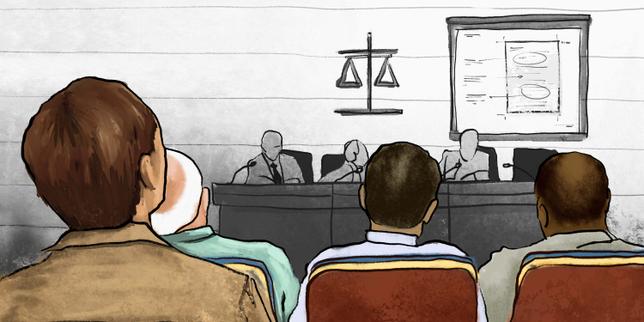
The heart of this trial isn't the man in the glass box. It's the woman who stood just a few feet from him to tell her story. We'll call her "N." for her safety. Her testimony is the kind of thing that stays with you long after the courtroom lights go out. She was sold. She was beaten. She was treated as property under a "manual" the Islamic State distributed to justify the rape of "infidel" women.
Essid didn't just join a group. He participated in a slave market. When N. spoke, the room went silent. She described how Essid bought her and kept her captive in Syria. She wasn't just a prisoner; she was a victim of a calculated attempt to break her spirit and, by extension, the spirit of her people.
Listening to her, you realize that "indescribable pain" is an understatement. It’s a hole in the soul. Yet, her presence in that French courtroom is an act of incredible defiance. She survived a system designed to kill her, and now she's the one holding the gavel of truth.
Why this isn't just another ISIS trial
Most ISIS trials focus on the "soldier" aspect. Did they carry a gun? Did they guard a checkpoint? This trial is different. It looks at the domestic life of the caliphate, which was arguably more horrific than the front lines.
The prosecution is using a specific legal framework to prove genocide. To win, they have to show "intent to destroy, in whole or in part, a national, ethnical, racial or religious group." Essid wasn't just a random guy who moved to Raqqa. He was part of the machinery.
- The Slave Trade: ISIS didn't hide this. They had offices for it.
- The Indoctrination: Children were taken to be raised as "cubs of the caliphate," forced to forget their Yezidi roots.
- The Mass Graves: Over 80 mass graves have been found in Sinjar since 2014.
By charging Essid with genocide, French prosecutors are following the lead of German courts, which were the first to secure such convictions. It’s about time. If we don't call it what it is, we're basically telling the survivors that their suffering was just "collateral damage" of a war. It wasn't. It was the point of the war.
The ghost of Mohamed Merah
You can't talk about Sabri Essid without mentioning the Merah family. This lineage of radicalization is a dark stain on French security history. Essid was a mentor figure. He was the one who appeared in a 2015 ISIS video showing a young boy executing a prisoner.
That video was a turning point. It showed the world that Essid wasn't just a follower. He was a producer of horror. He was teaching the next generation how to murder.
In court, Essid often tries to play the "simple believer" card. Don't buy it. He knew exactly what he was doing. He chose to go. He chose to stay. He chose to participate in a system of human trafficking that specifically targeted Yezidi women. The defense might argue he was just a cog in the machine, but machines don't work without their parts.
Justice is slow but it's coming
People often ask why these trials take so long. The genocide happened in 2014. It’s 2026. Why now?
Building a genocide case is a nightmare for investigators. You need more than just a witness saying "he was there." You need to prove the structural intent of the organization and the individual's role in it. It requires coordinating with the UN, gathering forensic evidence from Iraq and Syria, and finding survivors who are willing to relive their trauma in a cold, bureaucratic setting.
N.'s bravery cannot be overstated. She had to travel, face her abuser, and recount the most shameful moments of her life. She did it because she knows that without her voice, Essid might just be another name on a long list of deported radicals.
What this means for the future of international law
If Essid is convicted of genocide, it sets a massive precedent in France. It sends a message to every foreign fighter currently sitting in a camp in Northern Syria: you will be held accountable for the specific crimes against the Yezidi people, not just for being a member of a banned group.
We need more of this. Universal jurisdiction allows countries like France and Germany to prosecute these crimes even if they didn't happen on their soil. It’s the only way to ensure that there’s no safe haven for monsters.
The Yezidi community is still displaced. Sinjar is still a mess. Most survivors haven't seen a dime of reparations. But trials like this provide a different kind of currency: recognition. When a judge says the word "genocide," it validates a decade of mourning.
Follow the trial's daily transcripts through human rights NGOs like the International Federation for Human Rights (FIDH). Support the Nadia's Initiative, which works on the ground to rebuild Yezidi villages. Don't let the news cycle bury this. The survivors are still speaking, and the least we can do is listen.
The verdict won't bring back the thousands who were murdered or the women who are still missing. But it tells the world that the "indescribable" will finally be described, documented, and punished.