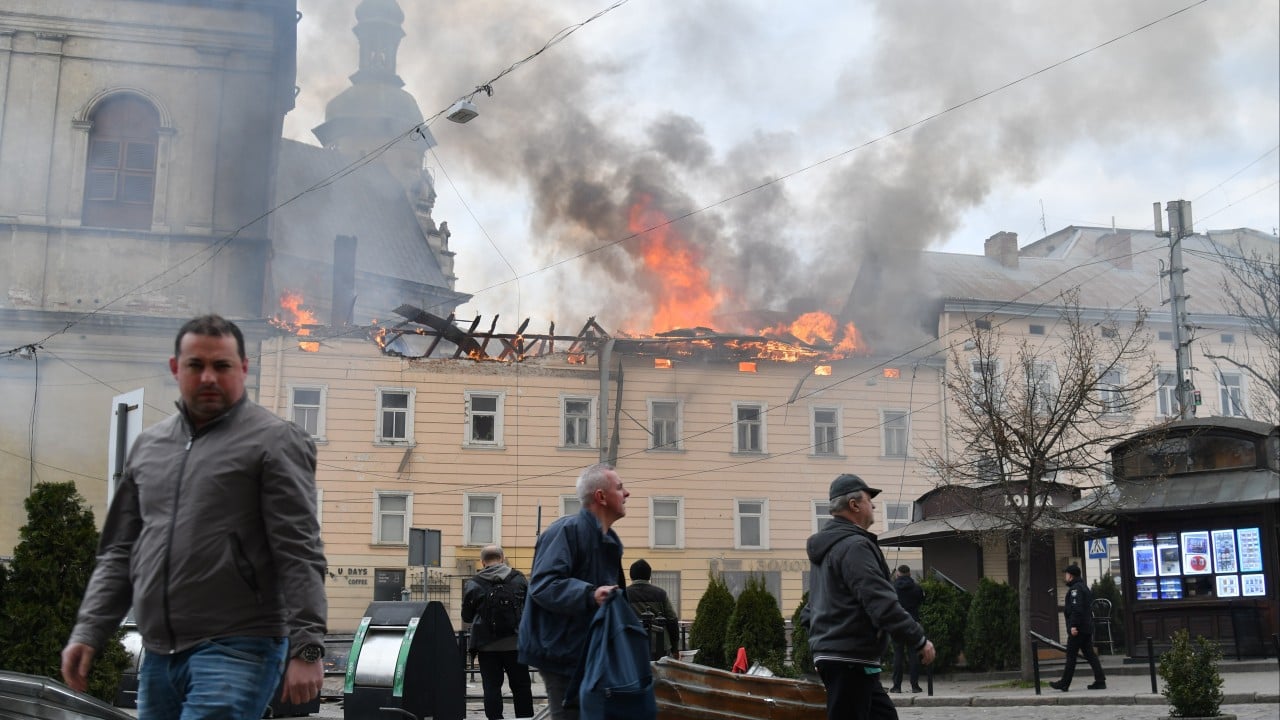
The media is obsessed with fire. Every time a Ukrainian drone slams into a Russian oil terminal in Ust-Luga or a refinery in Ryazan, the headlines scream about "crippling the Russian war machine." It makes for great television. Dark smoke plumes against a Siberian sky look like victory.
They aren't.
If you think blowing up a distillation tower at a Rosneft plant is the "game-changer" (to use a word the pundits love but I despise), you don’t understand how energy infrastructure or modern attrition works. You are looking at the symptoms of a conflict, not the nervous system. While the "lazy consensus" tracks the number of barrels of oil lost, they are missing the brutal reality: the physical destruction of refineries is a temporary logistical headache. The real war—the one that actually breaks a nation—is happening in the electrical substations and the specialized manufacturing supply chains that no one is talking about.
The Myth of the "Crippled" Refinery
Let’s dismantle the first delusion. The common narrative suggests that if Ukraine hits enough refineries, Russia runs out of gas, the tanks stop, and the economy collapses.
That is mathematically illiterate.
Russia is a resource colony with a secondary processing problem. They produce roughly 10 million barrels of crude oil per day. They only need a fraction of that for domestic consumption and military operations. Even if Ukraine knocked out 20% of Russia’s refining capacity—which would be a monumental feat of drone engineering—Russia still has more than enough crude to swap for finished products from "neutral" partners like India or China.
Furthermore, refineries are built to be resilient. They are massive, sprawling complexes of pipes and concrete. To actually "destroy" one, you need more than a 50kg warhead on a hobbyist drone. You need a sustained bombing campaign that most NATO countries couldn't even pull off. What we see instead is the surgical removal of atmospheric distillation units. It’s annoying. It’s expensive. It is not terminal.
I have spent years looking at industrial supply chains. You don't kill a giant by pricking its skin; you kill it by inducing a stroke.
The "Western Parts" Trap
The real genius of the Ukrainian strategy isn't the fire. It’s the timing.
Most Russian refineries were modernized in the early 2010s using Western technology—specifically from firms like Honeywell UOP, Lummus, and Technip. These plants rely on proprietary catalysts and highly specialized control systems.
When a drone hits a control room or a specific heat exchanger, Russia cannot simply go to a hardware store in Moscow and buy a replacement. They are operating on a "cannibalization clock." They take parts from Plant B to fix Plant A. Eventually, they run out of B.
The mistake analysts make is assuming this leads to an immediate halt. It doesn't. It leads to a slow, grinding degradation of quality. Russia will keep producing fuel, but it will be "dirty" fuel. High sulfur. Low octane. The kind of stuff that gums up high-performance jet engines and modern tank filters over six months, not six days.
Why the Power Grid is the Real Target
If you want to actually paralyze a country, you don't hit the oil. You hit the electricity that pumps the oil.
The "status quo" experts are hyper-focused on the export revenue lost from energy sites. They should be focused on the Autotransformers.
A refinery can operate with a few holes in its tanks. It cannot operate without a stable 110kV or 220kV power supply. Unlike oil tanks, which can be patched with steel plates and a welder, high-voltage transformers are bespoke masterpieces of engineering. They take 12 to 18 months to build. They weigh hundreds of tons. You cannot move them easily. You cannot "ghost" them through a shadow fleet.
Ukraine’s shift toward targeting the electrical infrastructure supporting these energy sites is the true strategic pivot. If the pumps stop working because the local substation is a smoking crater, it doesn’t matter how much oil is in the ground.
The Economic Mirage of "High Prices"
"But won't this drive up global gas prices and hurt the West?"
This is the favorite talking point of the cautious. It’s also a lie.
When you hit a refinery, you reduce the demand for crude oil because there is nowhere to process it. This actually puts downward pressure on the price of raw crude on the global market, because Russia is forced to dump its unrefined oil at a discount to anyone with a tanker and a lack of morals.
The "cost" is felt in the refined product—diesel and gasoline. Yes, this hurts. But it hurts the Russian domestic consumer and the Russian military logistics chain ten times harder than it hurts a commuter in Berlin or London.
The Thought Experiment: The Blackout Scenario
Imagine a scenario where Ukraine stops aiming for the flashy explosions of oil tanks and starts aiming exclusively for the "Gray Boxes"—the control centers and the transformer yards.
In this scenario:
- The refineries remain visually intact, so the "fire trackers" on social media think nothing is happening.
- The internal pressure in the pipelines begins to fluctuate because the digital control systems are fried.
- Automated safety valves trigger a nationwide shutdown to prevent a catastrophic "overpressure" event.
This isn't a theory. It’s the inherent vulnerability of a centralized, Soviet-era industrial architecture that has been "patched" with modern Western software. You don't need to burn the barn down if you can just lock the doors and melt the keys.
Stop Asking if the Sites are "Destroyed"
The question "Which energy sites have been attacked?" is the wrong question. It’s the question of a spectator, not a strategist.
The right question is: "What is the mean time to repair (MTTR) for the specific component hit?"
If a drone hits a storage tank, the MTTR is 48 hours. It’s a waste of a drone.
If a drone hits a cracking tower, the MTTR is 6 months. That’s a win.
If a drone hits a custom-built Siemens control cabinet, the MTTR is "until the war ends." That’s a kill.
The Actionable Truth
We need to stop evaluating these strikes based on the size of the fireball. We are witnessing the first "Asymmetric Industrial Siege" in history.
Russia is trying to fight a 20th-century war of mass. Ukraine is fighting a 21st-century war of critical nodes. The winner won't be the one with the most tanks, but the one who can keep their specialized machinery from seizing up.
Russia’s energy sector is a house of cards held together by Western-made glue that is no longer being sold. Every strike isn't just "attacking a site"—it’s dissolving the glue.
The next time you see a map of "attacked energy sites," ignore the red dots. Look for the gaps in the supply chain. Look for the parts that can't be replaced. Look for the silence of the pumps.
That is where the war is being won.
Stop looking at the fire. Watch the shadows.