Walk into any Uniqlo on a Tuesday morning and you will hear it. It is a sound that defines the modern global economy, though most shoppers tune it out. It is the rhythmic, almost percussive snick-snick-snick of hangers sliding across metal rails.
Behind the registers, a young clerk performs the "Uniqlo Fold"—a geometric maneuver so precise it looks like origami. There is no wasted motion. No hesitation. This is not just a clothing store; it is a high-speed data processor disguised as a walk-in closet. Don't miss our earlier coverage on this related article.
On a gray Thursday in Tokyo, that precision translated into a different kind of sound: the digital roar of a stock ticker hitting heights never before seen. Fast Retailing, the titan that owns Uniqlo, watched its shares surge to a record high. The company didn't just meet expectations. It shattered them, lifting its full-year profit forecast to a staggering 475 billion yen.
But numbers are cold. They don't tell you why a father in New Jersey, a student in London, and a salaryman in Osaka are all wearing the exact same Heattech undershirt. To understand why Fast Retailing is currently outrunning the ghost of a global recession, you have to look past the spreadsheets and into the eyes of Tadashi Yanai. If you want more about the background here, Reuters Business provides an excellent summary.
The Man Who Hates Fashion
Tadashi Yanai is the richest man in Japan, yet he speaks about his empire with the clinical detachment of a master watchmaker. He has often said that Uniqlo is not a fashion company. He considers it a technology company.
Consider the hypothetical case of a woman we will call Elena. She lives in a city where the wind-chill turns your breath to ice by November. She isn't looking for a "vibe" or a "runway look" when she walks through those glass doors. She is looking for a solution to the biological problem of being cold.
When Elena buys a $15 thermal top, she is participating in a massive, invisible engineering project. Fast Retailing doesn't gamble on whether neon green will be "in" next season. They bet on the fact that humans will always want to be warm, dry, and comfortable. By narrowing their focus to these fundamental human needs, they bypassed the greatest trap in the apparel industry: the fickle nature of the human heart.
While competitors like H&M or Zara scramble to copy what a celebrity wore to brunch last week, Yanai’s team spends years perfecting the molecular structure of a polyester fiber. This is the "LifeWear" philosophy. It sounds like a marketing slogan. In reality, it is a defensive fortification against the volatility of the modern world.
The Great Pivot North
For years, the narrative surrounding Fast Retailing was one of "almost." They were the kings of Asia, the undisputed masters of the Japanese wardrobe, but the West remained a stubborn puzzle. North America and Europe were the graveyards of Japanese retail ambitions.
Then, the world shifted.
A global cost-of-living crisis began to squeeze the middle class in ways they hadn't felt in decades. Suddenly, the quiet reliability of a $40 cashmere sweater—one that actually lasts three winters—became more than a bargain. It became a necessity.
The recent surge in stock price isn't just a reflection of Japanese sales. It is the sound of Uniqlo finally cracking the code of the Western consumer. Operating profit in North America and Europe has moved from a rounding error to a primary engine of growth. They stopped trying to be trendy and started being essential.
The math is brutal and beautiful. By streamlining their supply chain and keeping inventory lean, Fast Retailing avoided the "clearance rack death spiral." When you walk into a store and see every shelf perfectly stocked with the same dozen items in forty different colors, you are seeing a company that has eliminated the risk of the unknown.
The Invisible Stakes of a Record High
Why does it matter if a retail giant’s stock hits an all-time high? For the investor, it’s a windfall. For the employee, it’s stability. But for the rest of us, it represents a fundamental change in how we value "stuff."
We are living through the end of the era of disposable junk. The surge in Fast Retailing’s valuation is a signal that the market believes the future belongs to those who provide high-quality basics at scale. It is a vote of confidence in the idea that "good enough" is no longer good enough.
But there is a tension here. Yanai is obsessed with growth. He wants to be the largest retailer on the planet, surpassing Inditex (the owner of Zara). This requires a relentless, almost frightening level of efficiency.
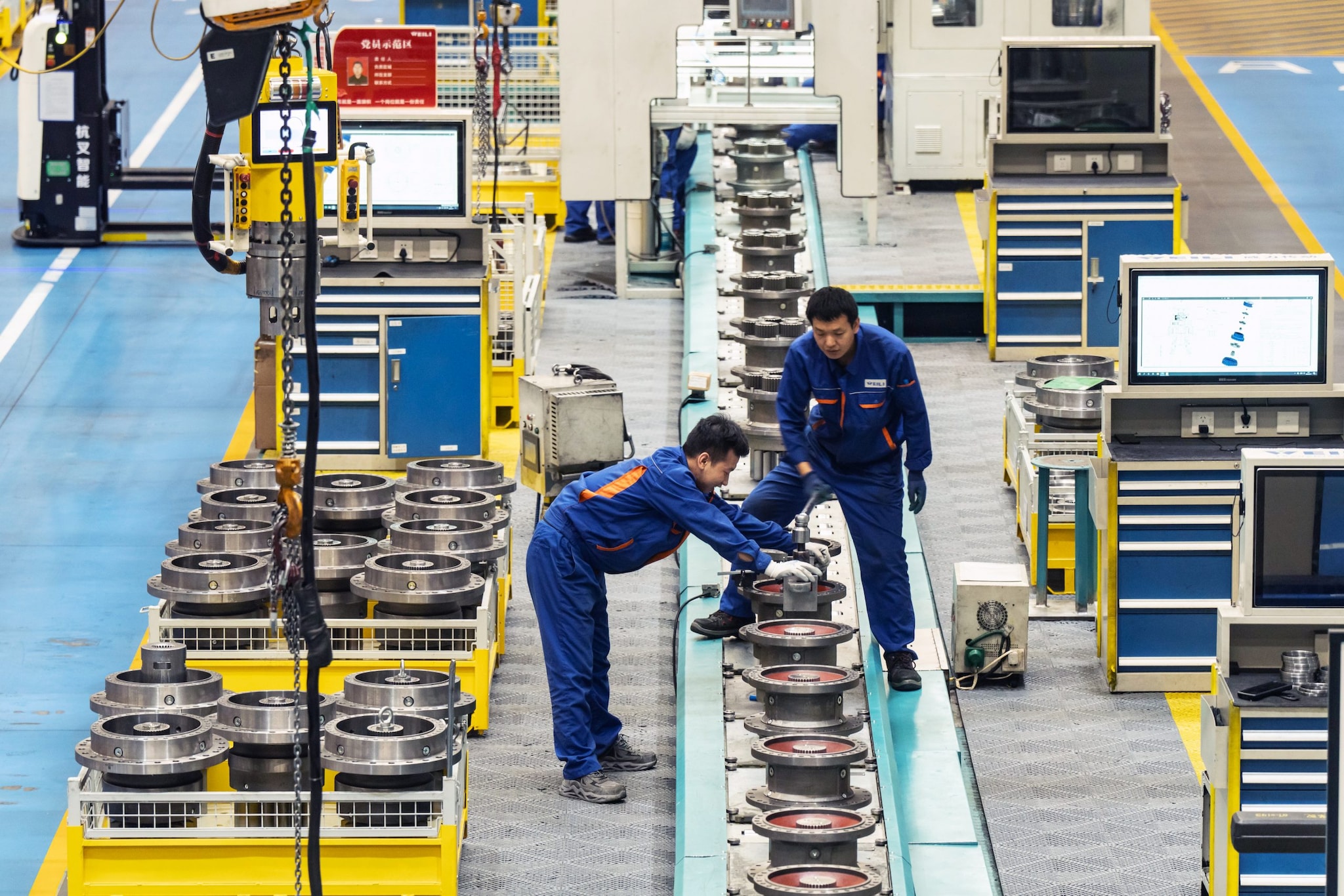
Imagine a warehouse in the suburbs of Tokyo. It is almost entirely automated. Robot arms sort thousands of shirts an hour with a delicate touch that mimics human fingers. There are no lunch breaks. There is no fatigue. This is the "invisible stake" of the story. To maintain these profit margins and hit these record highs, the company must become more like a machine every single day.
The Weight of Success
There is a risk in being this successful. When you are at the top of the mountain, every direction is down.
The yen has been weak, which helped inflate those record profits when foreign earnings were converted back home. But currency is a ghost; it can vanish as quickly as it appears. If the yen strengthens, or if consumer sentiment in China—Uniqlo’s second-largest market—falters further, the record high could become a distant memory.
Yet, walking through the flagship store in Ginza, you don't feel the fragility of the stock market. You feel the weight of the clothes.
There is a specific kind of quiet confidence in the way people shop there. They aren't hunting for a bargain with the frantic energy of a warehouse sale. They are selecting tools for their lives. A black coat for an interview. A white tee for a first date. Blue socks for a Tuesday.
This is the emotional core that the financial analysts miss. They talk about "operating margins" and "dividend yields." They forget that the reason those numbers exist is because a human being felt the fabric of a sleeve and decided it was worth their hard-earned money.
Tadashi Yanai once said that he fails nine times out of ten. He even wrote a book titled One Win, Nine Losses. It is a stark admission for a billionaire. It suggests that this record high isn't a stroke of luck or a sudden surge in popularity.
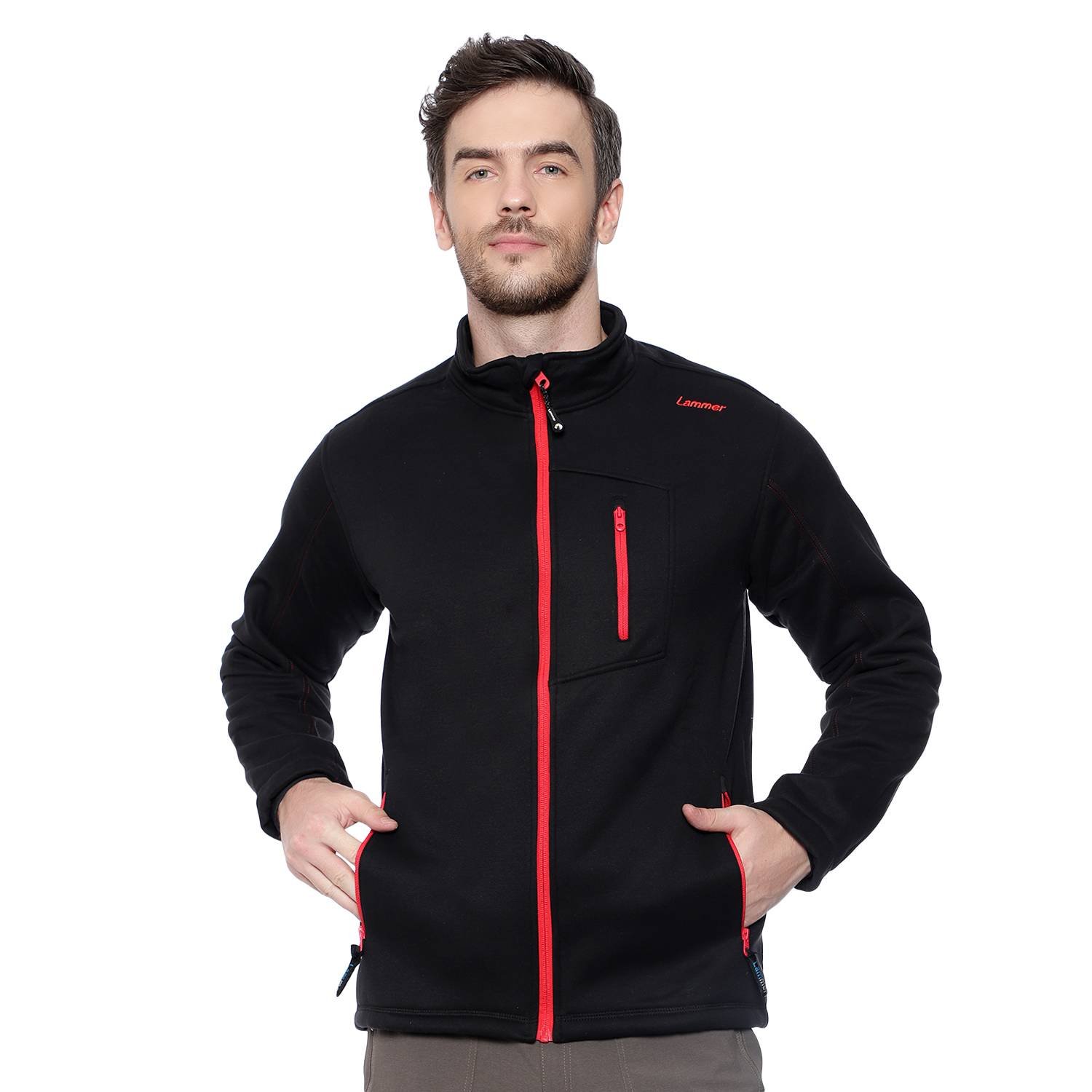
It is the result of a thousand small corrections. It is the result of a man who looked at a fleece jacket and saw a problem that needed to be solved, rather than an item that needed to be sold.
The stock market is a blinking light on a screen. The reality is the snick-snick-snick of the hangers. It is the teenager in Paris and the grandfather in Sapporo, both zipped into the same lightweight down vest, unaware that they are the twin pillars holding up a record-breaking empire.
The sun sets over Tokyo, reflecting off the glass of the Fast Retailing headquarters. Inside, the lights stay on. There are more folds to perfect. There are more fibers to re-engineer. The record high is yesterday's news; the pursuit of the perfect white t-shirt is forever.