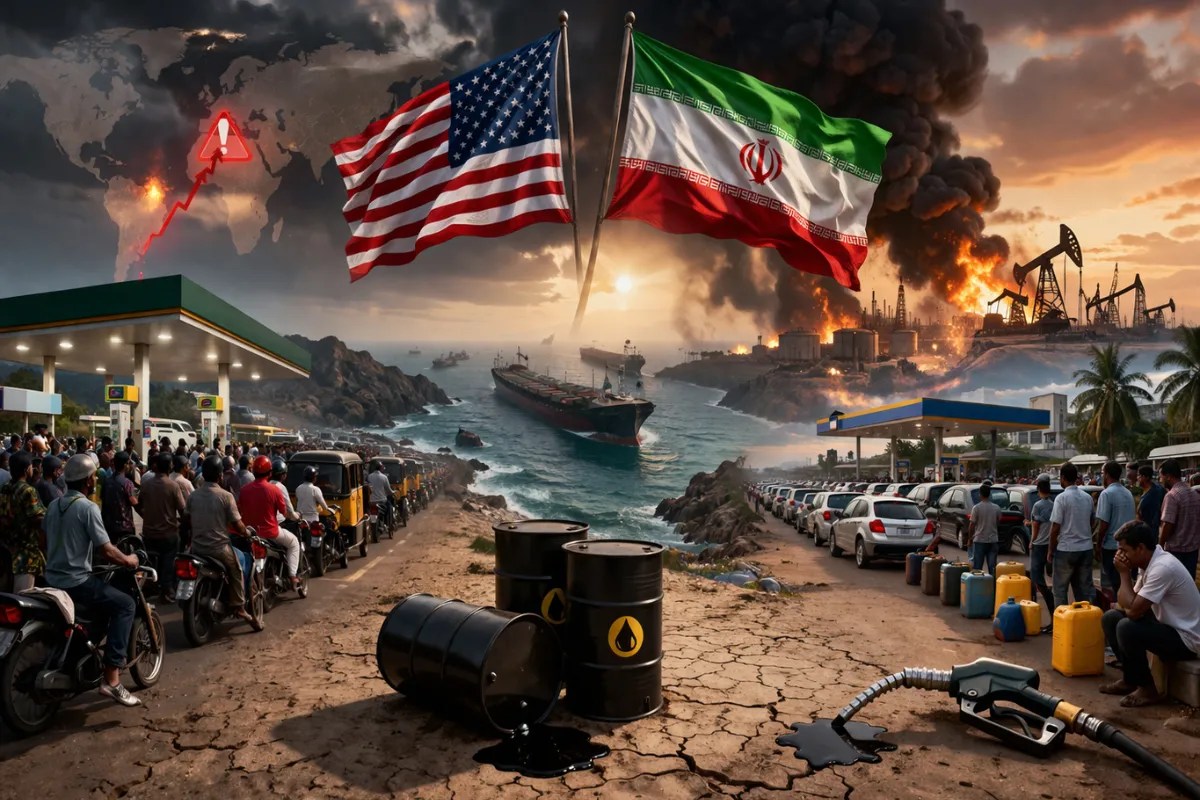
The smoke rising from the ruins of southern Tehran and the upscale districts of Tel Aviv hasn't yet cleared, but the narrative of the conflict has already shifted from the battlefield to the backrooms of Islamabad and Ankara. On Tuesday, March 24, 2026, President Donald Trump stood in the Oval Office and claimed that Tehran is ready for a "very significant prize" in exchange for an exit from a war that has systematically dismantled its traditional power structures. This announcement has sent shockwaves through Israel, Lebanon, and Iraq, three nations that now find themselves caught between the momentum of a military victory and the unpredictable volatility of a Trump-brokered peace.
The core of this geopolitical gamble is a reported Iranian offer involving massive oil and gas concessions and a promise to never pursue nuclear weapons. While Trump claims the "right people" in Iran are talking sense, the reality on the ground remains a bloody contradiction. For a different view, consider: this related article.
The Israeli Skepticism and the Strip of Control
In Jerusalem, the mood is one of calculated distrust. While the Trump administration pushes for a diplomatic "win" to cool global oil prices—which have spiked 50% since the February 28 invasion—Prime Minister Benjamin Netanyahu’s government is focused on a different metric. Israel has already vowed to seize and hold a "security strip" in southern Lebanon, a move designed to permanently push Hezbollah back from the border.
The friction is clear. Washington wants a deal that stabilizes the Strait of Hormuz and brings Iranian crude back to the market to ease the domestic political pressure of $100-per-barrel oil. Israel, however, sees this as the moment to finish a decades-long job. For the Israeli security establishment, any deal that leaves the Iranian Revolutionary Guard Corps (IRGC) with enough infrastructure to rebuild is a failure. They are watching the arrival of 2,000 U.S. Marines with a mix of relief and anxiety, wondering if these troops are here to secure a victory or enforce a premature ceasefire. Related reporting regarding this has been published by NBC News.
Lebanon and the Hezbollah Power Vacuum
Lebanon is currently a nation in freefall. The Israeli ground incursion that began on March 3 has decimated Hezbollah’s leadership, including the reported targeting of Naim Kassem. With the central government in Beirut officially banning Hezbollah’s military activities, the country is witnessing a tectonic shift in its internal power balance.
The "bawal" or turmoil in Lebanon isn't just about the airstrikes on Beirut's southern suburbs. It is about the terrifying uncertainty of what comes next. If Trump strikes a deal with a "reformed" Iranian regime, does Hezbollah become a stranded asset? Or does it morph into a decentralized, even more radicalized insurgency? The Lebanese people are currently watching their sky for drones while their politicians scramble to figure out if they still have a patron in Tehran or if they have been traded away for a "prize" of oil and gas.
Iraq and the Peril of the Proxy Battlefield
Iraq remains the most dangerous wild card in this triad. As Iranian missiles continue to target U.S. assets and Gulf allies like Bahrain and Kuwait, Iraq has become the primary transit corridor for the remnants of Iran’s proxy network. The Iraqi government is walking a razor-thin line, trying to avoid being the collateral damage of "Operation Epic Fury."
The recent Iranian strikes on Tel Aviv, which caused significant damage and casualties on March 24, were a reminder that Tehran still possesses a "reach-back" capability. For Iraq, the fear is that any delay in the Trump peace plan will lead to a scorched-earth policy by the IRGC on Iraqi soil. If the "tipping point" for the Iranian regime is indeed a sequence rather than a single event, Iraq is the place where that sequence is likely to turn most violent.
The Oil Prize and the Sanctions Paradox
The most controversial element of the current strategy is the Treasury Department’s decision to "unsanction" 140 million barrels of Iranian oil already at sea. Treasury Secretary Scott Bessent claims this move uses Iranian oil against Tehran by forcing prices down, but critics call it a lifeline to a regime on the brink of collapse.
The Strategic Package for Compensation of Losses, an editorial recently circulated in Iranian state circles, suggests that Tehran is trying to monetize the Strait of Hormuz, essentially charging a "security fee" of $2 million per tanker. Trump’s willingness to even entertain conversations about a "prize" suggests a shift from the "regime change" rhetoric of early March to a "regime reform" stance.
This pivot is driven by cold mathematics. The global economy has lost 11 million barrels of oil per day—a shock larger than 1973 and 1979 combined. Trump needs the oil to flow before the U.S. midterm elections, even if it means leaving the Iranian regime's core structure intact.
The New Leadership in Tehran
While Trump talks about the "right people," the identity of those people is a matter of intense debate. Following the reported death of Ali Khamenei, the appointment of Mohammad Bagher Zolghadr as the head of the Supreme National Security Council suggests a hardening, not a softening, of the military's grip. Zolghadr is an IRGC veteran, not a diplomat.
This creates a dangerous gap between the White House's optimism and the IRGC's reality. If the Trump administration is negotiating with a faction that doesn't actually control the missile batteries, the five-day pause in strikes announced this Monday could simply be a window for Iran to re-arm and mine the Persian Gulf further.
The conflict has reached a stage where the military objectives have been largely met—the Iranian Navy is effectively non-existent and the Air Force is grounded—but the political objectives remain a chaotic mess. The next 72 hours will determine if the "prize" Trump speaks of is a genuine bridge to peace or a tactical ruse designed to buy the regime time to survive its most desperate hour.
Watch the movements of the 82nd Airborne and the price of Brent Crude. If the oil price doesn't break below $90, the market isn't buying the peace plan, and neither should the rest of the world.