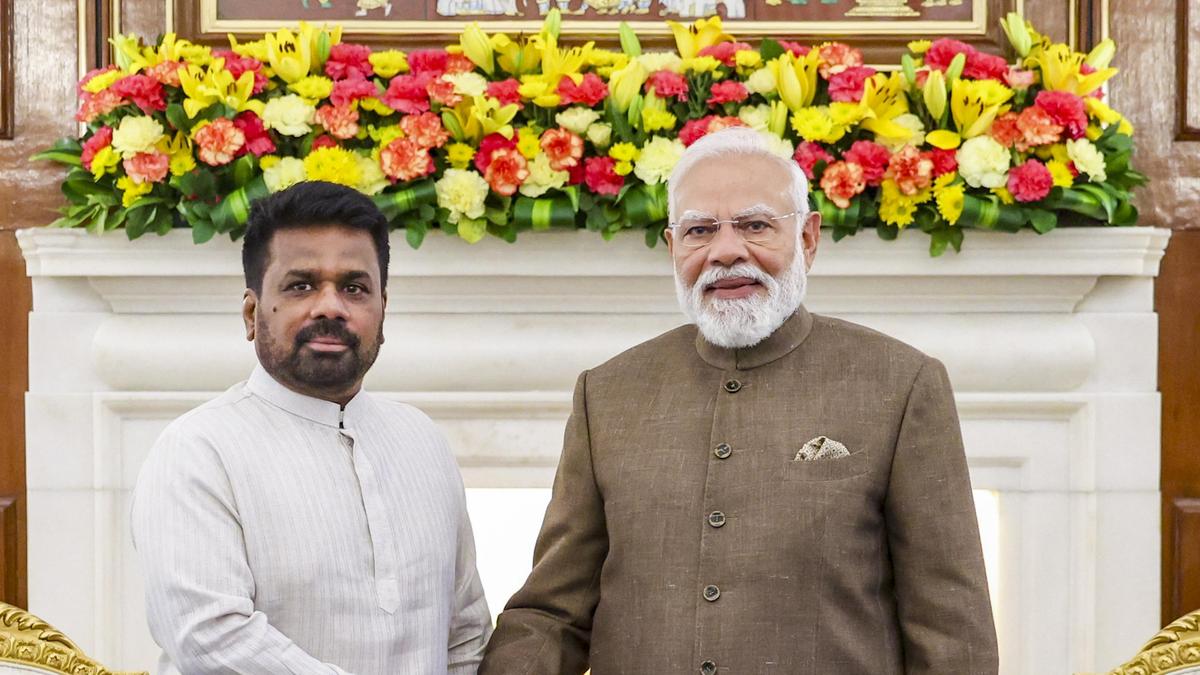
A phone call between heads of state is rarely just about "cooperation," despite what the official press releases suggest. When Indian Prime Minister Narendra Modi spoke with Sri Lankan President Anura Kumara Dissanayake on March 24, 2024, the subtext was not about diplomatic pleasantries. It was about survival in a volatile global market.
The primary driver is a looming energy crisis triggered by escalating instability in West Asia. With the Strait of Hormuz facing disruptions and global supply chains fracturing, Sri Lanka has found itself in a desperate position. Colombo has already returned to fuel rationing and digital QR code quotas to manage a dwindling supply. For Dissanayake, India is no longer just a neighbor; it is a life raft. For Modi, Sri Lanka is the linchpin of a regional energy grid that secures India’s dominance in the Indian Ocean.
The Geopolitical Squeeze
The conversation focused heavily on the West Asia conflict, but the real news is the "progress on key initiatives" mentioned in passing. These initiatives represent a fundamental shift in how the two nations share power—both literal and political. Sri Lanka has reportedly approached New Delhi for emergency fuel supplies to stave off a total economic collapse.
This isn't just about charity. India is leveraging this moment to accelerate the Trincomalee Oil Tank Farm project and a proposed multi-product pipeline. For decades, these projects were stalled by nationalist rhetoric in Colombo. Now, the reality of empty fuel tanks has silenced the critics. Even Dissanayake’s administration, which rose to power on a platform often skeptical of Indian influence, is now fast-tracking these deals.
The Adani Exit and the Pricing War
While the leaders talk of "strengthening cooperation," a billion-dollar crack has formed in the facade. Adani Green Energy recently withdrew from two massive wind power projects in Mannar and Pooneryn. The official reason? A tariff dispute. The Dissanayake government, determined to show its populist teeth, tried to force a rate cut from $0.08 to $0.06 per unit.
Adani walked.
This exit highlights the friction between India's corporate-led regional expansion and Sri Lanka's internal political pressure. While the state-to-state energy bridge—the physical power cables under the Palk Strait—remains on the table, the collapse of the Adani deal proves that private capital will not tolerate the political volatility that has defined Sri Lankan infrastructure for years.
Connectivity as a Shield
The proposed electricity grid interconnection is the most ambitious part of this puzzle. By linking the Indian and Sri Lankan grids, Colombo could theoretically tap into India’s vast renewable energy surplus during shortages. Conversely, it allows India to use Sri Lanka as a strategic "battery" or a hub for green hydrogen production in the future.
The stakes are high.
- Energy Security: Sri Lanka can currently only store enough fuel for 25 to 35 days. The Trincomalee project would push that to 60 days.
- Cost of Power: India’s cost of production is significantly lower than Sri Lanka’s current thermal-heavy mix.
- Regional Dominance: Every Indian-backed pipeline or cable is one less opportunity for Chinese investment in the same sector.
The Permanent Solution
Foreign Minister Vijitha Herath has called the India-UAE-backed Trincomalee project a "permanent solution" to the island's recurring nightmares. This is a significant admission. It signals that the current administration is moving away from the "debt-trap" diplomacy of the past and toward a more integrated, regional energy framework.
The integration of these grids and the construction of the pipeline are no longer optional "cooperation" goals. They are structural necessities. If the Strait of Hormuz closes, a pipeline from India becomes the only way to keep the lights on in Colombo.
The era of Sri Lanka playing India and China against each other for infrastructure projects is fading. In the energy sector, the proximity of the Indian mainland makes New Delhi the only logical partner. The phone call on Tuesday was the sound of a neighbor realizing that in a world at war, the closest power outlet is the most valuable one.
Would you like me to analyze the specific technical specifications and timeline for the proposed India-Sri Lanka undersea power cable?