European leaders are currently engaged in a high-stakes game of strategic avoidance, flatly rejecting President Donald Trump’s demands to deploy warships to the Strait of Hormuz. While the White House frames the request as a simple matter of protecting global energy interests, the reality on the ground—and in the water—is far more volatile. Brussels and London aren't just being difficult; they are refusing to pay the entry fee for a war they didn't start and a tactical "plan" that many believe doesn't actually exist.
At the heart of the friction is a fundamental disagreement over who is responsible for the current paralysis of the world's most critical maritime chokepoint. Following joint U.S.-Israeli strikes on Iran in late February 2024, Tehran effectively throttled the 21-mile-wide waterway. By utilizing a low-cost, high-impact arsenal of sea mines, suicide drones, and fast-attack craft, Iran has turned the passage into a "kill zone" for tankers aligned with the West. For European capitals, the calculation is cold: why risk billion-dollar frigates to solve a supply crisis precipitated by Washington’s unilateral military gambit? For a different perspective, see: this related article.
The Burden of a War Without a Script
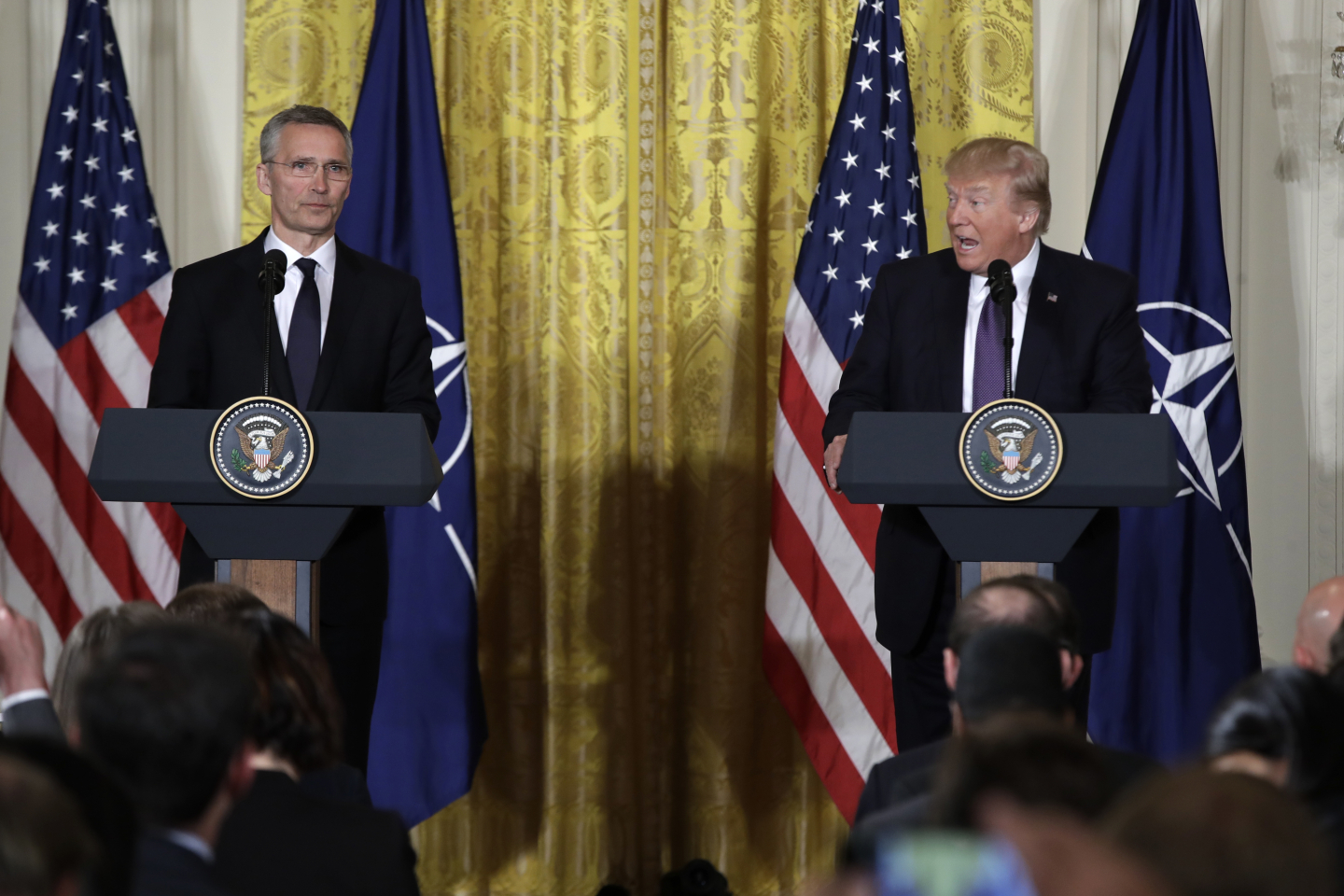
President Trump has been characteristically blunt, stating that nations dependent on Persian Gulf oil should "protect their own territory." He has even suggested that the future of NATO itself could be at risk if allies don't step up. However, the European response has been a unified wall of "no." EU Foreign Policy Chief Kaja Kallas was unequivocal this week, stating that "nobody is ready to put their people in harm's way" in the Strait.
The refusal isn't merely a lack of political will; it's a lack of clarity. German Foreign Minister Johann Wadephul has publicly demanded to know what the ultimate military goals are. Europe’s military analysts point to a glaring absence of a "Phase 2." If European ships join a U.S. armada, what is the exit strategy? If an Iranian battery sinks a French or Italian vessel, does that trigger a full-scale continental war? These questions remain unanswered by a White House that appears to be improvising a coalition in the middle of a live-fire exercise. Similar coverage regarding this has been shared by TIME.
Asymmetric Grids and the Death of Traditional Escort
The technical challenge of "opening" the Strait in 2026 is vastly different from the Tanker War of the 1980s. Iran no longer relies on a traditional navy that can be swept aside in a single afternoon. Instead, they utilize an asymmetric grid.
- Smart Mines: Sophisticated, sensor-fused mines that can be programmed to ignore certain hull signatures while targeting others.
- Swarm Drones: Low-cost loitering munitions that can saturate the air defenses of even the most advanced destroyers.
- Shore-to-Ship Missiles: Mobile batteries hidden in the rugged coastline of the Musandam Peninsula and Iranian mainland.
Europe already has a naval presence in the region—Operation Aspides. However, this mission was designed for the Red Sea to counter Houthi rebels. Extending its mandate to the Strait of Hormuz would mean moving from a defensive escort role into an active combat theater against a state actor. European leaders, particularly in Paris and Berlin, view this as a "mission creep" of the most dangerous kind. They are currently pushing for a diplomatic "Black Sea" style grain deal for oil, rather than a military breakout.
The Economic Pivot and Russian Sanctions
A bizarre sub-plot in this crisis is the Trump administration’s recent decision to temporarily ease sanctions on Russian oil to mitigate the $100-plus per barrel price spike. This has caused a massive rift with European allies who are still heavily invested in the defense of Ukraine.
To the leaders in the EU, the move feels like a betrayal of the broader security architecture. They see a Washington that is willing to fund Moscow’s war machine in the East just to lower gas prices at home, all while demanding European ships take fire in the Persian Gulf. This perceived hypocrisy has hardened the European stance. If the U.S. can negotiate with Russia for oil, Europe argues, the U.S. should be able to find a diplomatic off-ramp with Tehran without involving NATO.
The Shell Game of Global Supply
While the U.S. claims it does not rely on Hormuz oil, the globalized nature of the market makes that distinction largely academic. If the Strait stays closed, the price of Brent crude doesn't care where the physical oil was headed; the entire market suffers.
| Country | Dependency on Hormuz (Est.) | Current Stance |
|---|---|---|
| China | 90% | Neutral/Negotiating with Iran |
| Japan | 80% | Declined military participation |
| United Kingdom | Significant | "Working on a plan" but no warships |
| Germany | Moderate | Hard refusal |
| United States | Low (Directly) | Demanding 100% ally participation |
The table above illustrates the strategic mismatch. China, the largest beneficiary of the Strait, is notably absent from Trump’s "enthusiastic" list. Beijing has managed to keep its tankers moving by maintaining a "non-hostile" status with Tehran, effectively bypassing the blockade that is strangling Western-aligned shipping. Europe sees this and realizes that a military "coalition of the willing" would only serve to further bifurcate the world's energy markets, leaving the West to pay the blood price for security while others sail through for free.
The End of the Transatlantic Blank Check
The standoff in the Strait of Hormuz is a definitive signal that the era of the "Transatlantic Blank Check" is over. European nations are no longer willing to be the junior partners in Middle Eastern interventions where they have no say in the planning but carry half the risk.
British Prime Minister Keir Starmer has emphasized a "calm, level-headed assessment of the British national interest." This shift toward national interest over alliance-wide loyalty is the new reality. Unless the White House can present a legally sound, strategically coherent plan that includes more than just "bombing the hell out of the shoreline," the U.S. Navy will likely find itself patrolling the world's most dangerous 21 miles alone.
The immediate next step is the meeting of NATO ambassadors, where the U.S. is expected to make its first formal request for Article 5-style solidarity. Given the current temperature in Brussels, that request is likely to arrive stillborn.
Would you like me to analyze the specific naval assets currently stationed in the Persian Gulf to determine if a U.S.-only "breakout" is tactically feasible?