Denmark used to be the poster child for the green transition. You’ve seen the photos of sleek wind turbines spinning over the North Sea and heard the statistics about how they generate more power than the country even needs. But something shifted recently. The same people who take pride in their environmental record are now showing up to town hall meetings with protest signs. They aren't protesting coal or gas. They're fighting solar farms.
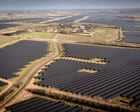
The phrase "fields of wheat, not fields of iron" has become a rallying cry across the Danish countryside. It’s a gut reaction to the sheer scale of modern renewable energy projects. When people talk about solar, they often imagine a few panels on a roof. They don’t imagine thousands of acres of Grade-A farmland being covered in glass and steel. This isn't just about "not in my backyard" syndrome. It’s a fundamental conflict between two Danish identities: the world-leading green innovator and the traditional agricultural powerhouse.
The land grab that sparked a rural revolt
Denmark is small. It’s roughly the size of Maryland or Switzerland, and about 60% of that land is cultivated. For centuries, the identity of the Danish "velfærdsstat" or welfare state was built on the back of highly efficient farming. Now, developers are eyeing those same flat, sunny fields for massive solar parks.
The scale is staggering. To meet its 2030 climate goals, Denmark needs to quadruple its onshore wind and solar capacity. We're talking about an area of land larger than the island of Falster being converted into energy production. Local communities feel like they're being sacrificed for the benefit of urban centers like Copenhagen. It's easy to vote for green energy when you live in a fourth-floor apartment and never have to look at a transformer station.
The economics don't always help the locals either. While developers offer compensation, it often feels like a drop in the bucket compared to the loss of heritage. If your family has farmed a patch of land since the 1800s, a yearly check doesn't replace the view or the soul of the village. It feels like an industrial invasion.
Why wind and solar aren't treated equally anymore
You might wonder why this is happening now. Denmark has lived with wind turbines for decades. But wind is different. A turbine has a small footprint on the ground; cows can graze under it, and tractors can drive around it. Solar is a blanket. It smothers the land.
When a solar developer moves in, the biodiversity often takes a hit, despite what the marketing brochures say. Sure, you can plant wildflowers between the rows, but you’ve effectively fenced off a massive corridor for local wildlife. Hunters, hikers, and farmers all lose access. This creates a visual and physical barrier that wind simply doesn't.
There's also the issue of the "green premium." In the early days, solar was the underdog. Now, it's big business. Huge investment firms are the ones driving these projects, not local cooperatives. In the 1980s, Danish wind power grew because communities owned the turbines. They shared the profits. Today’s solar boom feels corporate and distant. That shift in ownership has eroded public trust faster than any political scandal could.
Food security vs energy security
The war in Ukraine changed the conversation about energy across Europe. Suddenly, getting off Russian gas wasn't just a green goal; it was a survival tactic. But the war also reminded everyone that food is a strategic asset.
Denmark is one of the world's largest exporters of pork and dairy. Every acre covered in solar panels is an acre that isn't growing grain or grazing cattle. Critics argue that it's madness to retire some of the most fertile soil in Europe when global food chains are already under pressure.
Is it better to have a field of "iron" that powers 5,000 homes or a field of wheat that feeds 10,000 people? There isn't an easy answer. The government tried to fast-track these projects by designating "energy parks," which essentially strips local councils of their power to say no. That’s a dangerous game in a democracy that prizes local consensus.
The myth of the perfect green transition
We've been told for years that the move to renewables would be painless. Just swap the coal plant for a few panels and everything stays the same. That was a lie. The transition is messy, loud, and incredibly hungry for space.
The backlash in Denmark is a warning for the rest of the world. If you ignore the people who actually live in the places where this infrastructure goes, they will eventually stop the project entirely. It doesn't matter how "green" your credentials are if the neighbors hate you.
Some municipalities have started a total freeze on new solar permits. They're waiting for better national guidelines or more money. In some cases, they're waiting for technology that doesn't exist yet, like high-efficiency rooftop solar that doesn't require taking over the countryside. But the climate won't wait.
Moving beyond the field of iron
The solution isn't to stop building solar, but we have to stop building it like it’s 2010. The "big and cheap" model is failing the social test.
We need to look at dual-use land, often called agrivoltaics. This involves raising the panels high enough for tractors to pass underneath or sheep to graze. It’s more expensive to build, but it keeps the land in production. It’s the only way to satisfy the "fields of wheat" crowd while still hitting carbon targets.
Another move is prioritizing "gray space." Think parking lots, industrial rooftops, and highway margins. It’s harder for developers because it’s not a wide-open flat field, but it’s where the power is actually needed.
If you're following this space, watch the local elections in rural Denmark over the next two years. They’ll be the real bellwether for whether the green transition survives its own success. The era of easy, uncontested solar is over.
Start looking at your own local zoning laws for renewable energy. If your town doesn't have a plan for where solar should go, a developer will eventually choose the easiest, cheapest, and most controversial spot for you. Being proactive about "where it fits" is the only way to avoid the gridlock we're seeing in the Nordics.