In the quiet, air-conditioned hallways of a U.S. District Court, the floor is buffed to a mirror shine. It is a space of hushed whispers, heavy oak doors, and the rhythmic scratching of pens against legal pads. Thousands of miles away, in the humid, gasoline-scented air of Caracas, a different kind of silence is settling in. It isn’t the silence of peace. It is the silence of a nation that has simply stopped waiting.
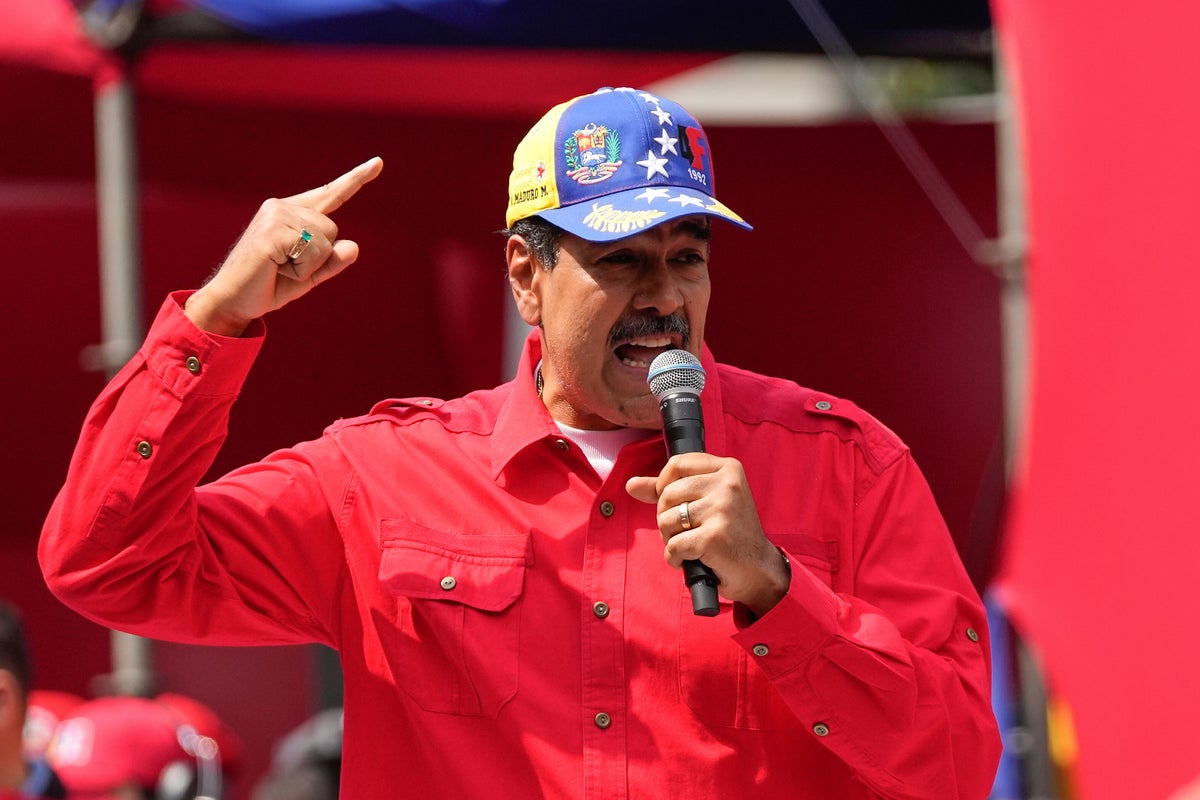
Nicolás Maduro is currently a man of two worlds, and he is increasingly unwelcome in both. On one side, he is the target of a relentless American legal machine, facing federal charges of narco-terrorism and corruption. On the other, he is the captain of a ship where the crew has jumped overboard, and the passengers are busy building their own life rafts.
To understand the weight of this moment, you have to look past the dry headlines about indictments and international warrants. You have to look at the kitchen tables in Maracaibo and the street stalls in Petare.
The Ghost in the Courtroom
When a head of state is indicted by a foreign power, the world usually braces for a seismic shift. We expect fireworks. We expect a sudden, jarring break in the status quo. But the legal battle surrounding Maduro feels less like a lightning strike and more like a slow, grinding tectonic shift.
The U.S. Department of Justice isn't just filing papers; they are building a cage made of jurisdiction and international banking regulations. They allege that Maduro participated in a corrupt conspiracy with the FARC to flood the United States with cocaine, using the Venezuelan state as a shield and a logistics hub.
Consider a hypothetical shopkeeper in Miami named Elena. Elena left Valencia ten years ago. She sends money back home every month. For her, the news of Maduro’s legal woes isn't just a political development. It’s a personal tally of the years she’s lost. Every charge read aloud in a New York or Florida courtroom is a reminder of the hyperinflation that turned her father’s pension into the price of a single egg.
But here is the irony: while the lawyers argue over the fine print of the Foreign Sovereign Immunities Act, the "sovereign" in question is becoming a phantom.
The Dollarization of Survival
While the U.S. courts pursue Maduro, the Venezuelan people have staged a coup of a different kind. It wasn’t a military uprising. It was an economic one.
For years, Maduro’s government railed against the "Yankee dollar." They preached the gospel of the bolívar, even as the currency melted away like ice in the Caribbean sun. Then, something shifted. The people stopped asking for permission to survive.
Walk into a grocery store in Caracas today. You won't see people checking the official government exchange rates with any sense of loyalty. You see the green of the U.S. dollar. You see Zelle transactions. You see a shadow economy that has become the only economy.
The state tried to control the flow of money, so the people created their own river.
This is the invisible stake of the legal battle. While Maduro fights to maintain his legitimacy on the international stage, his domestic relevance is being eroded by the very currency his enemies mint. He is a socialist leader presiding over one of the most aggressively capitalistic, dollar-dependent survival cultures on earth.
He holds the palace, but the people hold the currency of the "empire."
A Nation Learning to Forget
There is a specific kind of exhaustion that sets in after a decade of crisis. It’s a numbness.
In the early days of the opposition movements, every court date and every international sanction felt like a potential breaking point. People stayed glued to their screens, waiting for the one piece of news that would change everything.
That frantic energy has been replaced by a weary pragmatism.
Imagine a young engineer named Ricardo. He’s 24. He has never known a Venezuela that wasn't in some state of collapse. He doesn't spend his mornings reading about the latest motions filed by Maduro's legal team in the United States. He spends his mornings trying to figure out how to bypass the latest internet blackout so he can finish a freelance gig for a company in Spain.
For Ricardo, and millions like him, Maduro is no longer the protagonist of the story. He is a weather condition. He is the rain you try to stay out of, the heat you endure. You don't wait for the weather to change before you go to work; you just buy an umbrella and keep moving.
The U.S. court system moves with a deliberate, agonizing slowness. It is a process designed for decades, not for the immediate hunger of a population. This creates a strange disconnect. The legal world is focused on the past—on the crimes committed, the bribes taken, the shipments moved. The Venezuelan people are focused entirely on the next twenty-four hours.
The Architect of a Labyrinth
The legal defense for Maduro often hinges on the idea of sovereignty. His lawyers argue that a U.S. court has no business judging the leader of a foreign nation. It’s a classic shield.
But sovereignty is a two-way street. A leader is sovereign because they represent the will and the welfare of a people. When the people have moved on to a different reality—one where they source their own electricity, manage their own healthcare through diaspora remittances, and ignore the state’s mandates—sovereignty becomes a hollow word. It is a title without a kingdom.
The tragedy of the situation is the sheer waste of it. Venezuela sits on the largest oil reserves on the planet. The country should be a titan of industry and a hub of South American culture. Instead, its primary export is its own people. Over seven million have left.
Those who remain have become masters of the workaround.
They have learned to fix cars with improvised parts. They have learned to teach schools with no books. They have learned to run businesses without banks. This resilience is beautiful, yes, but it is also a quiet indictment of the man fighting for his life in a legal brief.
The fact that the country can "move on" without its leader isn't a sign of Maduro’s strength. It’s the ultimate proof of his failure.
The Weight of the Mirror
Late at night, when the cameras are off and the advisors have gone home, one wonders if Maduro looks at the maps of the world and sees how small his circle has become.
He is restricted. He is watched. He is a man who can travel to only a handful of places without the risk of being diverted to a tarmac where federal agents wait with handcuffs.
The courtroom in the U.S. is a mirror. It reflects a version of himself that he cannot control with a televised speech or a military parade. In that room, he is not "El Presidente." He is a defendant. He is a set of files. He is a series of testimonies from former allies who decided that their own freedom was worth more than their loyalty to him.
Betrayal is the silent passenger in every authoritarian regime. The legal cases in the U.S. are fueled by "cooperating witnesses"—men who once sat at Maduro’s table, toasted his health, and helped him move the very money that is now being used to track them down.
These witnesses are the human element of the prosecution. They are the ones who know where the ledgers are hidden and which shell companies hold the keys to the kingdom. Their voices, echoing in the sterile halls of the American justice system, are more dangerous to Maduro than any troop movement.
The New Reality
We often think of history as a series of great events—wars, treaties, elections. But history is more often the sum of millions of small departures.
Venezuela is departing.
It is departing from the 20th-century model of the all-powerful state. It is departing from the influence of its own capital city. It is departing from the expectations of the international community.
While the legal battle rages on, the most significant change isn't happening in a courtroom. It’s happening in the minds of the people who have realized they don't need to wait for a verdict to start living. They have stopped looking toward the Miraflores Palace for solutions, and they have stopped looking toward Washington for a rescue.
They are simply existing in the gaps.
Maduro can fight every charge. He can hire the most expensive lawyers in the world. He can claim victory every time a hearing is delayed or a motion is granted. But he cannot stop the clock, and he cannot stop the quiet, steady sound of a nation’s footsteps as it walks away from him.
The court will eventually reach its conclusion. The gavels will fall. The records will be sealed. But by the time the final sentence is written, the country he once led will be unrecognizable to him.
The most profound punishment isn't a prison cell. It is the realization that the world has learned to breathe without you.
Venezuela is already taking that breath. It is shallow, it is difficult, and it is flavored with the grit of a long struggle, but it is a breath nonetheless.
And Nicolás Maduro is not the one drawing it.
Would you like me to analyze the specific legal precedents being used in the narco-terrorism charges against the Venezuelan administration?