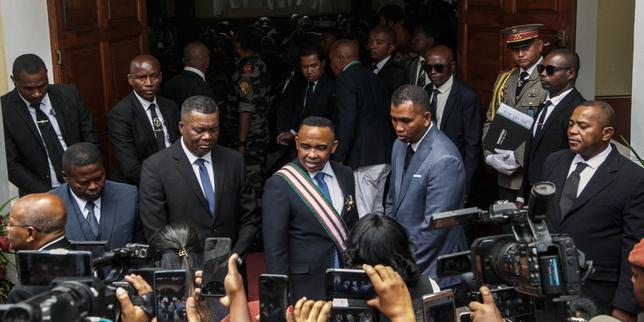
Madagascar is currently the site of a radical and deeply unsettling experiment in governance. President Andry Rajoelina has begun requiring his future ministers to undergo polygraph tests as a prerequisite for joining the cabinet. He frames this as a "great step toward the rule of law," a move designed to purge corruption before it can take root in his administration. However, the reality behind this high-tech interrogation strategy is far more complex than a simple quest for integrity. By outsourcing the vetting of the nation’s highest officials to a machine, the Malagasy government is not strengthening the rule of law; it is signaling a profound collapse of institutional trust and human judgment.
The use of lie detectors in a political context is virtually unprecedented at this level of government. While intelligence agencies around the world use polygraphs for security clearances, applying them to ministerial appointments suggests a shift toward a "techno-authoritarian" model of loyalty testing. This is not about finding the best person for the job. It is about using a controversial, scientifically disputed tool to exert psychological dominance over the political class.
The Flawed Science of the Truth Machine
To understand why this move is so dangerous, one must first understand the device itself. A polygraph does not actually detect lies. It measures physiological responses—heart rate, blood pressure, respiration, and skin conductivity—under the assumption that the stress of lying will trigger a "fight or flight" response.
The scientific community has long been skeptical of this premise. The American Psychological Association and various neurological studies have consistently pointed out that there is no unique physiological pattern associated with deception. An innocent person might be nervous because they are being interrogated by the President’s security apparatus, causing a "false positive." Conversely, a practiced sociopath or someone trained in countermeasures can remain calm while lying, resulting in a "false negative."
By relying on these machines, the Rajoelina administration is prioritizing biometric data over a candidate’s track record, policy expertise, or ethical history. If a brilliant economist fails a polygraph because they are intimidated by the setting, the country loses a vital asset. If a corrupt but cold-blooded operative passes, they gain a "certified" seal of integrity that they can use as a shield against future scrutiny.
A Substitute for Real Oversight
The most troubling aspect of the polygraph mandate is what it replaces. In a functioning democracy, the "rule of law" is upheld by independent judiciaries, a free press, parliamentary oversight, and a robust anti-corruption bureau. These are human-led institutions that investigate evidence, follow money trails, and hold power to account through transparent legal processes.
Replacing these structural safeguards with a black-box test is a shortcut. It creates an illusion of purity while bypassing the messy, necessary work of institutional reform. If the President truly wanted to move toward the rule of law, he would strengthen the BIANCO (Independent Anti-Corruption Office) or ensure that the Court of Auditors has the resources to track every ariary spent by the state. Instead, he has opted for a theatrical display of "scientific" vetting that happens behind closed doors.
This theater serves a specific political purpose. It creates a hierarchy where the President is the ultimate arbiter of truth, aided by a machine that only he controls the results of. It turns the cabinet selection process into an initiation ritual rather than a democratic appointment.
The Psychological Toll on Governance
Politics in Madagascar has long been a game of shifting alliances and fragile stability. Introducing a polygraph into this mix changes the psychology of the cabinet from the very first day.
A minister who has been forced to sit in a chair, wired up to sensors, and questioned about their private life or future intentions is a minister who knows they are not trusted. This environment breeds resentment and fear, not a spirit of public service. It encourages a culture of "compliance over competence." When the primary goal of an official is to satisfy the machine (and the man behind it), they are less likely to offer the candid, sometimes dissenting advice that a leader needs to hear.
Furthermore, this practice sets a chilling precedent for the rest of the Malagasy civil service. If ministers are subjected to this, will it eventually trickle down to judges, police officers, or local governors? The normalization of invasive biometric surveillance as a tool of political management is a hallmark of regimes that value control over collaboration.
The Global Precedent and the Risk of Isolation
Madagascar is not acting in a vacuum. International donors and diplomatic partners watch these developments with a mix of curiosity and alarm. For a country that relies heavily on foreign investment and aid, the optics of "polygraph governance" are risky. Western democracies generally view the polygraph as an investigative tool of last resort, not a standard administrative procedure.
Comparative Vetting Standards
| Region | Primary Vetting Method | Role of Polygraph |
|---|---|---|
| European Union | Financial audits, criminal background checks | Almost never used in politics |
| United States | FBI background checks, Senate confirmation | Security clearances only; banned for private employment |
| Madagascar (New) | Polygraph testing | Central to ministerial appointment |
This divergence could lead to a diplomatic "uncanny valley." It becomes difficult for international bodies to engage with a government that defines its integrity through a method that most modern legal systems find unreliable. It suggests a move away from the international standards of transparency that investors crave.
The Mirage of the Quick Fix
Corruption is a systemic problem in Madagascar, rooted in decades of economic instability and a lack of accountability. It cannot be solved by a pulse-rate monitor. The "great step" the President describes is actually a detour.
True integrity is built through the slow, arduous process of creating systems where it is harder to be corrupt than to be honest. This means digitalizing public procurement to remove the human element of bribery, protecting whistleblowers who report on their superiors, and ensuring that the law applies equally to the highest-ranking official and the lowest-level clerk.
The polygraph is a "quick fix" for a problem that requires surgery. It offers the President a headline-grabbing victory over "dishonesty" without him having to dismantle the patronage networks that often underpin political power in the region. It is, in many ways, the ultimate political distraction.
The future of Madagascar depends on whether its leaders can move beyond the theater of technology and return to the hard work of building institutions that people actually trust. As it stands, the machine is not protecting the state; it is merely masking the void where trust used to be.
Watch the appointment of the next cabinet closely. Do not look at the results of the tests, which will almost certainly be kept secret or released in curated snippets. Look at whether the new ministers have the courage to challenge the status quo, or if they have simply learned how to breathe rhythmically while the sensors are attached.