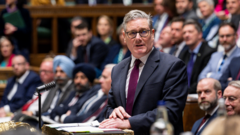
Questions about Jeffrey Epstein don't just go away. They linger like a bad smell in the corridors of Westminster, and right now, the Prime Minister is doing everything possible to avoid catching a whiff of it. When asked directly whether he’s had a conversation with Lord Peter Mandelson regarding his past association with the convicted sex offender, the PM didn’t just hesitate. He performed a masterclass in political sidestepping that would make a ballroom dancer jealous.
It’s not just about one phone call or a casual chat over tea. It’s about the optics of influence. Peter Mandelson remains one of the most powerful figures in the Labour Party ecosystem, a man whose advice is sought and whose shadow is long. Yet his documented history with Epstein—a friendship that apparently continued even after Epstein’s initial conviction—remains a massive, unaddressed elephant in the room for this administration. If you’re leading a country on a platform of integrity and change, you can't just ignore the baggage your closest advisors bring to the table.
The Question That Hit a Wall
During a recent press briefing, the tension was thick enough to cut. A reporter asked a simple, binary question. Had the PM spoken to Mandelson about Epstein? Yes or no. Instead of a clear answer, we got a wall of word salad. The PM talked about "focusing on the British people" and "delivering on priorities." It’s the classic defensive crouch. When a politician tells you they’re focused on the public's priorities in response to a specific question about an individual, they’re effectively telling you that the individual is a liability they aren't ready to defend.
The refusal to answer creates a vacuum. In politics, vacuums get filled by speculation. By failing to say "No, we haven't discussed it" or "Yes, I asked for clarification and I'm satisfied," the PM leaves the door wide open for critics to assume the worst. It suggests that either the conversation was so awkward it can't be disclosed, or—perhaps more likely—the PM is terrified of alienating a man who still holds the keys to significant parts of the party machinery.
Why the Mandelson Connection Matters So Much
Peter Mandelson isn't just some backbench lord. He’s an architect of the modern party. His ties to Epstein were not fleeting. Reports have surfaced over the years regarding stays at Epstein's various properties and social gatherings where the two were present. While Mandelson has consistently maintained he did nothing wrong, the association itself is toxic in the current climate.
We’ve seen how these associations have dismantled the reputations of others, most notably Prince Andrew. While the situations aren't identical, the public’s tolerance for "I didn't know what was going on" has hit zero. For the Prime Minister, keeping Mandelson in the inner circle while dodging questions about his judgment sends a confusing message. It says that some people are too important to be held to the standard of transparency promised to the voters.
The Art of the Swerve
Watch the footage and you'll see the physical shift. The shoulders square up, the eye contact breaks for a split second, and the rehearsed pivot begins. This isn't just an accidental omission. It’s a deliberate strategy managed by a communications team that knows the Epstein name is radioactive. They’ve clearly decided that a "no comment" or a "swerve" is less damaging than the headline that would follow an actual admission of a conversation.
But this strategy has a shelf life. You can't claim to be the party of "cleaner politics" while refusing to address the ties your senior figures have to one of the most notorious figures of the 21st century. The PM’s team likely thinks they can wait this out. They think the news cycle will move on to the next budget or a healthcare crisis. They might be right in the short term, but every time the PM dodges a direct question, it chips away at that image of being a straight-talker.
The Public Deserves Better Than Vague Deflections
The real issue here is trust. If the Prime Minister has nothing to hide regarding his discussions with Mandelson, he should just say so. If he hasn't had the talk, he should explain why he feels it's unnecessary. Is it because he trusts Mandelson implicitly? Or is it because he’s afraid of what he might hear?
The Epstein scandal isn't some historical footnote. It involves systemic abuse and a network of high-profile enablers that the world is still trying to map out. When the leader of a G7 nation refuses to clarify his stance on an advisor's link to that network, it’s not just a political blunder. It’s an insult to the intelligence of the electorate.
People want to know who is whispering in the PM's ear. They want to know that the people shaping national policy aren't compromised by past associations that haven't been fully aired. The "swerve" might work for a day or two in the briefing room, but it doesn't work at the ballot box where people remember who gave them an honest answer and who hid behind a teleprompter.
What Happens When the Deflection Fails
Eventually, the questions will get louder. If Mandelson is given an official role or continues to be a visible presence at high-level events, the PM won't be able to hide behind "focusing on the people." The Epstein connection is a permanent part of Mandelson's biography now. You can't delete it, and you can't ignore it away.
The next step for anyone watching this play out is to look at the appointments. Watch who gets the plum roles in the coming months. If the PM continues to elevate those with murky past associations without addressing them, the "integrity" brand is dead on arrival. If you're tired of the spin, keep an eye on the official records of who is visiting Number 10. Transparency shouldn't be a choice; it's a requirement for the job. Demand a direct answer the next time the microphone is open. Stop accepting the pivot as a valid response.