Viktor Orban doesn't usually sweat. For over a decade, he’s turned Hungary into a personal project, a masterclass in "illiberal democracy" where the media is captured and the opposition is fragmented. But the script just flipped. Peter Magyar, a man who lived inside the belly of the beast, is now tearing it apart from the outside. If you're watching Central European politics, you'll see this isn't just another protest movement. This is a family feud turned national revolution.
Magyar isn't some liberal academic from Budapest. He’s the ultimate insider. He’s the former husband of Judit Varga, the woman who was Orban’s justice minister. He knows where the bodies are buried because he helped dig some of the holes. When he walked away from the ruling Fidesz party earlier this year, he didn't just quit. He started a fire.
The Crack in the Fidesz Monolith
For years, the Hungarian opposition tried to beat Orban by being the "not Orban" choice. It failed every time. They were seen as out-of-touch elites or remnants of the old, failed socialist era. Peter Magyar is different. He talks like a Fidesz voter. He shares their values on sovereignty and national pride, but he’s calling out the massive corruption that’s hollowed out the country’s institutions.
He didn't start with a manifesto. He started with a recording. He released a tape of his ex-wife describing how government officials pressured prosecutors to remove evidence from court records. It was a "smoking gun" moment that the government couldn't hand-wave away. It proved what everyone suspected: the rule of law in Hungary is whatever the Prime Minister says it is.
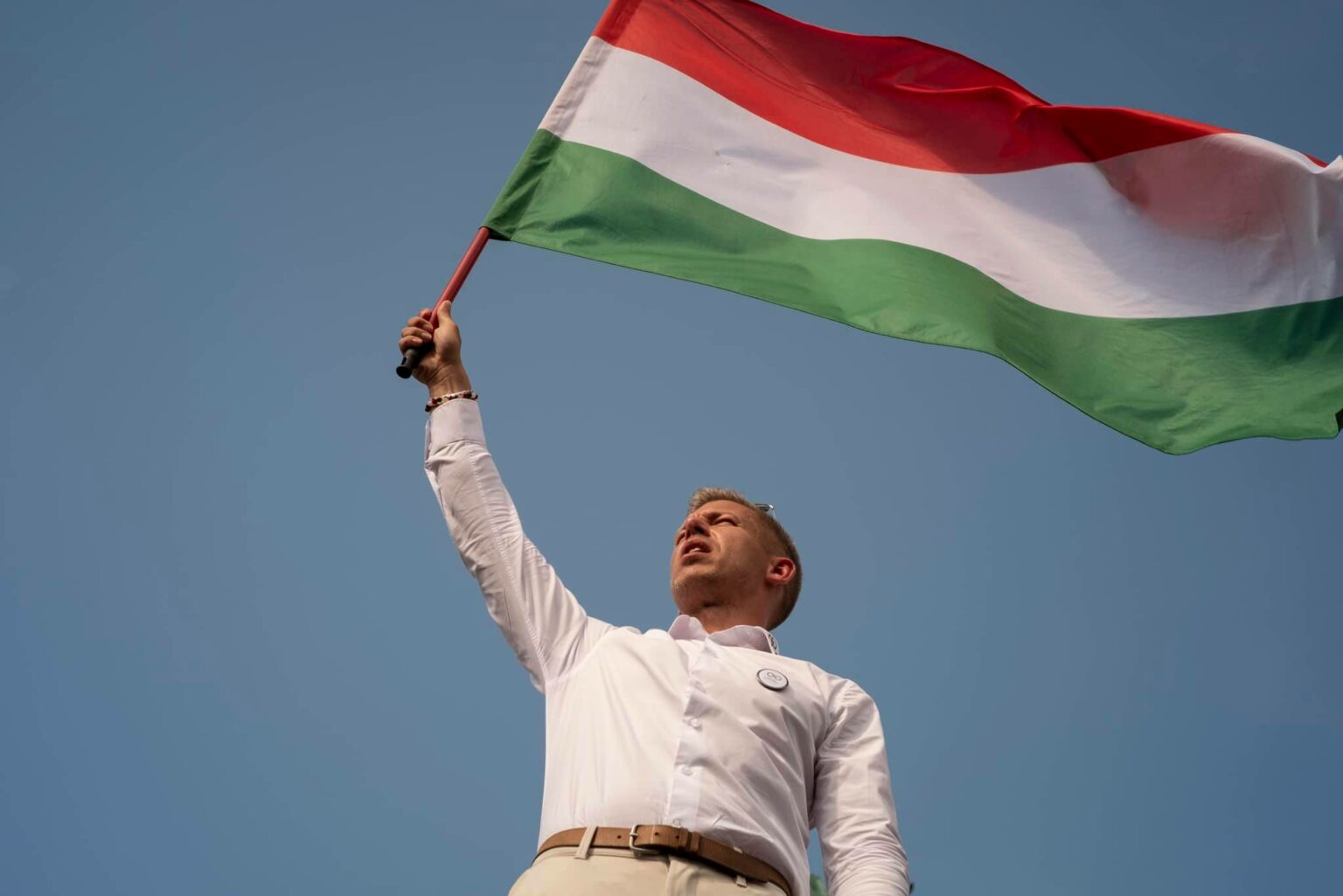
The sheer scale of his rallies is what's shaking the government. We're talking about hundreds of thousands of people in Budapest. These aren't just the usual city activists. You see grandmothers from rural villages and young people who have never voted before. They're showing up for his Tisza party because Magyar offers something the traditional opposition never could: a way to be a conservative without being a crony.
How Magyar is Breaking the Propaganda Machine
Orban’s power rests on a massive state-funded media machine. Usually, if a critic pops up, the government-controlled news outlets label them a "foreign agent" or a "Brussels puppet" within hours. They tried that with Magyar. It didn't stick.
Why? Because he’s one of them. He was a diplomat. He sat on the boards of state companies. When the media says he's a traitor, he just laughs and tells stories about what actually happens in the closed-door meetings at the Carmelite Monastery, Orban's headquarters. He's effectively vaccinated a large part of the public against the government’s smear campaigns.
He understands social media better than the veterans in the Prime Minister's office. While Orban relies on stiff, scripted TV appearances, Magyar is on Facebook and Instagram constantly. He’s raw. He’s angry. He’s direct. He responds to comments. He makes people feel like they’re part of a movement, not just a voting bloc. It’s a populist tactic used against the king of populists.
The Economic Reality No One Mentions
The government likes to brag about growth, but the reality on the ground is grim. Inflation in Hungary was the highest in the European Union for months on end. People are feeling the squeeze at the grocery store. While the Orban-connected elite—the "national bourgeoisie"—get richer from EU-funded contracts, the average Hungarian is watching their purchasing power vanish.
Magyar leans into this. He points out that Hungary, once a leader in the region, is falling behind neighbors like Poland and Romania in terms of living standards. He ties the corruption directly to the empty wallets of the voters. It’s a powerful message. He’s telling people that the "sovereignty" Orban talks about is really just a shield to protect the wealth of a few dozen families.
A New Relationship With Europe
The biggest change Magyar proposes involves Brussels. Orban has made a career out of "fighting" the EU. He blocks aid to Ukraine and holds up Swedish NATO bids to get leverage. It’s a high-stakes game that has left billions in EU funds for Hungary frozen due to rule-of-law concerns.
Magyar says he’ll bring that money home. He’s not a federalist who wants to give all power to the EU, but he knows the current isolation is killing the Hungarian economy. He’s promised to join the European Public Prosecutor’s Office. That’s a massive deal. It would mean independent oversight of how EU money is spent in Hungary. For Orban’s inner circle, that’s a terrifying prospect. For the average voter, it sounds like the only way to stop the theft.
The Risks of a One Man Show
It's not all sunshine and roses. The biggest criticism of Magyar is that his movement is entirely about him. The Tisza party was basically a shell he took over. Can he build a real political infrastructure before the next national elections? Orban has thousands of local activists, mayors, and loyalists across the country. Magyar has a smartphone and a megaphone.
There’s also the question of his past. Some people in the traditional opposition don't trust him. They wonder if he’s just a disgruntled insider looking for power. He’s been part of the system for two decades. Is he truly a reformer, or just someone who lost his seat at the table?
But honestly, most Hungarians don't seem to care about his motives right now. They care about his results. He’s managed to do in three months what the rest of the opposition couldn't do in twelve years: he made Orban look vulnerable.
What Happens Now
The next few months are a sprint. Magyar needs to prove he can move beyond big rallies and start winning local influence. The government will likely escalate their attacks, possibly using the legal system to disqualify him or his party. They’ve already started using the "Sovereignty Protection Office" to investigate his funding.
If you want to track the real shift in power, watch the rural polls. If Magyar starts eating into Fidesz's lead in the countryside—the party's absolute heartland—then the Orban era is truly entering its twilight.
You can support this change by staying informed through independent outlets like Telex or 444, which provide the ground-level reporting that the state media tries to drown out. If you're in Hungary, the next step is simple: watch the local candidate lists. The battle isn't just in Budapest anymore. It’s in every small town where the "fear factor" of the ruling party is finally starting to fade. Keep an eye on the voter registration numbers for the new TISZA party members. That’s where the real story is written. The era of the "unbeatable" Orban is over. What comes next is up to the people who are finally brave enough to stop whispering.