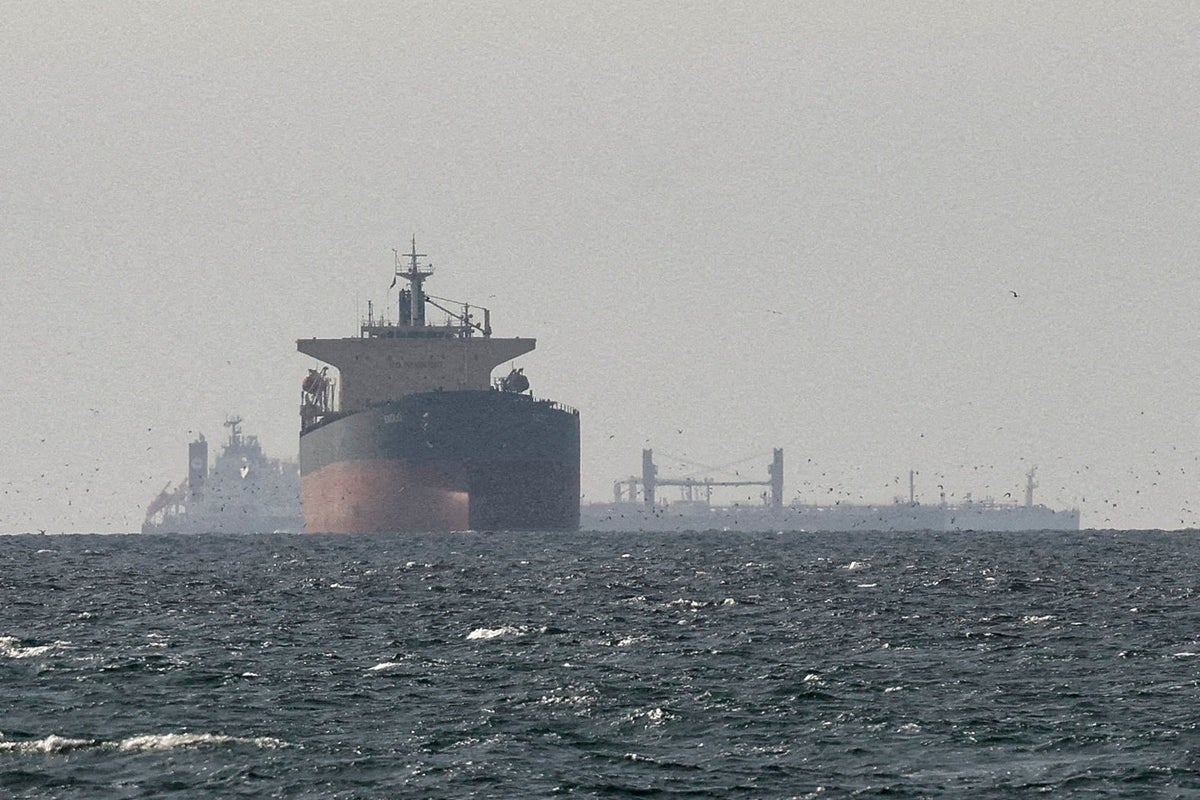
The headlines scream about deterrence. Government officials leak movements of the Bataan Amphibious Ready Group as if we are still living in 1991. The consensus is lazy, predictable, and dangerously outdated: "Send more boots, park a ship, and the problem goes away."
It is a lie. If you found value in this piece, you might want to look at: this related article.
Moving a few thousand Marines and a flat-deck ship into the Middle East isn't a show of force. In the modern theater, it is a display of logistical inertia. We are watching the military equivalent of a legacy software company trying to fix a cloud-based security breach by shipping more desktop monitors to the office.
The mainstream narrative ignores the reality that massed hardware in the Persian Gulf has become a liability, not an asset. If you think this is about "stabilizing global oil markets," you haven't been paying attention to the last decade of energy independence or the shift in how asymmetric warfare actually functions. For another look on this story, check out the latest coverage from Al Jazeera.
The Myth of the Floating Fortress
Traditional naval strategy relies on the assumption that a large ship equals a large threat. That worked when the opposition lacked the math to find you and the cheap hardware to hit you.
Today, we are deploying multi-billion dollar targets into a bathtub. The "deterrence" logic fails because it assumes the adversary plays by the same economic rules. It costs the U.S. millions per day to keep an Amphibious Ready Group (ARG) on station. It costs a local proxy group about $20,000 to launch a swarm of drones or a guided anti-ship missile.
I have watched planners burn through budgets trying to justify these deployments. They focus on "presence." But presence without a clear, modern mission is just expensive loitering.
The ARG is built for a specific type of fight: hitting a beach, securing a port, and moving inland. In the current Middle Eastern friction points, there is no beach to hit. There is no conventional army waiting for a fair fight. By sending the Marines, we are bringing a sledgehammer to a hacking contest.
The Energy Independence Blind Spot
Every news cycle mentions the Strait of Hormuz. They claim the U.S. must protect the flow of oil to keep the global economy from cratering.
This is 1970s thinking.
The U.S. is currently the world’s largest producer of crude oil. The strategic necessity of the Persian Gulf for American domestic energy security has evaporated. While the global price is linked, the actual physical reliance is a ghost of the past.
The real beneficiaries of U.S. naval protection in the Middle East are China and India. We are spending American taxpayer dollars and risking American lives to subsidize the energy security of our primary economic rivals.
If we were being "contrarian" in the war room, the move wouldn't be sending more ships. It would be demanding that the nations actually consuming that oil provide the security for it. But the "consensus" doesn't allow for that conversation because it would admit that our current posture is a holdover from a dead era.
The Cost of Predictability
When you do the same thing for thirty years, you become a solved problem.
Our adversaries know exactly how a Marine Expeditionary Unit (MEU) operates. They know the range of the Harriers or F-35Bs on deck. They know the transit speed of the transport docks.
True power in the 21st century comes from being unpredictable and distributed. A massive ship is the opposite of both. It is a slow-moving, high-value node in a network that is increasingly vulnerable to "cheap" kills.
Consider the math of modern defense. Using a $2 million interceptor missile to knock down a $30,000 drone is a losing game. It’s an economic war of attrition that the U.S. is currently losing while claiming "tactical success." Every time we "successfully intercept" a threat in the Red Sea or the Gulf, the adversary wins a little more by draining our magazines and our treasury.
Stop Asking if We Should Send Them
The question everyone asks is: "Is the U.S. doing enough to protect the region?"
That is the wrong question. The right question is: "Why is the U.S. still using a kinetic solution for a non-kinetic era?"
We are obsessed with the optics of "boots on the ground." It makes for a great press briefing. It looks "strong" on a map. But if the goal is actually to stop regional escalation, sending a visible, targetable force often has the opposite effect. It provides a focal point for provocation.
I’ve seen this play out in corporate boardrooms and military briefings alike. Leaders choose the most visible action because it’s the easiest to defend to stakeholders, even if it’s the least effective. No one gets fired for sending the Marines. People do get fired for suggesting we withdraw and let the regional players sort out their own backyard.
The Reality of Amphibious Irrelevance
Amphibious assault is a dying art.
In an age of satellite surveillance and long-range precision strikes, the idea of gathering thousands of troops on a ship to move them close to a hostile shore is tactical suicide. The "over-the-horizon" capability we tout is frequently within the range of shore-based batteries that cost less than the ship’s cafeteria.
We need to stop pretending that a Marine on a ship in 2026 has the same psychological impact as one in 1950. The world has moved on. Our enemies have moved on. Only the Pentagon remains committed to the script.
We are currently witnessing the sunset of the carrier-centric power projection model. This deployment isn't a "new" development; it’s the twitching of a muscle memory that no longer serves the body.
If the goal is to win the next conflict, we should be investing in sub-surface autonomy, cyber disruption, and decentralized logistics. Instead, we are sending a 40,000-ton target to sit in a narrow waterway and hope nobody does the math.
The ships are moving. The Marines are ready. The policy is broken.
Do not look at the movement of the Bataan as a sign of strength. Look at it as a sign of a superpower that has forgotten how to innovate and is instead relying on the expensive, heavy, and increasingly fragile tools of the past to solve the problems of a transparent, high-speed future.
Put the hardware away and start thinking. The ocean is getting smaller every day, and we are still acting like it’s a moat.