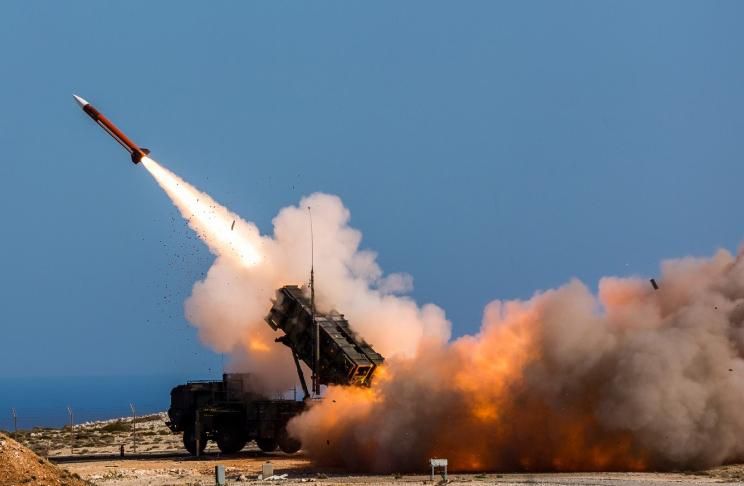
The United States is currently burning through its strategic reserve of precision-guided munitions at a rate that far outpaces its ability to replenish them. This is not a theoretical supply chain hiccup or a minor logistical delay. It is a fundamental breakdown of the American industrial base. While the Department of Defense acknowledges the dwindling stockpiles of everything from 155mm artillery shells to Javelin anti-tank missiles, the proposed solution—turning to low-cost, rapidly produced "attritable" weapons—is currently a hollow promise. The harsh reality is that the infrastructure to build these cheaper alternatives simply doesn't exist at scale, and the military-industrial complex is structurally allergic to the low profit margins they represent.
The math is brutal. In modern high-intensity conflict, the consumption of munitions isn't measured in months, but in days. When the U.S. sends thousands of missiles to allies, it isn't just dipping into a surplus; it is liquidating decades of slow-motion procurement. Replacing a single sophisticated missile often takes two to three years due to specialized components and a shrinking pool of skilled labor. This gap has created a vacuum that "cheap" tech was supposed to fill. However, shifting from $2 million interceptors to $50,000 suicide drones isn't just a matter of changing a purchase order. It requires a total overhaul of how the U.S. builds for war.
The Architecture of Failure
For thirty years, the Pentagon prioritized quality over quantity. The result was a suite of weapons that are arguably the best in the world but are too expensive to lose and too slow to build. This "exquisite" hardware relies on a fragile web of sub-tier suppliers. If a single machine shop in the Midwest that makes a specific gimbal for a seeker head goes out of business, the entire production line for a multi-million dollar missile stops.
This fragility is a direct consequence of post-Cold War consolidation. In the 1990s, the "Last Supper" meeting led by then-Deputy Secretary of Defense William Perry encouraged defense giants to merge. We went from dozens of prime contractors to a handful of titans. While this saved money in a peacetime economy, it eliminated the redundancy needed for a surge. Now, when the Pentagon wants to double production of a specific rocket motor, it finds that there is only one factory in the country capable of doing the work, and that factory is already running three shifts.
The push for low-cost alternatives—often referred to as "Replicator" initiatives or "attritable" systems—is an attempt to bypass this bottleneck. The idea is to flood the zone with cheap, disposable drones and missiles. But there is a massive disconnect between Silicon Valley’s vision of cheap hardware and the Pentagon’s requirement for "mission-capable" gear. A drone that works in a backyard doesn't work when its GPS signal is jammed, its data link is spoofed, and it has to sit in a shipping container for five years without the battery exploding. Making "cheap" things reliable in a combat zone is, ironically, very expensive.
The Margin Trap
The primary obstacle to low-cost munitions isn't engineering; it’s the business model of the defense industry. Major defense contractors are beholden to shareholders who demand high margins. Building a $4 million missile provides a healthy profit and a long-term maintenance contract. Building a $20,000 "dumb" drone provides neither.
When the government asks a traditional defense giant to pivot to low-cost systems, it is essentially asking them to cannibalize their own revenue streams. This creates a natural resistance. New players—the "defense tech" startups—are eager to fill the gap, but they face the "Valley of Death." This is the period between winning a small prototype contract and receiving a massive production order. Most small firms go bankrupt before the Pentagon can navigate its own multi-year budget cycle to buy their products in bulk.
To make low-cost munitions a reality, the U.S. needs to move away from "cost-plus" contracting, which rewards companies for spending more money, and move toward fixed-price contracts for massive volumes. But the volume isn't there yet. Without a guaranteed order for 100,000 units, no company can justify building the automated factory needed to drive the price down. It is a classic chicken-and-egg problem that the current procurement system is ill-equipped to solve.
The Software Illusion
There is a dangerous assumption in Washington that software can compensate for a lack of physical mass. The narrative suggests that if we just make our remaining missiles "smarter" with AI, we won't need as many of them. This is a fallacy. In a sustained conflict against a peer competitor, quantity has a quality of its own. You cannot "algorithm" your way out of a shortage of TNT and steel.
Furthermore, the focus on high-tech solutions has led to a neglect of basic industrial chemistry. The U.S. is dangerously dependent on foreign sources—including adversaries—for the energetic materials and precursors used in explosives and propellants. While we debate the ethics of autonomous drones, we are struggling to find domestic sources for the chemicals needed to make the rockets actually fly. We have spent billions on the "brain" of the weapon while the "muscles" have atrophied.
The shift to low-cost alternatives also requires a change in military doctrine. Commanders are trained to treat every asset as precious. Using an "attritable" system means accepting that 80% of them might be destroyed or malfunction. Culturally, the U.S. military struggles with the idea of "planned failure." This hesitancy leads to "requirement creep," where a simple, cheap drone slowly gains more sensors, better armor, and more features until it is no longer cheap or easy to produce.
The Global Scramble for Components
While the U.S. tries to figure out its domestic production, the rest of the world isn't waiting. The war in Ukraine has turned into a massive laboratory for low-cost warfare. We are seeing off-the-shelf components—hobbyist motors, plastic 3D-printed frames, and consumer-grade cameras—being used to disable multi-million dollar tanks.
This has led to a global race for "non-exquisite" components. The same chips found in a washing machine or a toy car are now being diverted to the front lines. The U.S. finds itself in a bizarre position: it has the most advanced technology on earth, but it is competing with insurgents and regional powers for the basic electronics needed to build mass-scale weaponry.
This competition drives up the price of "cheap" alternatives. If the Pentagon wants to buy a million small electric motors for a new drone swarm, it has to outbid the commercial automotive and appliance industries. Without a dedicated, protected supply chain for these low-end components, the "low-cost" alternative quickly becomes a budget-buster.
Rebuilding the Arsenal
Fixing the munitions gap requires more than just more money. It requires a structural change in how the government interacts with the private sector. The Pentagon needs to stop acting like a customer at a boutique and start acting like a partner in industrial capacity.
- Multi-Year Procurement: The government must commit to buying munitions in bulk over five to ten years, regardless of the immediate political climate. This gives companies the certainty they need to invest in new factories and hire workers.
- Modular Open Systems: We need to stop building "black box" weapons. If a missile’s sensor is proprietary, only one company can fix it or upgrade it. By forcing an open architecture, the Pentagon can swap in a cheaper sensor from a startup without redesigning the entire missile.
- On-Shoring Energetics: The U.S. must rebuild its capacity to produce explosives and propellants domestically. This is a matter of national security that cannot be left to the whims of the global market.
- Accepting "Good Enough": The military must resist the urge to over-engineer low-cost systems. A drone that works 70% of the time and costs $5,000 is often more valuable than a drone that works 99% of the time and costs $500,000.
The window for this transition is closing. As current stockpiles continue to drain, the "years away" timeline for cheap alternatives becomes an existential threat. The U.S. cannot afford to wait for the perfect low-cost solution while its current arsenal disappears into the vacuum of global instability. We must choose between maintaining the illusion of technological perfection and the reality of industrial mass.
If you want to understand the true state of American readiness, look past the shiny jets and the carrier strike groups. Look at the shipping containers. Look at the warehouses. Look at the lead times for a simple fuse. The strength of a superpower isn't just in what it has on the shelf today, but in how fast it can refill those shelves tomorrow. Right now, the shelves are getting bare, and the factory doors are locked.
Demand a breakdown of the "Tier 3" and "Tier 4" suppliers for any major weapons program you track.


