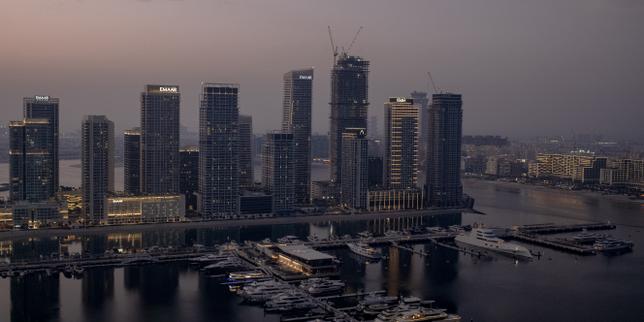
The artificial fronds of Palm Jumeirah are currently experiencing a psychological and economic decoupling from the rest of Dubai. While the city’s mainland hubs like Downtown and Dubai Marina pulse with a frantic, post-pandemic energy, the world’s most famous man-made island has drifted into an eerie, high-priced silence. This isn't the quiet of exclusive luxury; it is the silence of a market that has outpriced its own utility. For the tourists who once flocked here for the spectacle, the Palm has become a gold-plated cage that is simply too quiet, too isolated, and too expensive to justify the commute.
The disconnect is driven by a massive surge in long-term residential acquisitions that have stripped the island of its transient, vibrant "holiday" feel. Wealthy expatriates and global investors have snapped up short-term rental stock to convert them into permanent fortresses. Consequently, the foot traffic that fuels the island’s cafes and beach clubs has evaporated. What remains is a neighborhood of shuttered blinds and empty promenades where the few remaining tourists feel like intruders in a private suburban enclave.
The Price of Artificial Solitude
Palm Jumeirah was never designed for genuine community. It was engineered for the "wow" factor of a Google Earth satellite view. When you are on the ground, the reality is far more grueling. The single entry and exit point—the trunk—has become a notorious bottleneck. As Dubai’s population swells, the logistics of leaving the island to find "real" culture or more affordable dining have become a deterrent.
Tourists arrive expecting the peak of Emirati glamor. Instead, they find themselves trapped in a beautiful, stagnant loop. Most visitors now realize that if they want the Dubai experience they see on social media, they are better off staying at the Creek or the newer developments in Jumeirah Village Circle where the city actually lives and breathes. On the Palm, the lack of street-level spontaneity is a glaring flaw. You cannot simply "go for a walk" and stumble upon a hidden gem. Every movement must be a calculated, choreographed Uber ride or a Monorail trip that leads to a mall everyone has already seen.
The local economy is feeling the pinch of this sterility. High-end restaurants inside the five-star resorts are reporting "quiet" nights even during what should be peak season. When a guest pays $800 a night for a room, they expect a certain level of ambient energy. When they walk out onto the West Beach or the Boardwalk and see more security guards than fellow travelers, the illusion of being at the center of the world shatters.
Investment Fever Killed the Vibe
The real estate data explains the ghost town phenomenon better than any travel brochure. Over the last 24 months, the Palm has seen a record-breaking volume of secondary market sales. But these aren't buy-to-let investors looking to host Airbnb guests. These are "buy-to-hide" investors.
- Property Hoarding: High-net-worth individuals from Eastern Europe and Asia are using Palm villas as "safe haven" assets. These properties often sit empty for ten months of the year.
- Rental Scarcity: As supply for short-term stays drops, prices for the remaining units skyrocket. This filters out the "average" luxury traveler, leaving only the ultra-wealthy who prefer to dine in private or stay within their resort's gated walls.
- Service Strain: Maintenance costs on the island are higher than on the mainland. Business owners are forced to pass these costs to consumers, resulting in a $20 coffee that even a seasoned traveler finds insulting.
The result is a hollowed-out social ecosystem. A neighborhood needs a mix of residents, workers, and visitors to feel alive. By tilting so heavily toward the ultra-private residential sector, the Palm has effectively evicted the "fun" that once made it a global landmark.
The Monorail to Nowhere
Transportation remains the island's Achilles' heel. The Palm Monorail is a marvel of engineering that serves almost no practical purpose for the modern traveler. It doesn't connect directly to the Dubai Metro system without a convoluted transfer. For a tourist, this means the island is functionally an offshore entity.
In a city that prides itself on the "seamless" (a word they love, but rarely achieve) flow of people, the Palm feels like a logistical afterthought. If you aren't willing to spend an hour in traffic to reach the Burj Khalifa, you stay on the island. If you stay on the island, you realize there isn't actually that much to do once you've taken the obligatory photo of the Atlantis.
The Rising Competition from the Mainland
Dubai is no longer a one-trick pony. The Palm used to be the only place for "beach luxury," but the mainland has caught up and surpassed it. Areas like Jumeirah Bay Island and the revitalized beachfronts in Umm Suqeim offer the same water views with ten times the accessibility.
Developers are also pivoting. They see that the modern traveler craves "walkability"—a concept that is almost non-existent on the Palm's outer fronds. New projects in the Dubai Canal area are designed around the human scale, with parks, shops, and offices all within a five-minute radius. Compared to these dynamic hubs, the Palm looks like a relic of 2005-era urban planning: big, flashy, and fundamentally disconnected from how people actually want to spend their time.
The "too quiet" complaint from tourists isn't just a matter of preference. It is a warning sign of brand decay. When a destination becomes synonymous with "boredom" or "isolation," the premium price tag begins to look like a tax on the uninformed.
The Institutional Blind Spot
The authorities and major developers seem convinced that more "attractions" will solve the problem. They build more observation decks and more high-end malls. But you cannot manufacture soul with concrete and glass. The Palm lacks the "third places"—the parks, the public squares, the casual hangouts—that allow a community to form.
Everything on the island is a transaction. You pay to park, you pay to sit on the beach, you pay to see the view. This transactional nature creates a cold atmosphere. When tourists say it’s "a bit too quiet," what they really mean is that it feels dead. They are looking for the pulse of a city, but they’ve checked into a high-security cemetery for the rich.
To fix this, there needs to be a radical shift in how the island is managed.
- Public Space Re-allocation: Converting some of the stagnant, unused plots into actual public parks that aren't tied to a hotel brand.
- Small Business Incentives: Lowering the barrier to entry for independent retailers and cafes that aren't part of a massive global conglomerate.
- Infrastructure Integration: Finally connecting the Monorail to the Red Line Metro in a way that doesn't require a hike through a parking garage.
Until these issues are addressed, the Palm Jumeirah will continue its slide into being a giant, water-bound suburban cul-de-sac. It will remain a place where people own property, but nobody actually wants to be. The tourists will keep drifting back to the mainland, seeking the energy that the Palm traded away for a bit of artificial peace and quiet.
If you are planning a trip to Dubai, look at the map. If you want to feel the heartbeat of the most ambitious city on earth, don't strand yourself on a frond. The view from the outside is much better than the reality of being trapped within.