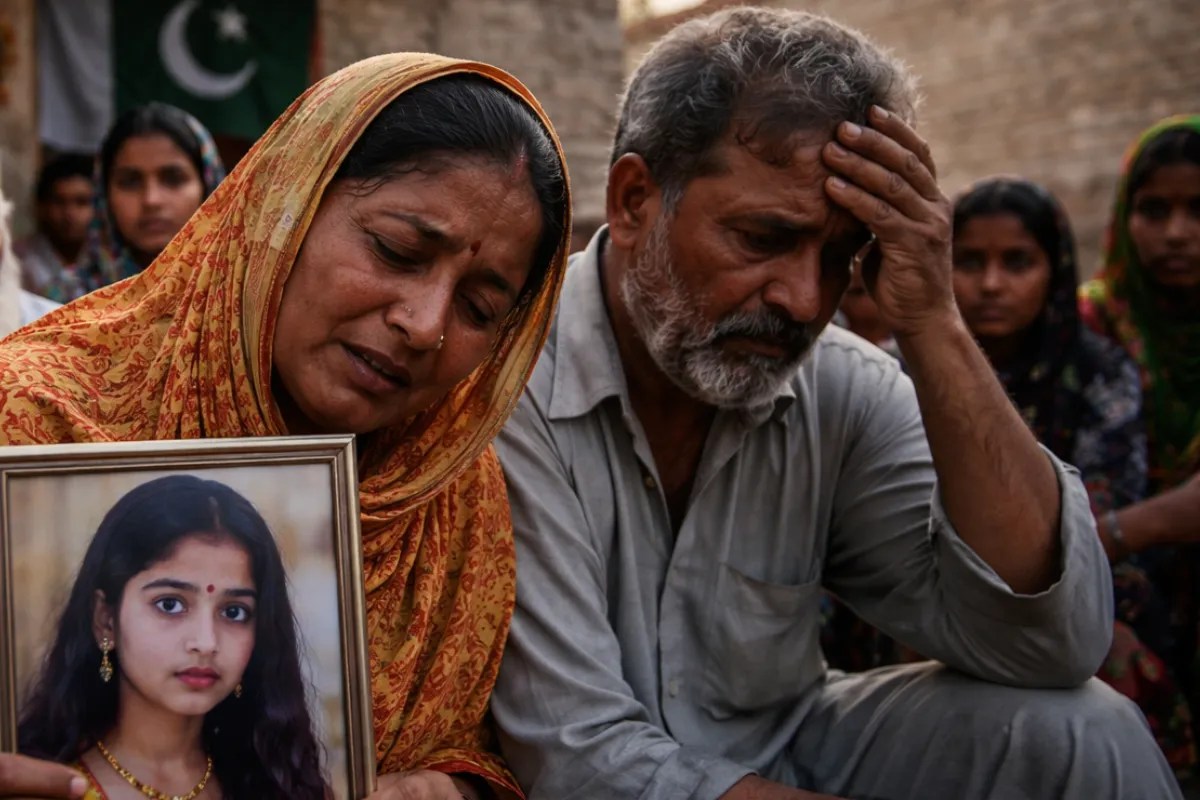
The recent abduction of a 15-year-old Hindu girl in Pakistan isn't just another headline. It’s a recurring nightmare. For the family in Sindh, the world stopped the moment their daughter was snatched. This isn't an isolated incident or a random act of violence. It's a systemic failure that targets the most vulnerable members of a minority community. Every young girl in these regions now feels like the next target. That’s the brutal reality.
When we talk about minority rights in Pakistan, the conversation often gets bogged down in diplomatic politeness. Let’s drop the act. We’re seeing a pattern where teenage girls from the Hindu community are kidnapped, forced into marriages, and converted under duress. The legal system often stands by, watching as birth certificates are forged to make children appear like consenting adults. It’s gut-wrenching. For a closer look into this area, we recommend: this related article.
The mechanics of a targeted disappearance
The process usually follows a chillingly predictable script. A young girl, often between 12 and 16, disappears from her home or on her way to school. Within days, a certificate of marriage and conversion surfaces. The family's plea for a First Information Report (FIR) is met with bureaucratic walls or outright threats from local power brokers.
Local police often claim the girl left of her own "free will." Think about that. A 15-year-old leaving her grieving parents to marry a man twice her age in a different faith overnight? It doesn't hold water. Organizations like the Human Rights Commission of Pakistan (HRCP) have documented hundreds of these cases. Yet, the conviction rate remains abysmal. The law exists on paper, but the street-level reality is governed by fear and religious extremism. For further details on this issue, detailed analysis is available at The Washington Post.
Why the Sindh Child Marriage Restraint Act fails in practice
Pakistan actually has laws meant to prevent this. The Sindh Child Marriage Restraint Act of 2013 technically bans marriage under the age of 18. It’s one of the more progressive pieces of legislation in the region. But there’s a massive gap between the law and the courthouse.
When these cases reach a judge, the pressure is immense. Crowds often gather outside the court to intimidate the family and the judiciary. In many instances, the victim is kept in the custody of her abductor or a "shelter home" run by the very groups involved in the conversion. By the time she stands before a judge, she’s been coached, threatened, or broken.
I've seen reports where medical boards, tasked with verifying the girl's age, provide conflicting or clearly inaccurate data to bypass the 18-year-old limit. It’s a rigged game. If the system meant to protect children is the one facilitating their disappearance, where does a family go?
The trauma that stays after the cameras leave
The media cycle moves fast. A story breaks, people express outrage on social media, and then everyone moves on to the next tragedy. But for the families, the trauma is permanent. They lose their daughters, their sense of safety, and often their place in the community. Many Hindu families in Sindh are forced to migrate, leaving behind ancestral lands because they can't protect their children.
It’s not just about one girl. It’s about the psychological warfare waged against an entire community. When a 15-year-old is taken, every other parent in that village starts looking at the door with terror. They stop sending their daughters to school. They restrict their movement. The "next target" mentality isn't paranoia; it's a survival instinct based on lived experience.
International silence and the need for accountability
Where is the international community? We hear plenty of speeches about human rights at the UN, but specific, targeted pressure regarding the abduction of Hindu girls in Pakistan is rare. It’s often sacrificed at the altar of geopolitical interests.
Human rights groups like Amnesty International and Christian Solidarity Worldwide have raised alarms, but without state-level consequences, nothing changes. The Pakistani government needs to move beyond "taking notice" of incidents. They need to dismantle the networks of shrines and individuals who profit from these forced conversions.
Real steps toward protection
Change won't come from a hashtag. It requires a total overhaul of how minority crimes are handled. First, the age verification process must be taken out of the hands of local doctors who might be under pressure. Use forensic standards. Second, any girl recovered from an abduction must be placed in a neutral, high-security facility—not with her "new husband" or a religious institution—until her case is settled.
If you’re following these stories, don’t just consume the news. Support organizations like the Scheduled Caste Rights Movement or local legal aid groups in Pakistan that actually provide lawyers for these families. They’re the ones on the ground fighting a lopsided battle. Documenting these cases and keeping the pressure on international human rights bodies is the only way to ensure these girls aren't forgotten. Awareness is the first step, but demanding legislative enforcement is the goal.