Brent crude has crossed the triple-digit threshold despite frantic efforts by Western governments to flood the market with emergency reserves. The failure of these strategic releases to suppress prices reveals a uncomfortable truth about modern energy markets. The $100 price tag isn't just a reaction to current geopolitical tension in the Middle East. It is a structural indictment of a global supply chain that has lost its elasticity. While the conflict involving Iran serves as the immediate spark, the underlying dry timber consists of years of underinvestment and a fundamental misunderstanding of how reserve releases actually impact trader psychology.
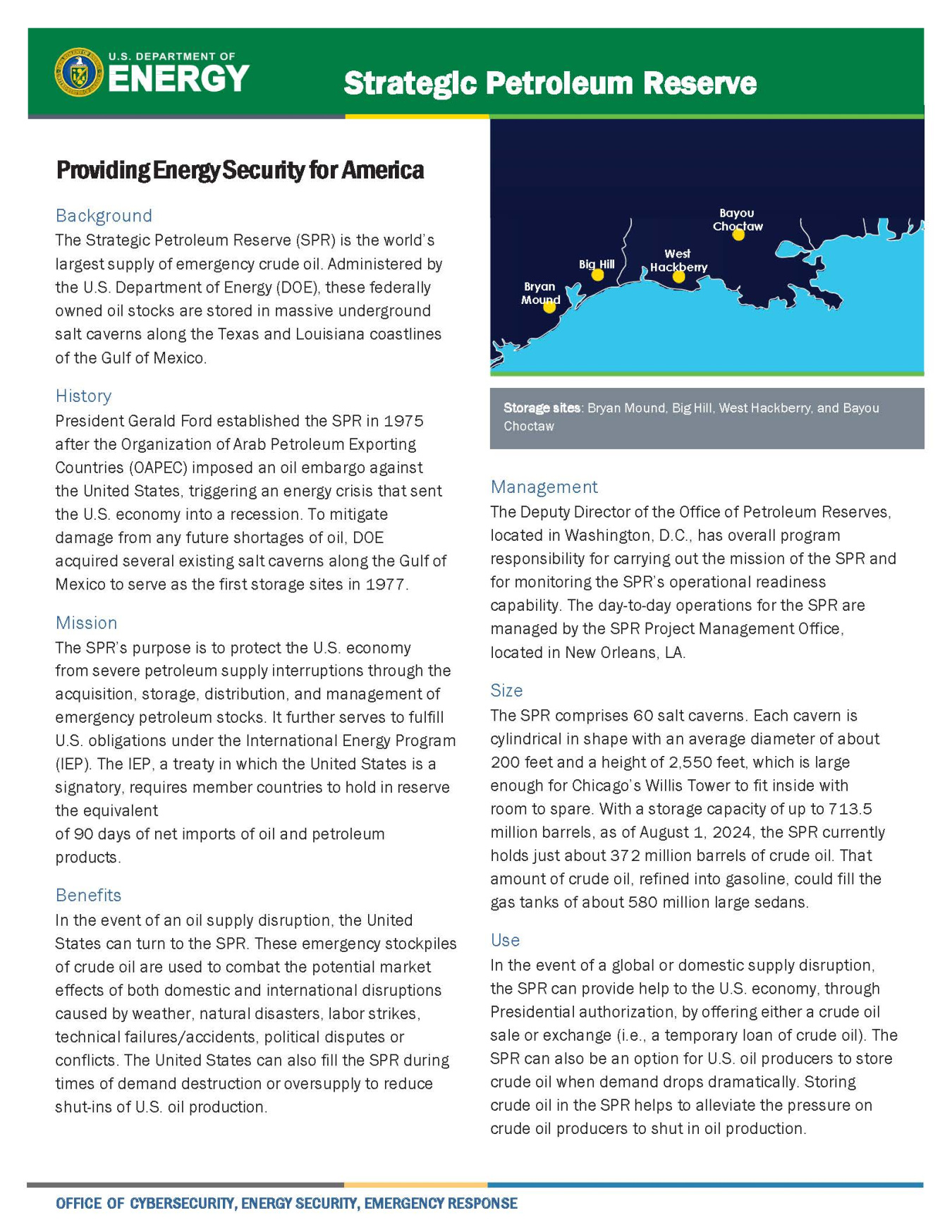
When the International Energy Agency or individual nations tap into their Strategic Petroleum Reserves, they are playing a card that only works if the market believes the supply gap is temporary. In the current environment, traders are looking at the escalating threats to the Strait of Hormuz and concluding that a few million barrels of light sweet crude won't fix a long-term deficit of heavy sour grades. The market has called the bluff of the policymakers. Read more on a similar issue: this related article.
Why the Strategic Petroleum Reserve Failed to Stop the Surge
The logic behind releasing emergency oil reserves is simple in theory but flawed in practice during an active conflict. By dumping government-owned oil into the market, officials hope to increase supply enough to meet demand and lower prices. However, this assumes that the "missing" oil is the only factor driving the price. It ignores the risk premium.
Traders do not just buy oil based on what is available today. They buy based on what they fear might be gone tomorrow. When an administration announces a massive release of reserves, it signals to the market that the situation is dire. Instead of calming the waters, it often validates the panic. If the government is worried enough to empty its rainy-day fund, the "rainy day" must be more severe than previously thought. More reporting by MarketWatch highlights comparable perspectives on the subject.
Furthermore, there is the technical reality of refinery configuration. Most of the oil held in national reserves is of a specific grade. If the disruption in the Middle East involves Iranian exports or regional stability, the market loses specific types of crude that cannot be instantly replaced by the inventory being released from salt caverns in Texas or storage tanks in Europe. This mismatch creates a bottleneck that keeps the price of Brent crude—the international benchmark—climbing even as supply is technically added to the system.
The Iranian Factor and the Fragility of the Strait
Iran occupies a unique position in the global energy hierarchy. It is not just about the barrels they produce, but the geography they influence. The Strait of Hormuz remains the ultimate choke point. Roughly one-fifth of the world’s total oil consumption passes through this narrow stretch of water.
If a conflict escalates to the point where shipping is actively deterred or physically blocked, no amount of reserve releases can compensate for that loss. We are talking about $20$ to $21$ million barrels of oil per day. The combined strategic reserves of the Western world would be exhausted in months if they tried to fill a gap of that magnitude.
The current price action suggests that the market is finally pricing in the "unthinkable" scenario. For years, the threat of a closed Strait was dismissed as posturing. Now, with direct kinetic action and maritime uncertainty, the risk is no longer theoretical. Investors are moving away from speculative shorts and piling into long positions, essentially betting that the geopolitical floor for oil is now significantly higher than it was six months ago.
The Ghost of Underinvestment
To understand how we reached $100$ Brent, we have to look back at the last decade of energy policy and capital expenditure. The world has been told that the era of fossil fuels is ending. Consequently, major oil companies have faced immense pressure from shareholders and activists to pivot away from exploration and production.
This has led to a massive shortfall in upstream investment. We have stopped looking for the big, multi-decade fields that provide the baseline for global supply. Instead, we have relied on shorter-cycle projects like U.S. shale, which can be turned on and off relatively quickly. But even shale has its limits. High labor costs, equipment shortages, and a renewed focus on "capital discipline"—returning money to shareholders rather than drilling more wells—mean that the U.S. can no longer act as the world's swing producer.
When a supply shock hits, there is no spare capacity left in the system. Saudi Arabia and the UAE are the only nations that typically hold significant spare capacity, and their willingness to deploy it is now tied to their own economic agendas and geopolitical alignments. The era of the "unconditional" oil backstop is over.
The Inflationary Feedback Loop
High oil prices do not exist in a vacuum. They act as a regressive tax on every sector of the global economy. When Brent hits $100$, the cost of shipping every consumer good on the planet rises. The cost of fertilizer, which is heavily dependent on energy inputs, spikes, leading to higher food prices months down the line.
Central banks are now caught in a vice. They want to lower interest rates to stimulate growth, but energy-driven inflation forces them to stay hawkish. If they cut rates while oil is at $100$, they risk a 1970s-style inflationary spiral. If they keep rates high, they risk a deep recession. This "energy-inflation-interest rate" triangle is the primary driver of market volatility today.
The failure of the reserve release to curb prices means that the only remaining tool to lower the price of oil is demand destruction. In plain terms, this means the price has to go so high that people and businesses simply stop buying it because they can no longer afford it. That is the definition of a recessionary catalyst.
The Psychological Shift in the Trading Pits
In the past, a $100$ barrel was seen as a psychological ceiling—a point where the market would naturally correct. That ceiling has become a floor.
The composition of the market has changed. We are seeing more "sticky" money entering the commodity space. Institutional investors are using oil as a hedge against a failing geopolitical order. They aren't trading the "spread"; they are buying the "security." This shift in who owns the contracts changes how the price reacts to news. Negative headlines about failed peace talks or new sanctions no longer cause a temporary dip; they cause a permanent step up in the baseline price.
We must also consider the role of the "Dark Fleet"—the shadow network of tankers used to circumvent sanctions. As the West tightens its grip on Iranian and Russian exports, more of the world's oil supply moves into this unregulated, opaque system. This makes the official data on global inventories increasingly unreliable. Traders know the data is fuzzy, so they add another layer of risk premium to the price. We are flying blind, and the market is pricing in the darkness.
Beyond the Barrel
The focus on Brent at $100$ often ignores the refining margin, or the "crack spread." It is not enough to have crude oil; you have to be able to turn it into diesel, jet fuel, and gasoline. Global refining capacity is stretched to the breaking point. Many older refineries were shut down during the 2020 lockdowns and never reopened. Others are being converted to biofuels, which have lower yields.
This means that even if the price of crude were to miraculously drop by $10$ next week, the price at the pump or the airport might stay high. The bottleneck has moved from the wellhead to the refinery gate. This structural deficit ensures that the energy crisis will be prolonged, regardless of the immediate outcome of the conflict in the Middle East.
The Reality of Energy Interdependence
The current crisis highlights the failure of "energy independence" as a concept. No nation is truly independent in a globalized commodity market. Even if a country produces more oil than it consumes, its domestic prices are still tied to the global benchmarks. A farmer in Iowa or a commuter in Munich is equally vulnerable to a disruption in the Persian Gulf.
The reliance on strategic reserves as a primary tool for market stability was a stop-gap measure that has reached its expiration date. These reserves were intended for physical disruptions—hurricanes, pipeline explosions, or total embargoes—not as a price-manipulation tool for embattled politicians. By using them to fight a price war, governments have depleted their only real insurance policy against a true catastrophe.
If the conflict expands, the world will find itself with empty reserves and a price tag that makes $100$ look like a bargain. The focus should not be on how many barrels we can dump into the market today, but on how we can rebuild the structural resilience of the energy system. This requires a cold, hard look at investment timelines, refining capacity, and the reality that the transition to a new energy mix will take decades, not years.
Ignoring the physical realities of the oil market in favor of short-term political optics has left the global economy exposed. The $100$ barrel is not the peak; it is a warning.
Monitor the spread between Brent and West Texas Intermediate (WTI). If that gap continues to widen while the Strategic Petroleum Reserve is being tapped, it is a definitive sign that the market no longer trusts government intervention to provide liquidity where it is needed most.