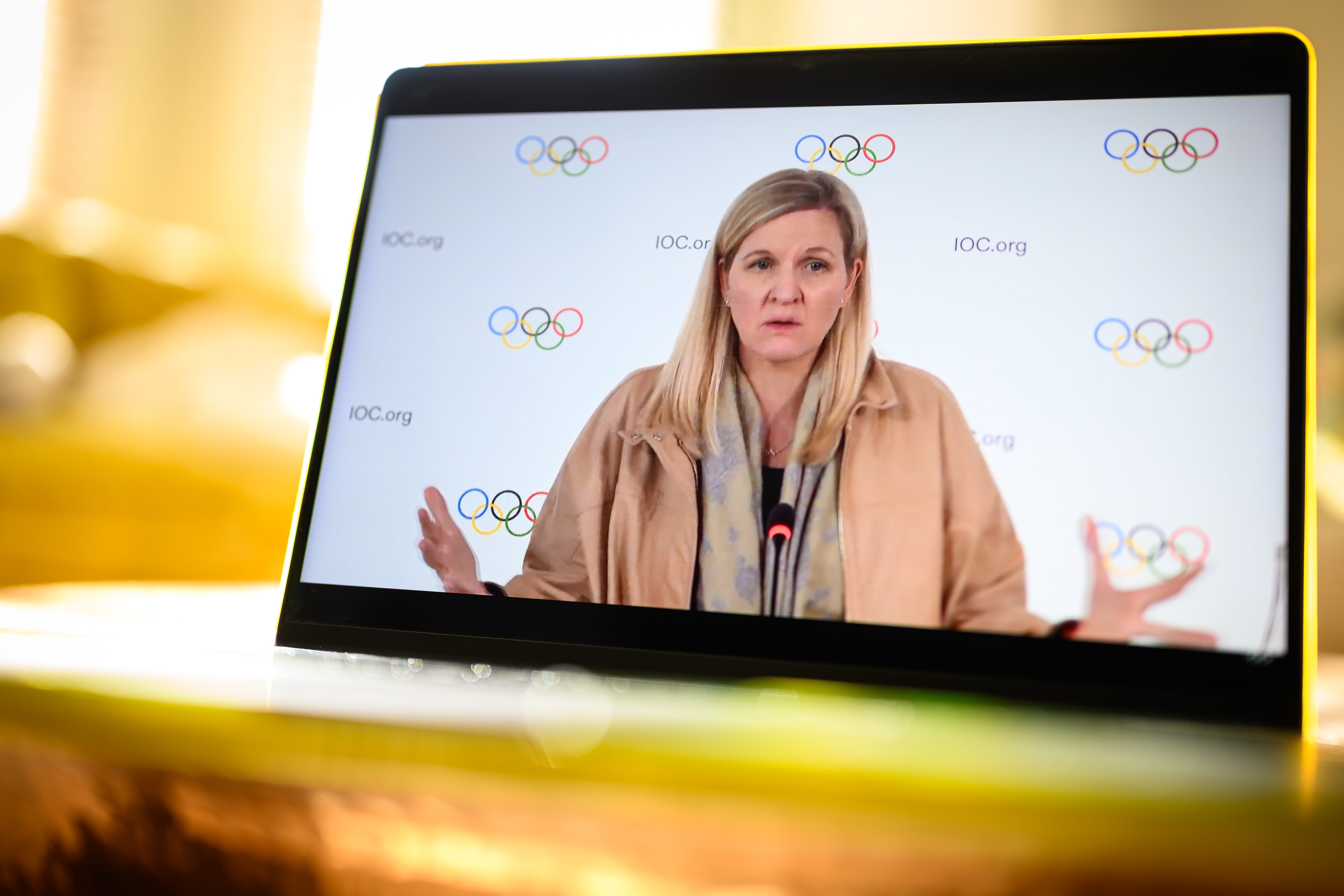
The debate over fairness in the Olympic arena just hit a breaking point. You've probably seen the headlines. World Athletics and World Aquatics, the heavy hitters of the Olympic movement, effectively shut the door on transgender women competing in the female category if they transitioned after puberty. It’s a move that many call a necessary protection of women’s sports, while others see it as a targeted exclusion that undermines the very spirit of the Games.
We need to stop pretending this is a simple "yes or no" issue. It isn't. When we talk about the Olympic committee and its stance on trans athletes, we're looking at a collision between biological data, human rights, and the shifting definition of "fairness" in a world where elite sports are decided by fractions of a second.
The Science That Changed the Rules
For years, the International Olympic Committee (IOC) relied on a simple testosterone limit. If your levels were below a certain threshold for twelve months, you were good to go. That changed when the 2021 Framework on Fairness, Inclusion, and Non-Discrimination shifted the power to individual sports federations. Basically, the IOC washed its hands of a universal rule and told each sport to figure it out.
World Athletics took that bait and ran with it. Their experts argued that suppressing testosterone doesn't actually erase the physical advantages gained during male puberty. We're talking about bone structure, lung capacity, and muscle fiber density. These aren't things that just vanish with a pill or an injection. In sports like sprinting or swimming, where explosive power is everything, those legacy advantages are massive.
The peer-reviewed data often cited by these governing bodies suggests that even after two years of hormone therapy, trans women may retain a strength advantage over biological females. This isn't just theory. It's the reason why Sebastian Coe, the president of World Athletics, took such a hard line. He argued that if the "female" category isn't protected, women simply won't win in their own sports.
Fairness is a Zero Sum Game
Let’s be honest about what’s happening here. In elite sports, fairness for one group often feels like an injustice to another. If you allow trans women who have gone through male puberty to compete, biological women argue the playing field is tilted before the starting gun even fires. If you ban them, you're telling a group of athletes they have no place in the highest level of competition.
I've talked to coaches who are terrified to speak up. They see the physical differences in training, but they don't want to be labeled as bigots. On the flip side, trans athletes like Lia Campbell or Alana Smith have faced a level of scrutiny that would break most people. They aren't "cheats." They're athletes following the rules that were in place at the time.
The problem is the rules are moving targets.
What the Critics Get Wrong About the Ban
A common misconception is that this is a total ban on trans people in the Olympics. It’s not. It is a ban on trans women in the female category under specific conditions. Trans men, for example, generally face fewer restrictions because the perceived physical advantage doesn't work in the same direction.
Critics of the ban argue that sport has never been "fair." We don't ban basketball players for being 7 feet tall. We didn't ban Michael Phelps for having double-jointed ankles or producing half the lactic acid of his rivals. So why is this specific biological trait—puberty—the one we've decided to police so aggressively?
The answer lies in the existence of the female category itself. We created women’s sports as a protected class because, without it, women would be excluded from the podium in almost every physical discipline. If we ignore the biological reality of male puberty, the category of "woman" in sports loses its functional meaning. That's the argument, anyway. And it's one that the Olympic committee is starting to favor.
The Rise of the Open Category
So where do these athletes go? World Aquatics tried to solve this by introducing an "open category." It was supposed to be a place where anyone could compete, regardless of gender identity.
The result? It flopped.
At the World Cup in Berlin, the open category events were canceled because nobody signed up. It turns out that athletes don't just want a lane to swim in; they want to belong to a recognized category with history, prestige, and a clear path to the podium. An "open" category often feels like a "separate but equal" solution that satisfied nobody and solved nothing.
The Legal Battles on the Horizon
Don't think for a second that these governing bodies have the last word. We're seeing a wave of legal challenges. Athletes are taking their cases to the Court of Arbitration for Sport (CAS). They’re arguing that these bans are discriminatory and violate human rights charters.
The legal reality is just as messy as the biological one. Different countries have different laws regarding gender recognition. The Olympic committee is trying to create a global standard for a world that can't even agree on basic definitions. It's a mess.
We're also seeing a shift in how sponsors react. Brands are caught in the middle. Some stay quiet. Others pick a side and face the inevitable social media firestorm. In 2026, the stakes are higher than ever because the "culture war" has fully integrated into the sports marketing machine.
How to Follow the Developing Rules
If you’re trying to keep up with who can compete where, stop looking at the IOC. They aren't the ones making the calls anymore. You have to look at the individual International Federations (IFs).
- Cycling (UCI): Has mirrored the strict bans seen in athletics.
- Gymnastics: Still evaluating, but leaning toward stricter biological markers.
- Soccer (FIFA): Currently reviewing their policy with a focus on "safety" and "fairness."
The trend is clear. The "inclusion first" era of 2015 is over. We've entered a "fairness first" era where biological sex is being prioritized over gender identity in elite competition.
If you want to understand the impact of these changes, look at the youth level. These Olympic rulings trickle down. Local school boards and state legislatures often use Olympic standards to justify their own bans. What happens in Lausanne, Switzerland, eventually affects a track meet in Ohio or a swim club in Sydney.
Get involved at the local level if you care about how these policies are implemented. Don't just vent on social media. Read the policy documents from your specific sport's governing body. Understand the difference between "gender identity" and "biological sex" as defined in these specific legal contexts. Most importantly, keep the focus on the athletes. Behind every policy change is a person who just wants to compete. We owe it to them to get the science and the ethics right, rather than just shouting past each other.