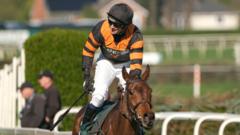
The racing media is currently weeping into its morning coffee because Nick Rockett, the 2024 Irish Grand National hero, has been pulled from the Aintree Grand National. The standard narrative is a mix of disappointment and confusion. They call it a "blow to the spectacle." They call it a "missed opportunity" for the fans.
They are wrong.
If you think this is a loss for the sport, you do not understand how modern National Hunt racing actually functions. You are viewing the world through the nostalgic lens of 1970s mud-pluggers, while the elite trainers are playing a high-stakes game of asset management. Withdrawing a horse like Nick Rockett isn’t a sign of weakness; it is a brutal, necessary acknowledgment that the Grand National as we once knew it is dead. And that is exactly why Willie Mullins is the most successful trainer in history.
The Myth of the Aintree "Must-Run"
The public has this romanticized obsession with the Grand National. They believe that if a horse is qualified and healthy, it belongs on that starting line. This sentiment is a relic.
In reality, the Aintree Grand National has become a statistical nightmare for horses of a certain profile. We are talking about a race that has been sanitized, shortened, and sped up to the point where it no longer rewards the traditional "National type." Nick Rockett is a seven-year-old with his entire career ahead of him. Sending a young, high-class novice—or near-novice—into a 32-runner cavalry charge is often a form of career suicide.
I have watched owners chase the "glory" of a National finish only to return home with a horse that is never the same. The mental and physical toll of that specific four-and-a-quarter-mile sprint is unique. By withdrawing him, the Mullins camp is essentially saying that the Aintree trophy isn't worth the risk of breaking a future Gold Cup contender. It is a logic-driven business decision that prioritizes longevity over a single Saturday afternoon of headlines.
The Weight of the Handicapper’s Ego
Let’s talk about the math that the mainstream pundits ignore. The British handicapper has a historical tendency to over-egg the ratings of Irish horses, particularly those coming off a major win at Fairyhouse.
When the weights were released, Nick Rockett was essentially being asked to give away massive amounts of lead to seasoned, older stayers who have been campaigned specifically to exploit the system.
- The Weight Trap: Carrying 11st 7lb or more as a seven-year-old is a statistical death sentence in the modern National.
- The Experience Gap: Aintree fences, even in their "softer" iteration, require a specific rhythm. A young horse jumping them for the first time under maximum pressure is a recipe for a confidence-shattering blunder.
The "lazy consensus" says you take your shot when you have the chance. The insider truth is that you only take the shot when the variables are skewed in your favor. The variables for Nick Rockett at Aintree this year were garbage.
The Irish Grand National Fallacy
The most common question being asked is: "If he could win at Fairyhouse, why can't he win at Aintree?"
This question betrays a fundamental ignorance of the differences between the two races. The Irish Grand National is a test of stamina and jumping. The Aintree Grand National is increasingly a test of flat-track speed and navigation.
Fairyhouse rewards a gritty, staying performance. Aintree now demands a horse that can travel at 35mph while navigating a sea of falling bodies and loose horses. Nick Rockett is a stayer. He is a grinder. Putting him in a race where the early pace is dictated by converted two-mile chasers is an exercise in futility.
The "Protect the Rating" Game
There is a darker, more cynical reason for this withdrawal that nobody wants to admit: the protection of a handicap mark for next season.
If Nick Rockett runs at Aintree and finishes a tired fifth or sixth, his rating stays exactly where it is—too high to be competitive in major handicaps and not high enough to be a Grade 1 lock. By pulling him now, the stable keeps their options open. They can target a specific, high-value race next season where the ground and the field size are curated to his strengths.
This isn't "dodging a challenge." It is tactical deployment. In any other industry, we would call this "optimizing the ROI." In racing, we call it "disappointing the fans." The fans don't pay the training fees. The fans don't have to deal with a horse that has lost its nerve because it was over-faced too early in its development.
Stop Asking if He Can Win
The question isn't whether Nick Rockett could win the Grand National. The question is what happens to him the day after.
We have seen too many "one-hit wonders" in this sport—horses that peak for a single National and then disappear into the ether of mid-division finishes at regional tracks. The modern elite stable avoids this by treating their stars like precision instruments rather than beasts of burden.
If you are upset that the "defending champion" (technically of the Irish version) isn't showing up, you are missing the point of modern bloodstock management. You should be applauding the restraint. It takes significantly more guts to withdraw a live contender from the world’s most famous race than it does to run him into the ground for the sake of "tradition."
The Brutal Reality of the Modern Calendar
The racing calendar is bloated. Between Cheltenham, Fairyhouse, Aintree, and Punchestown, there is simply no way for a horse to remain at its physical peak for three months straight.
The competitor article treats the Aintree withdrawal as an isolated event. It’s not. It’s the result of a grueling season where every gallop is tracked by GPS and every heartbeat is monitored. If the data says the horse is 2% off his peak, you don't run. Period.
The obsession with "showing up" is for losers. Winners care about winning when the conditions are perfect. Everything else is just noise.
The Future is Punchestown
The smart money knows exactly where Nick Rockett is heading. He is being saved for Punchestown, where the ground will be better, the field will be smaller, and the prize money is still significant.
At Punchestown, he will be the big fish in a smaller pond. He will build more experience without the trauma of a 32-horse pile-up. He will likely win, his value will skyrocket, and the same pundits who are crying about Aintree will be hailing him as a "genius-managed" superstar in May.
The industry insiders aren't shocked by this withdrawal. They are nodding in silent agreement. They know that the Grand National is a lottery, and Willie Mullins is a man who prefers to fix the odds in his favor rather than buy a ticket and hope for the best.
The Grand National doesn't need Nick Rockett to be a great race, and Nick Rockett certainly doesn't need the Grand National to be a great horse. Stop sentimentalizing a four-mile handicap. It’s a business. Start acting like it.
Go find a different "story" to chase. The real story here is that the biggest yard in the world just signaled that Aintree isn't the pinnacle anymore. It’s just another race. And if the conditions aren't right, they won't play.
Accept it.