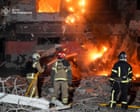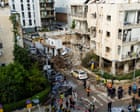
The headlines are reading like a Tom Clancy fever dream. Missile sirens in Tel Aviv. Vows of eternal strikes on Tehran. Rhetoric about "total victory" in Southern Lebanon. If you listen to the mainstream analysts, you are being told that Israel is currently re-establishing its "deterrence" through a series of tactical masterstrokes.
They are wrong.
What we are witnessing isn't the re-assertion of dominance. It is the tactical brilliance of a state that has forgotten how to achieve a strategic end-state. When Benjamin Netanyahu stands before a camera to promise more fire, he isn't speaking from a position of control. He is trapped in a feedback loop where the only answer to a failed policy is to double down on the mechanics of that failure.
The Deterrence Myth is Dead
The "lazy consensus" suggests that if you hit a proxy hard enough, the patron will back down. This is the bedrock of the current Israeli strategy. The logic follows that by decapitating Hezbollah’s leadership and striking Iranian infrastructure, Israel can force a "new regional order."
This ignores the fundamental physics of asymmetrical warfare. Deterrence is a psychological state, not a body count. I have watched military hierarchies burn through billions of dollars trying to kill their way out of a political problem. It never works. When a missile hits Tel Aviv, it isn't a sign that the enemy is "desperate." It is a sign that the enemy’s threshold for pain is significantly higher than your threshold for risk.
By expanding the war to two fronts simultaneously, Israel is not "unleashing" power. It is diluting its diplomatic capital and stretching its logistics to a breaking point that no amount of American resupply can fully bridge. You cannot bomb a population into loving peace, and you certainly cannot use 2,000-pound bombs to solve the internal demographic and political rot that is currently eating the Israeli state from the inside out.
The Lebanon Trap
Every few decades, the Israeli defense establishment convinces itself that Lebanon is a problem that can be solved with armor and airpower. They forgot 1982. They forgot 2006.
The current vow to "push Hezbollah back" beyond the Litani River sounds authoritative. In reality, it is a logistical nightmare. Hezbollah is not a conventional army; it is a social fabric with a militia attached. You are not fighting soldiers; you are fighting a geography.
Standard military doctrine suggests that you need a 3-to-1 advantage to win an offensive. In the craggy, tunnel-riddled terrain of Southern Lebanon, that ratio needs to be 10-to-1. Israel is attempting to do this while its reserve forces are already fatigued from a year of high-intensity urban combat in Gaza. This isn't a "bold move." It is a massive gamble with the lives of a generation of young Israelis, based on the hope that the enemy will simply choose to stop fighting. They won't.
The Iran Calculation is Broken
The media treats the strikes on Iran as a high-stakes chess match. It’s actually more like a game of chicken played with nuclear-grade consequences. Netanyahu’s strategy hinges on the idea that the Iranian regime is a rational actor that fears for its survival above all else.
But what if the regime views internal dissent as a greater threat than external strikes? History shows that external "aggression" is the ultimate gift to a failing autocracy. Every Israeli missile that hits Iranian soil is a PR win for the hardliners in Tehran. It allows them to wrap themselves in the flag and brand every domestic protester as a Zionist agent.
By striking Iran directly, Israel is not "degrading" the threat. It is validating the IRGC’s entire raison d'être. It provides the perfect justification for the "breakout" toward a nuclear weapon. If you tell someone you are going to destroy them every day for twenty years, don't be surprised when they build the ultimate insurance policy.
The Economic Suicide of Perpetual War
Let’s talk about the data the "security experts" ignore: the balance sheet.
- Credit Ratings: Israel’s credit rating has already been slashed. Investors hate uncertainty, and they loathe multi-front wars with no exit strategy.
- The Tech Exodus: The "Start-Up Nation" relies on a global, mobile workforce. High-tech workers are not staying in a country where they spend three months a year in uniform and the other nine months wondering if a drone is going to hit their office.
- The Cost of Interception: An Iron Dome interceptor costs roughly $50,000. A David’s Sling interceptor costs about $1 million. The rockets they are shooting down cost $500 to $5,000. You don't need to be a math genius to see that the "missile hit on Tel Aviv" is an economic victory for the adversary regardless of whether it actually explodes on a target.
Israel is winning the kinetic battles and losing the fiscal war. You can have the best air force in the world, but if your currency collapses and your brain trust moves to Cyprus or Berlin, you have lost the country.
Dismantling the "Total Victory" Delusion
People often ask: "But what should Israel do instead? They have to defend themselves."
This is the wrong question. The real question is: "What is the political objective that this violence is supposed to achieve?"
If the objective is "security," then this strategy is an objective failure. Security is the absence of the need for war. What Netanyahu is offering is the permanence of war. He is selling a future where Israelis live in bunkers, guarded by a high-tech wall that failed once and will fail again, while the rest of the world slowly detaches from their cause.
The "unconventional advice" that no one wants to hear is that military force has reached the point of diminishing returns. The harder Israel strikes, the more it cements the unity of its enemies. The more it expands the theater, the more it exposes its own vulnerabilities.
The Reality of the "Missile Hit"
When a missile hits Tel Aviv, the standard response is "more fire." A more sophisticated leader would recognize it as a failure of the current escalation ladder. If the goal was to "deter" the enemy from hitting the heart of the country, and they hit the heart of the country anyway, then your deterrence has failed.
Doubling down on a failed deterrent is not "strength." It is a lack of imagination. It is the action of a leadership that is more afraid of its own political base than it is of its foreign enemies.
Netanyahu isn't fighting for the survival of Israel. He is fighting for the survival of the 11:00 PM news cycle. He needs the fire and the fury to distract from the fact that after a year of war, the hostages are still in tunnels, the north is a ghost town, and the "undefeated" IDF is bogged down in a geopolitical quagmire with no light at the end of the tunnel.
Stop looking at the tactical maps. Stop counting the "terrorists eliminated." Look at the strategic map of the next decade. Israel is currently trading its long-term viability for short-term headlines. This isn't a victory march. It's a slow-motion collapse disguised as a counter-offensive.
Go ahead and cheer for the next air strike if it makes you feel better. Just don't be surprised when the bill comes due and find that there's nothing left in the bank—not money, not soldiers, and certainly not peace.
Stop asking how many missiles it takes to win. Start asking why you're still fighting the same war your grandfather fought, using the same failed logic, and expecting a different result.
The fire isn't the solution. The fire is the evidence of the failure.