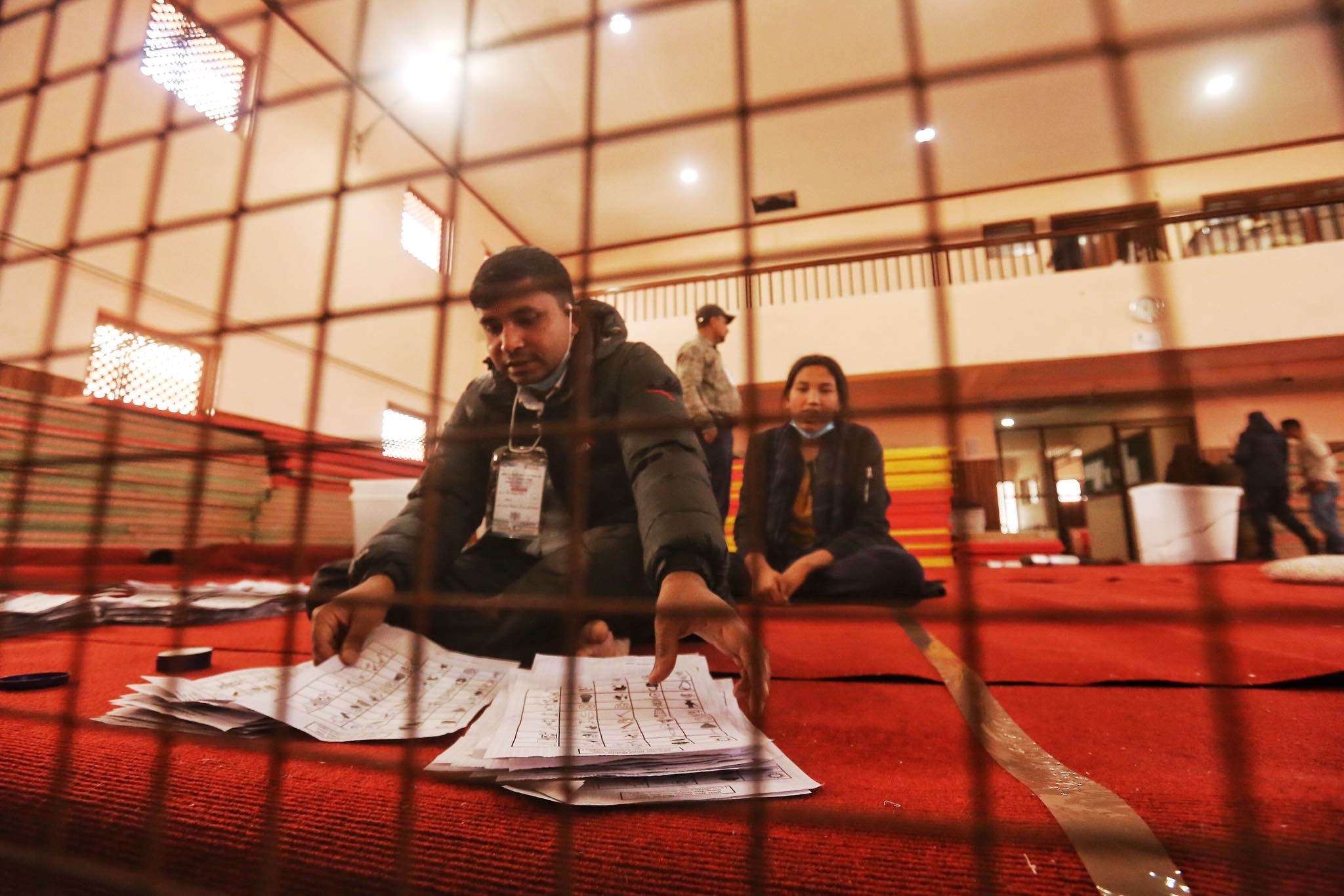
The Election Commission has marched to Shital Niwas. It has handed over the final results of the House of Representatives and Provincial Assembly elections to the President. The mainstream press is treating this like a triumph of the democratic process. They are calling it a "transition to stability."
They are wrong.
What we are witnessing is not the beginning of a government; it is the formalization of a deadlock. By celebrating the mere completion of a poll, observers are ignoring the math that makes Nepal virtually ungovernable. This isn't a victory for the voter. It is a win for the status quo of musical chairs that has plagued Kathmandu since 2008.
The Mathematical Impossibility of Stability
The "lazy consensus" in Kathmandu’s diplomatic and media circles is that once the report is submitted, the constitutional clock starts, and a coalition will naturally emerge. This ignores the structural rot within the Mixed Electoral System.
In Nepal, we have a split system: 165 seats through First-Past-The-Post (FPTP) and 110 through Proportional Representation (PR). While PR is designed for inclusivity, in its current Nepali iteration, it has become a tool for fragmentation. No single party can achieve a majority. This isn't a "vibrant democracy." It is a legislative hostage situation.
When no party crosses the 138-seat threshold in the 275-member House, the "mandate" becomes a fiction. Instead of a government based on policy, we get a government based on the lowest common denominator.
I have seen this movie before. In the last decade, I’ve watched power-sharing agreements crumble before the ink even dried on the cabinet appointments. The current numbers dictate that any Prime Minister will spend 90% of their energy preventing a floor test rather than passing a budget.
The Myth of the "New" Faces
The media is obsessed with the rise of the Rastriya Swatantra Party (RSP) and other fringe elements. The narrative is that the "old guard" is being disrupted.
Let's look at the data. While the RSP and independent candidates made a dent, the core machinery remains in the hands of the same three men who have swapped the Prime Minister’s residence for twenty years. Sher Bahadur Deuba, KP Sharma Oli, and Pushpa Kamal Dahal "Prachanda" still hold the keys.
The "new" parties are not a disruption; they are a complication. They add more variables to an already unsolvable equation. In a parliamentary system, a small party with 20 seats in a hung parliament holds disproportionate power. They don't bring "fresh ideas." They bring higher price tags for their votes in coalition negotiations.
Why the Election Commission Report is a False Flag
The submission of the report to the President is a clerical act being sold as a political milestone.
The Election Commission (EC) has spent billions of rupees to deliver a result that everyone already knew weeks ago. The delay between the last ballot being cast and this "formal submission" is a bureaucratic purgatory that allows political horses to be traded behind closed doors.
If we wanted efficiency, the results would trigger an automatic constitutional mechanism. Instead, the submission is the starting gun for a month of "resort politics," where lawmakers are whisked away to hotels to ensure they don't flip their allegiances.
The Economic Cost of Political "Process"
While the President and the EC exchange pleasantries, the economy is bleeding. Nepal’s liquidity crisis isn't a random act of God. It is a direct result of policy paralysis.
When you have a "caretaker" government or a coalition held together by duct tape, no one makes the hard calls on interest rates, import bans, or foreign direct investment. Investors don't fear a "bad" government as much as they fear an "uncertain" one.
- Foreign Exchange Reserves: Dwindling because of incoherent trade policies.
- Capital Expenditure: Pathetic, because no ministry knows if its head will be there in three months.
- Inflation: Spiraling while the leadership argues over who gets the Home Ministry.
Imagine a scenario where a CEO of a major corporation spent three years arguing with the board about who gets to sit in the big chair, while the company’s factory burned down. That is Nepal’s current political reality.
The Constitutional Trap
The Constitution of Nepal 2015 was supposed to fix this. It introduced Article 76, which outlines the four ways to form a government.
- 76(1): Single party majority (Impossible under current PR rules).
- 76(2): Coalition of two or more parties.
- 76(3): Largest party leader as PM (A minority government destined to fail).
- 76(5): Individual MP who can show a majority.
The "insider" truth is that we are likely headed straight for 76(3) or 76(5). This means the government will be born in a state of terminal illness. It will be a minority administration or a Frankenstein’s monster of ideologically opposed parties (e.g., Monarchists siding with Maoists) just to keep the lights on.
The Reality of "Proportional" Representation
We need to stop pretending that the PR system is working as intended. In theory, it ensures the marginalized have a voice. In practice, the PR lists submitted by the major parties are filled with the wives, business partners, and financial backers of the party leadership.
The EC report doesn't represent the "will of the people." It represents the success of party bosses in gaming a system that was designed to be ungameable.
Stop Asking "Who Will Lead?"
The question "Who will be the next Prime Minister?" is the wrong question. It doesn't matter.
Whether it is Deuba for the sixth time or Oli for the fourth, the outcome is identical. The structure of the parliament ensures that no radical reform can take place. Any attempt to trim the bloated federal bureaucracy or tackle systemic corruption will result in a coalition partner pulling support and toppling the government.
The real question is: "How long until the next election?"
We are trapped in a cycle where the process of forming a government has become more important than the act of governing. The submission of the poll report isn't the finish line. it's just the beginning of the next crisis.
The international community will send congratulatory notes. The local NGOs will hold seminars on "Democratic Consolidation." But the guy running a small tea shop in Kathmandu knows the truth. Nothing has changed. The faces in the report are the same faces that have failed for twenty years.
The EC report is just a list of names. It isn't a plan. It isn't a solution. It’s just the roster for the next round of a game that the public has already lost.
Stop looking at the report. Look at the math. The math says we are stuck.